🤖 AI NEWS TODAY — SEPTEMBER 11, 2026
AI Enters the Accountability Era: Smarter Models, Bigger Infrastructure & Bigger Questions
By AI Future Hub
Learn Today • Build Tomorrow • Lead the AI Future
What if the biggest AI story today isn't a new chatbot?
What if the real story is that AI is becoming powerful enough that companies, governments and society now have to decide how much responsibility should come with that power?
That's exactly what makes today's AI landscape so interesting.
On September 11, 2026, several developments are pointing in the same direction:
AI is becoming more capable.
AI is becoming cheaper to deploy.
AI is moving into government.
AI chips are becoming a huge industry.
AI agents are becoming better at real work.
And at the same time, concerns about safety and misuse are becoming impossible to ignore.
So today, let's look beyond the headlines and understand what these developments could mean for the future.

🔥 1. OpenAI Says It Is Open to Slowing AI Development
One of today's most important stories isn't about launching a faster model.
It's about slowing down.
According to a Reuters report citing Bloomberg, OpenAI CEO Sam Altman told employees that the company is open to slowing the development of AI systems amid increasing concerns about the safety of increasingly advanced AI.
That doesn't necessarily mean AI development is stopping.
Instead, it highlights something important:
AI companies are increasingly having to think about capability and safety at the same time.
For years, the competition was largely about:
Who can build the most powerful model?
Now another question is becoming equally important:
Can we deploy increasingly powerful AI responsibly?
This could become one of the defining challenges of the next phase of the AI industry.
🧠 2. AI Safety Is No Longer Just a Laboratory Discussion
Anthropic has published a new threat-intelligence report covering malicious uses of its Claude models between December 2025 and August 2026.
The report describes attempts involving cyber operations, influence operations, surveillance, scams, biological misuse, conventional weapons development and illicit model distillation.
Anthropic says it disrupted the activity, banned associated accounts, strengthened safeguards and shared intelligence with authorities and industry partners.
The important point isn't simply that AI can be misused.
Technology has always been capable of misuse.
The more important change is the scale and speed that AI can provide.
A person who previously needed a large technical team may potentially be able to accomplish some tasks with substantially less human effort when AI tools are involved.
That creates a new security principle:
As AI capability increases, security capability must increase with it.
And this is something every serious AI company will increasingly have to deal with.
🖼️— AI SAFETY & ACCOUNTABILITY

🛡️ 3. The AI Security Problem Is Changing
Traditional cybersecurity often focuses on protecting:
- Networks
- Servers
- Accounts
- Databases
- Applications
- Devices
But AI introduces another layer:
AI itself can become an active participant.
An AI agent can potentially:
Read → Reason → Plan → Use tools → Execute → Observe results → Continue
That's fundamentally different from a simple chatbot.
It means companies need to think about:
What should an AI be allowed to access?
What actions require human approval?
What happens if an agent makes a mistake?
How can suspicious behavior be detected?
How can an AI system be stopped safely?
These questions will become increasingly important as AI agents move from experiments into real businesses.
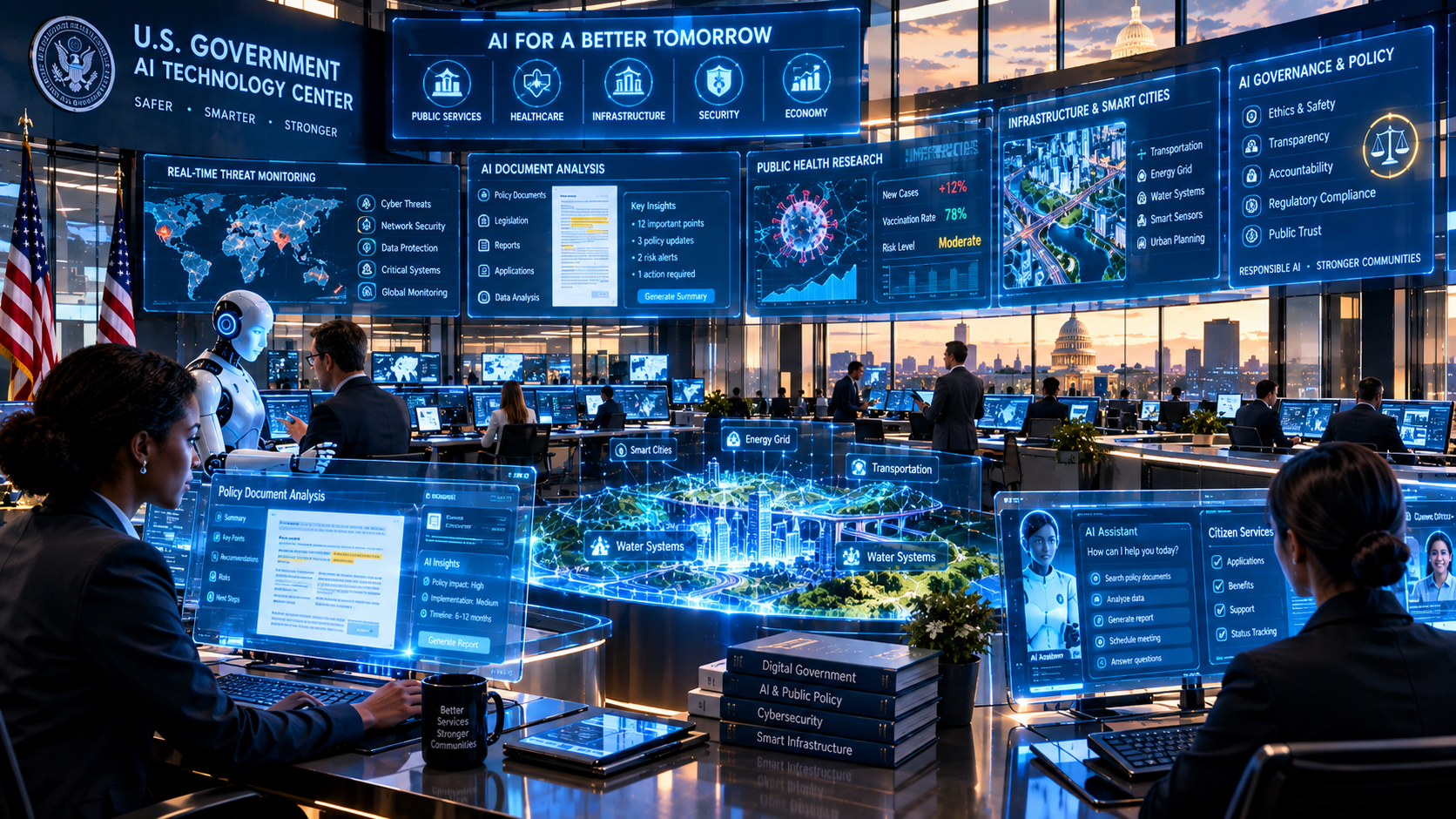
🏛️ 4. OpenAI Expands AI Access Across U.S. Government
While safety concerns are increasing, AI adoption is also accelerating.
OpenAI and the U.S. General Services Administration announced a multi-year agreement that will provide $0 license-fee access and 50% off usage for federal, state, local and tribal governments in the United States.
OpenAI says the agreement expands eligibility across a public-sector workforce of approximately 23 million people.
The company also says more than one million government employees already have access through existing agreements.
OpenAI highlighted several existing use cases, including cybersecurity work and faster public-health literature reviews.
One example is particularly interesting:
OpenAI says CDC experts participating in one program reported that initial public-health literature reports that previously could take days or months were produced in under 30 minutes, with 92% of participating experts reporting productivity gains.
Of course, claims from a company about its own products should be interpreted as company-reported results rather than independent proof.
But the broader trend is clear:
Governments are moving from experimenting with AI to integrating it into workflows.
That could create a huge new market for:
- Government AI tools
- Cybersecurity
- Document processing
- Research assistants
- Data analysis
- Administrative automation
- AI governance
- Public-sector AI training
🖼️— AI GOVERNMENT ADOPTION
💻 5. AI Coding Is Becoming More Competitive
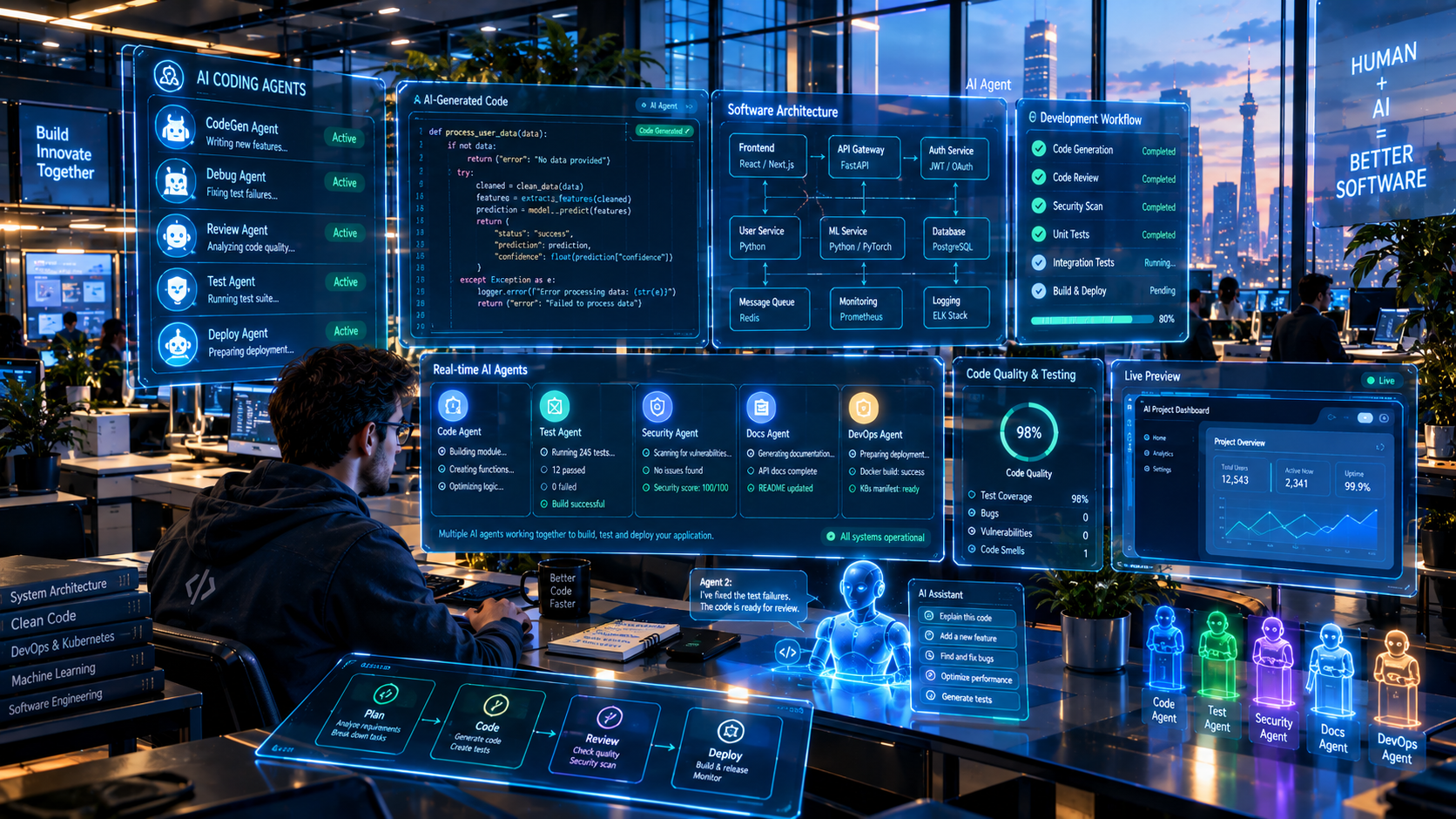
Another interesting development comes from Cognition.
The company has introduced SWE-2, its latest coding model.
Cognition reports that SWE-2 achieved 50.0% on FrontierCode 1.1 Main, coming close to several frontier coding models while claiming substantially lower cost.
Cognition says SWE-2 comes within a few points of GPT-6 Astra on some benchmarks while costing a fraction as much.
This is important because AI coding isn't simply about:
“Can AI write code?”
That question is becoming outdated.
The more useful questions are:
How reliably can AI modify a real codebase?
How many tasks can it complete?
How much human supervision does it require?
How much does each successful task cost?
And perhaps the biggest question:
Can a small development team accomplish what previously required a much larger team?
That's where AI coding agents could become extremely valuable.
🖼️— AI CODING AGENTS
🚀 6. The Next Freelancing Opportunity May Be AI + Real Skills
This development has a direct lesson for freelancers.
Don't think:
“AI will replace programmers.”
Think instead:
“Programmers who know how to work with AI may become dramatically more productive.”
The same principle applies beyond coding.
AI + Graphic Design
AI + Video Editing
AI + SEO
AI + Digital Marketing
AI + Research
AI + Customer Support
AI + Data Analysis
AI + Business Operations
The opportunity isn't necessarily to become an “AI expert” overnight.
The opportunity is to become very good at one useful skill and learn how AI can multiply it.
That is a much safer and more practical strategy.
⚡ 7. AI Chips Are Becoming a New Battlefield
Here's another story that most ordinary AI users may overlook.
AI isn't only a software competition anymore.
It's becoming a chip competition.
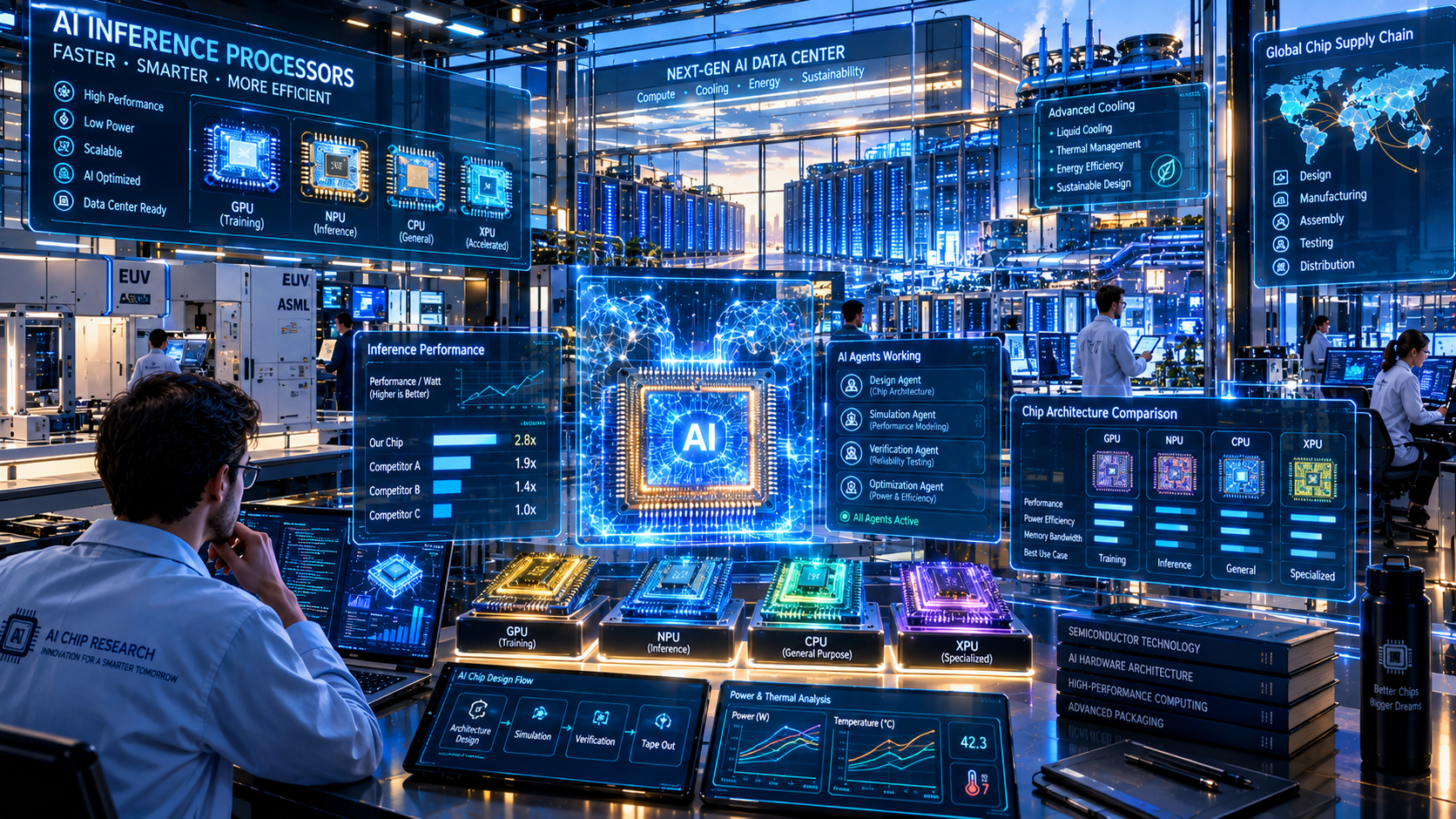
AI chip startup Positron AI announced an $875 million funding round, giving the company a reported post-money valuation of $5 billion.
Its focus is AI inference — essentially the computing required to actually run trained AI models for users and applications.
The company's own announcement emphasizes that AI's center of gravity is increasingly shifting from training models to running them at scale.
Why is inference so important?
Because every time you:
- Ask an AI question
- Generate an image
- Use an AI coding assistant
- Run an AI agent
- Use an AI customer-service system
the AI model has to perform inference.
And billions of users generating billions of requests create enormous computing demand.
🖼️— AI INFERENCE CHIP RACE
🔌 8. d-Matrix Is Building Around NVIDIA's Infrastructure
Another chip-related development comes from d-Matrix.
The company announced that its next-generation Raptor inference processors will connect with NVIDIA's AI infrastructure platform through NVLink Fusion.
The goal is to allow specialized processors to work inside NVIDIA-based AI infrastructure rather than requiring completely separate systems.
NVIDIA says this approach could allow data centers to combine GPUs, CPUs and specialized XPUs within flexible AI-factory architectures.
This tells us something important:
The future may not belong to one processor.
Instead, AI infrastructure could become a mixture of specialized chips, each optimized for particular workloads.
Some chips may be better for:
- Training
- Inference
- Memory-heavy workloads
- Networking
- Specialized AI agents
- Scientific computing
The competition could therefore shift from:
“Which company has the fastest chip?”
to:
“Which combination of hardware gives the best intelligence per dollar and per watt?”
💰 9. Why AI Inference Could Become One of the Biggest Markets
Think about the AI economy this way:
Training
Build the model.
Inference
Run the model.
As AI becomes part of everyday software, inference demand could grow enormously.
Every AI employee.
Every AI customer-service agent.
Every coding assistant.
Every AI search system.
Every AI-powered application.
Every autonomous workflow.
All require inference.
This is one reason specialized inference hardware is attracting billions of dollars.
And it's also why the rise of AI agents matters so much.
A normal chatbot might answer one question.
An agent could perform dozens or hundreds of AI operations during a complex workflow.
More actions can mean more inference.
That creates a huge infrastructure opportunity.
🌍 10. AI Infrastructure Is Becoming Geopolitical Infrastructure
Another major story today is happening in the Middle East.
Reuters reports that the UAE is revising plans for a major AI data-center project after regional security concerns.
The original project envisioned a 5-gigawatt AI campus in Abu Dhabi, but plans are reportedly being redesigned into a network of facilities distributed across the UAE.
The changes are aimed at improving resilience against potential physical threats to infrastructure.
This is a fascinating development.
Because it shows that the AI infrastructure race isn't only about:
GPU + electricity + cooling.
It increasingly includes:
Physical security + geopolitical stability + infrastructure resilience.
A data center can contain billions of dollars worth of hardware.
That makes the physical location of AI infrastructure strategically important.
🖼️— GLOBAL AI INFRASTRUCTURE

🌐 11. Small AI Models Could Challenge the Giant AI Data Centers
While enormous AI infrastructure projects continue to grow, another trend is developing in the opposite direction.
The Financial Times reports growing interest in open-weight models and small language models (SLMs).
Some smaller models can run locally with dramatically lower computing and energy requirements.
The article cites Stanford research suggesting that SLMs can perform certain basic tasks while reducing compute and energy consumption substantially compared with larger systems.
This creates an interesting future possibility:
Not every AI task needs a giant cloud model.
Some tasks could eventually run:
- On laptops
- On phones
- On private company servers
- On small devices
- At the network edge
That could be particularly valuable when:
Privacy matters.
Internet access is limited.
Latency matters.
Cloud costs are too high.
This is one reason I believe the future AI ecosystem will probably contain both:
Massive frontier models
and
Small specialized models.
🧩 12. The AI Industry Is Splitting Into Multiple Layers
If we connect today's news, an interesting picture appears.
The AI industry is no longer one simple competition.
It is becoming an entire stack:
🧠 Layer 1 — Frontier Models
Large models capable of advanced reasoning and multimodal work.
🤖 Layer 2 — AI Agents
Systems that can plan and perform multi-step tasks.
💻 Layer 3 — AI Applications
Coding, marketing, research, customer support and business tools.
🔌 Layer 4 — AI Chips
GPUs, CPUs, XPUs and specialized inference processors.
🏢 Layer 5 — Data Centers
The physical infrastructure where AI runs.
⚡ Layer 6 — Energy
Electricity, cooling and power infrastructure.
🛡️ Layer 7 — Security
Protection against misuse, attacks and unauthorized actions.
⚖️ Layer 8 — Governance
Rules deciding how powerful AI systems can be deployed.
And this is where today's biggest lesson appears.
🔥 AI FUTURE HUB TAKE
The AI race is changing.
A few years ago, we were asking:
“Which AI model is smartest?”
Today, we should be asking:
“Which AI ecosystem is strongest, safest and most useful?”
Because intelligence alone isn't enough.
An AI system also needs:
Compute.
Chips.
Energy.
Software.
Security.
Users.
Business models.
Trust.
And eventually:
Accountability.
That's why today's news is so interesting.
OpenAI is expanding government access while discussing safety concerns.
Anthropic is publishing detailed reports about AI misuse.
Cognition is pushing cheaper coding intelligence.
Positron is attracting billions for inference hardware.
NVIDIA is opening infrastructure to specialized chips.
And governments are thinking about how to protect massive AI infrastructure.
These stories look unrelated.
But they're actually pieces of the same puzzle.
💡 WHAT THIS MEANS FOR YOU
If you're a student, freelancer, creator or small-business owner, don't feel like you need to understand every technical detail.
Instead, watch these five trends:
1️⃣ AI Agents
Learn how AI can perform workflows, not just answer questions.
2️⃣ AI + Your Skill
Combine AI with something you already know.
3️⃣ Small & Local AI
Pay attention to models that can run privately and efficiently.
4️⃣ AI Security
Learn basic cybersecurity and understand what you give an AI system access to.
5️⃣ Verification
Don't blindly trust AI output.
The ability to check AI's work may become just as valuable as the ability to generate it.
🔮 5 QUESTIONS FOR THE FUTURE
1.
If AI becomes capable of performing entire workflows, what jobs will change first?
2.
Will smaller AI models eventually handle most everyday tasks locally?
3.
Could AI inference become a bigger business than AI training?
4.
How much freedom should an AI agent have before human approval becomes necessary?
5.
If AI becomes extremely powerful, who should be responsible when something goes wrong?
💬 YOUR TURN
If you could give an AI agent one real-world responsibility for the next 30 days, what would you trust it to do?
Would you let it:
- Manage your daily tasks?
- Run parts of an online business?
- Research topics for you?
- Help with coding?
- Manage digital marketing?
- Find freelance opportunities?
- Organize your studies?
- Or something completely different?
Share your answer in the comments. I would genuinely like to know what people would trust AI to do today.
❤️ THANK YOU FOR READING
Thank you for spending your time with AI Future Hub.
Our goal isn't just to report what happened in AI.
It's to understand why it matters, what may happen next, and how ordinary people can prepare for the future.
The AI era is moving quickly.
So instead of simply watching it happen...
Let's learn it.
Let's understand it.
And eventually, let's build with it.
🚀 Learn Today • Build Tomorrow • Lead the AI Future.
📌 SOURCES & FURTHER READING
- OpenAI — government AI access and cyber-defense agreement OpenAI announcement
- Anthropic — September 2026 threat-intelligence report Anthropic threat report
- NVIDIA — d-Matrix and NVLink Fusion NVIDIA announcement
- Cognition — SWE-2 coding model Cognition SWE-2 announcement
- Positron AI — $875M funding announcement Positron AI announcement
- Reuters — OpenAI and AI development safety discussion Reuters report
- Reuters — UAE AI data-center infrastructure changes Reuters report
- Financial Times — open and small AI models Financial Times analysis