Can AI Become a Truly Personal Assistant?
AI has become a part of everyday life. We use it to write emails, summarize information, brainstorm ideas, learn new topics, and sometimes even make decisions.
But there is a difference between an AI tool that can answer questions and an AI assistant that actually understands you. That's where things get interesting.
The Problem With Starting From Zero
Imagine talking to the same assistant every day but having to explain your situation again and again.
You might say: “I’m working on this project.”
Then tomorrow: “Remember the project I told you about?”
And the next day, you have to explain the details again.
That's not how a human assistant would normally work. A useful personal AI should be able to remember relevant information and use it when it actually helps. This is why personal AI with memory is becoming an interesting area of AI development.
Memory Could Change the Experience
AI memory isn't simply about storing every conversation. Good memory should be selective. It could remember things such as:
- Your ongoing projects
- Important preferences
- Recurring tasks
- Previous decisions
- Useful notes
- Information you specifically want it to remember
The benefit is simple: you spend less time repeating yourself. The AI can spend more time helping you.
But What About Privacy?
This is probably the biggest question. The more an AI knows about you, the more important privacy becomes.
If an assistant can access emails, documents, calendars, conversations, or personal notes, users need to know what happens to that information. This is why local AI assistants, on-device processing, encryption, and user-controlled permissions are becoming increasingly important.
I don't think “private” should simply be treated as a marketing word. Users should be able to understand how their data is processed and what control they actually have.
AI Should Work With You, Not Replace You
Another thing I find interesting is the growth of AI agents.
Instead of simply asking: “How do I organize my schedule?” you could eventually ask an AI assistant to help organize it for you. The same idea can apply to emails, documents, research, reminders, and repetitive work.
But I don't think AI should make every important decision on our behalf. The better model is:
AI handles repetitive work. Humans handle important judgment.
That balance could make AI much more useful.
A More Connected AI Experience
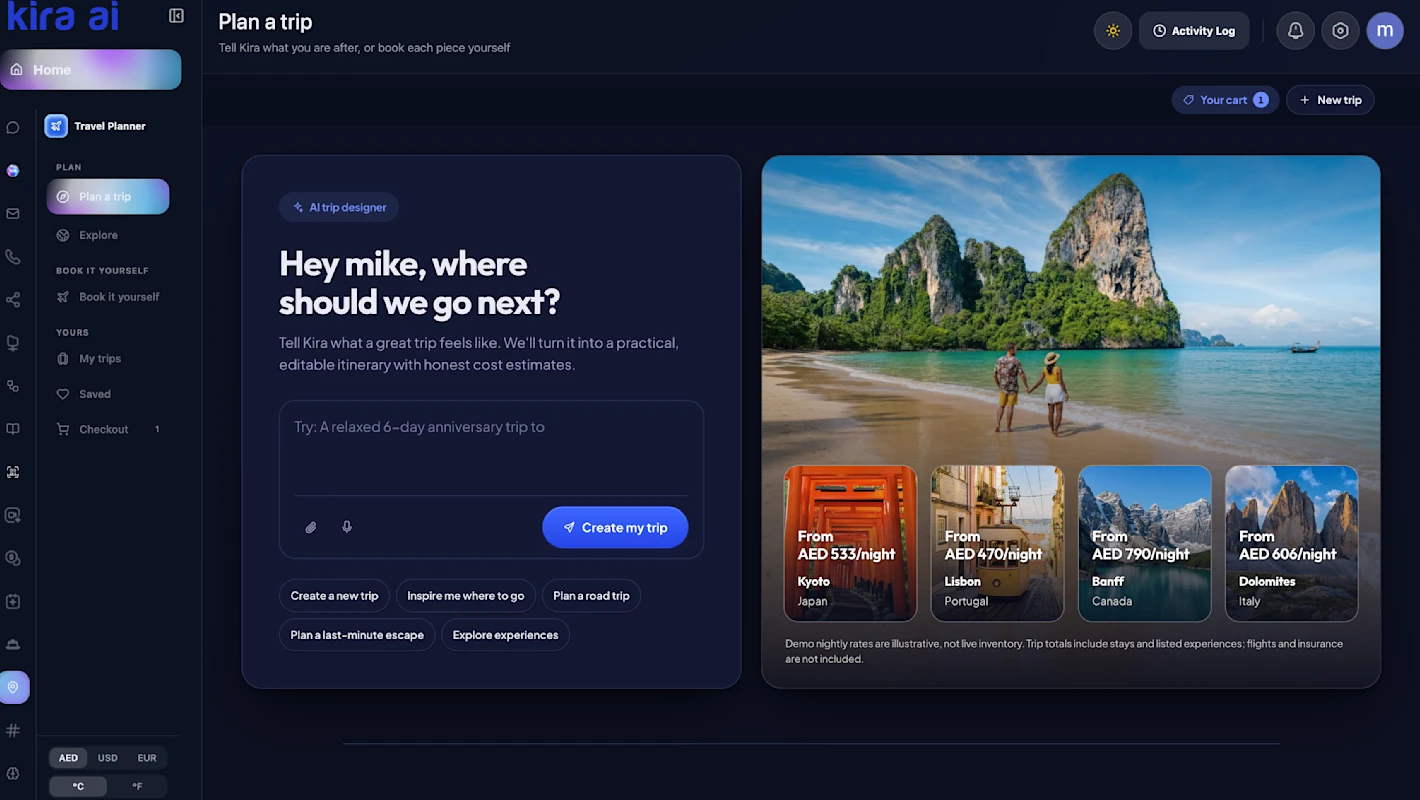
Platforms such as Kira AI are exploring this direction by bringing together personal AI, memory, AI agents, integrations, and productivity features.
What makes this trend interesting isn't simply having more AI features. It's the possibility of having one assistant that understands more of your everyday context.
Instead of:
Question → Answer
The experience could gradually become:
Context → Understanding → Assistance → Action
That's a significant change.
Where Is Personal AI Going?
I think we're still at the beginning of this transition. The future of AI may not simply be about creating models that know more information. It may be about creating assistants that understand your context better.
The most useful AI might eventually be the one that:
- Remembers what matters
- Respects your privacy
- Works with your existing tools
- Reduces repetitive work
- Gives you control over important actions
For me, that's much more interesting than simply having another chatbot. The real promise of personal AI isn't replacing people. It's giving people more time to do the things that actually need a human mind.