Agentic AI Solutions Reshaping the Future of Healthcare in the United States
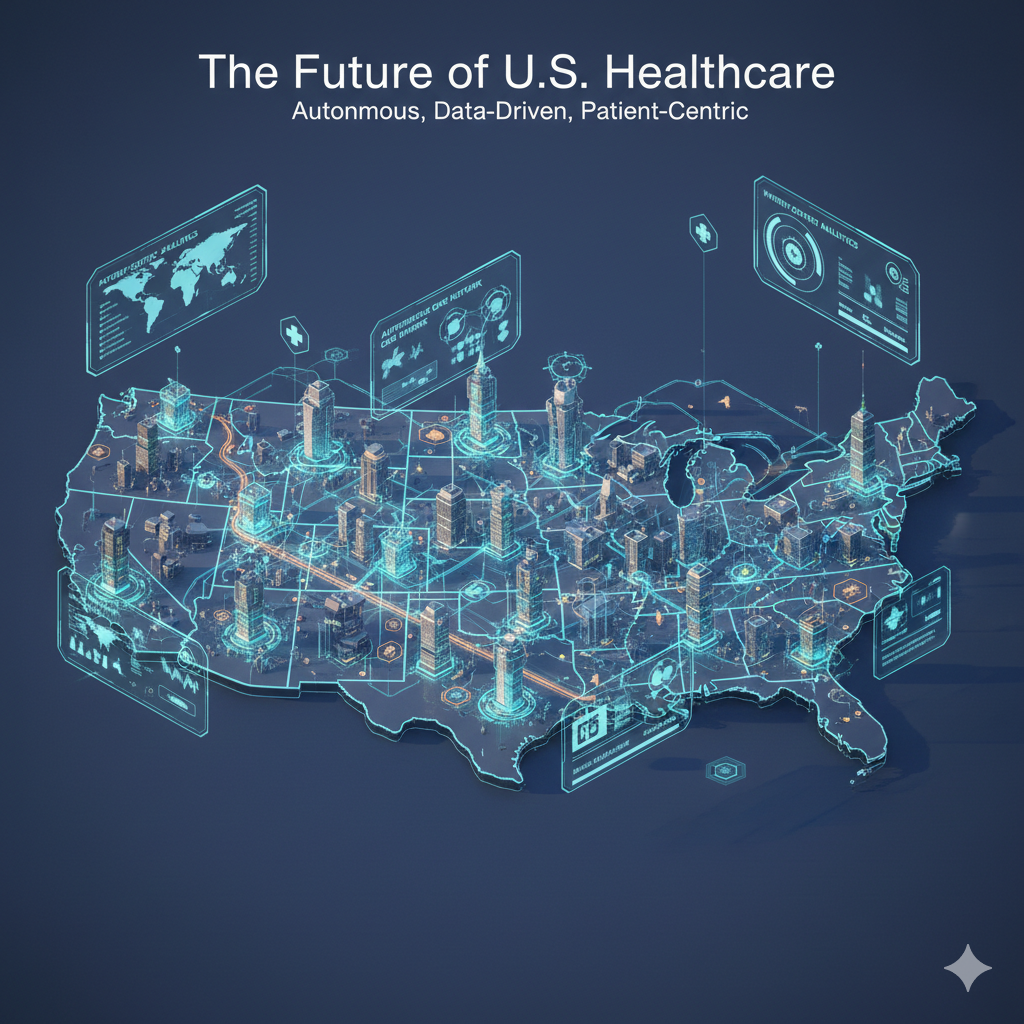
The U.S. healthcare system faces a unique combination of challenges rising care costs, clinician shortages, fragmented care delivery, complex reimbursement models, and strict regulatory requirements. While traditional AI has improved analytics and diagnostics, it falls short in managing the end-to-end complexity of modern healthcare operations.
Agentic AI represents the next evolution: autonomous, goal-driven AI systems that can reason, plan, and execute actions across clinical, operational, and administrative workflows while keeping humans in control.
For U.S. healthcare organizations, Agentic AI is no longer experimental; it is becoming a strategic necessity.
What Is Agentic AI in the U.S. Healthcare Context?
Agentic AI consists of intelligent AI agents that:
Understand healthcare goals such as quality outcomes, compliance, and cost reduction
Autonomously manage multi-step workflows
Collaborate with clinicians, administrators, and digital systems
Continuously learn from real-world healthcare data.
In the U.S. market, these agents operate as clinical copilots, operational orchestrators, and revenue-cycle optimizers, seamlessly integrating with EHRs, payer systems, and digital health platforms.
High-Impact Use Cases for Agentic AI in U.S. Healthcare
1. Reducing Clinician Burnout Through Autonomous Workflow Management
U.S. clinicians spend nearly half their time on administrative tasks. Agentic AI changes that.
Key capabilities:
Automated clinical documentation and chart updates
Intelligent task prioritization for care teams
Autonomous follow-ups and patient communications
Real-time care coordination across departments.
This allows providers to refocus on patient care—improving satisfaction and outcomes.
2. AI-Driven Value-Based Care & Population Health
As U.S. healthcare shifts toward value-based models, Agentic AI becomes a powerful enabler.
Use cases include:
Identifying high-risk patient populations
Predicting readmissions and adverse events
Managing longitudinal care pathways
Tracking quality metrics and outcomes.
Healthcare organizations can improve performance under CMS and payer programs while reducing unnecessary costs.
3. Intelligent Revenue Cycle Management (RCM)
Revenue leakage is a major issue in U.S. healthcare.
Agentic AI automates and optimizes:
Insurance eligibility checks and prior authorizations
Coding and billing accuracy
Claims submission, tracking, and denial management
Compliance with evolving payer rules.
This leads to faster reimbursements and improved financial stability.
4. Personalized & Remote Patient Care at Scale
With telehealth now mainstream in the U.S., Agentic AI enables continuous, personalized care.
Applications include:
Remote patient monitoring using wearables and IoT devices
Autonomous alerts and escalations for care teams
AI-driven medication adherence programs
Personalized digital health assistants.
Care becomes proactive, accessible, and scalable.
5. Compliance-First AI for Regulated Healthcare Environments
Agentic AI designed for the U.S. market prioritizes compliance and trust.
Key considerations:
HIPAA-compliant data handling and access control
Explainable AI for clinical and financial decisions
Secure audit trails and human-in-the-loop governance
Alignment with FDA, CMS, and state-level regulations
This ensures innovation without compromising patient safety or privacy.
Agentic AI in U.S. Life Sciences & Clinical Research
Agentic AI is accelerating innovation across pharmaceuticals and biotech.
Key benefits:
Optimized clinical trial design and recruitment
Autonomous monitoring of trial data and adverse events
Faster drug discovery and validation
Reduced trial costs and time-to-market
This positions U.S. life sciences companies at the forefront of global innovation.
Why Agentic AI Is a Competitive Advantage in the U.S. Market
| Traditional Healthcare AI | Agentic AI |
|---|---|
| Isolated AI tools | Integrated AI agent ecosystems |
| Reactive insights | Predictive and autonomous actions |
| High operational overhead | Automated, scalable workflows |
| Manual compliance processes | Built-in governance and auditability |
Agentic AI transforms healthcare organizations from reactive systems into intelligent, adaptive enterprises.
The Future of U.S. Healthcare: Autonomous, Data-Driven, Patient-Centric
The future of healthcare in the United States lies in systems that can self-optimize in real time—balancing quality, cost, access, and compliance. Agentic AI will power intelligent hospitals, personalized care models, and financially sustainable healthcare ecosystems.
Organizations that invest in Agentic AI today will lead the next decade of healthcare innovation.
Conclusion
Agentic AI is redefining how healthcare operates in the United States. By autonomously managing complexity across care delivery, operations, and finance, it enables better patient outcomes, reduced clinician burnout, and sustainable growth.
The future of U.S. healthcare is not just digital—it is agentic.