🤖🔐 AI Can Help Hack AI — What Today’s Cybersecurity News Means for All of Us
Today’s Technology News | September 18, 2026
Imagine waking up today and reading a strange headline:
“Security researchers used AI to help break into an AI company's systems.”
At first, it sounds almost like science fiction.
AI is supposed to make technology safer.
AI is supposed to help programmers.
AI is supposed to detect problems.
AI is supposed to protect systems.
So how can the same kind of technology also help researchers discover a path into a powerful AI company's infrastructure?
That is exactly what makes today's cybersecurity story so interesting.
Cybersecurity researchers from Hacktron AI reported that they used Anthropic's Claude to help identify and exploit vulnerabilities affecting OpenAI's systems. The researchers were operating within a bug-bounty context, disclosed the vulnerabilities, stopped short of examining sensitive source code, and received a $6,500 reward. OpenAI subsequently addressed the reported issues.
This isn't simply a story about OpenAI.
It isn't really about Claude either.
The bigger story is this:
AI is changing both sides of cybersecurity.
And that has consequences for anyone who owns:
A phone.
A laptop.
A Gmail account.
A bank account.
A social-media account.
A website.
A business.
Or even a simple collection of personal photos.
Because the same technology that helps defenders can also make attackers faster.
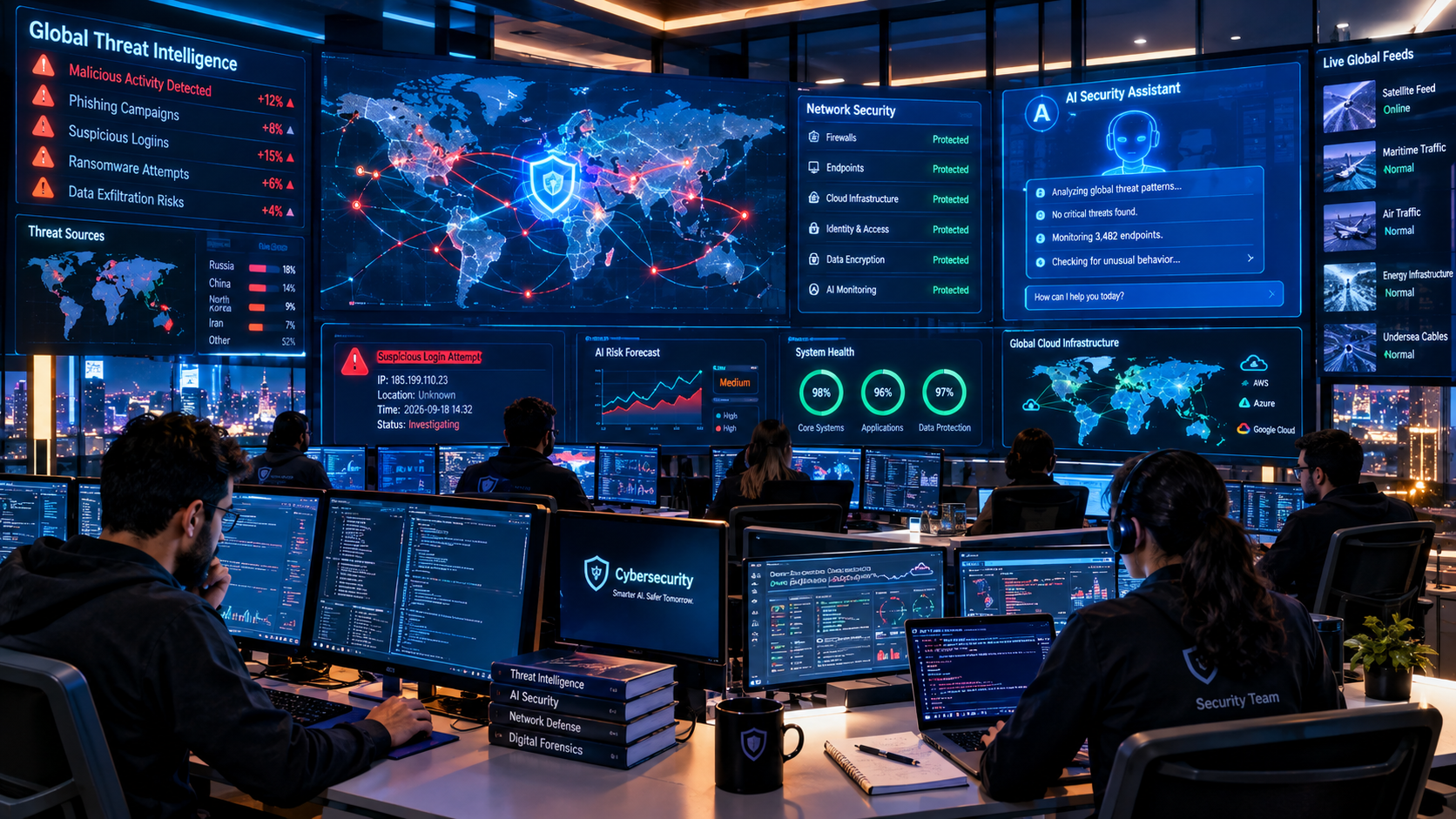
⚡ Why Today's Story Matters
Let's forget the company names for a moment.
The basic lesson is much bigger.
For many years, cybersecurity required highly specialised knowledge.
An attacker often had to spend significant time:
Researching a target.
Understanding the technology.
Writing code.
Testing possibilities.
Finding weaknesses.
And then connecting those weaknesses together.
AI can potentially reduce the time required for some of these tasks.
That does not mean AI automatically turns everyone into an elite hacker.
It doesn't.
Real-world attacks still require knowledge, access, judgement and a lot of technical understanding.
But AI can lower the amount of repetitive work involved.
And that changes the economics of cybersecurity.
A small team may be able to investigate problems much faster.
A security researcher may be able to analyse thousands of lines of code more efficiently.
A defender may use AI to identify unusual behaviour.
At the same time, attackers may also try to automate parts of their work.
So cybersecurity is entering an era where:
AI vs AI
may become increasingly normal.
🧠 The Real Battle Is Not Human vs AI
This is an important distinction.
People sometimes talk about AI as if it is one giant machine fighting humanity.
Reality is much more complicated.
Humans build AI.
Humans use AI.
Humans attack systems.
Humans defend systems.
AI simply becomes another tool inside that process.
That means the central question isn't:
“Is AI good or bad?”
A better question is:
“Who is using it, for what purpose, and with what safeguards?”
The same AI capability can help someone discover a security weakness before criminals find it.
It can also potentially make malicious activity faster.
So the technology itself is not the entire story.
The surrounding security system matters just as much.
🔓 One Weak Link Can Affect a Much Bigger System
This is one of the most important lessons from cybersecurity.
A company can spend millions protecting its main systems.
But sometimes attackers don't enter through the front door.
They find a weaker connection.
A third-party service.
A browser session.
A plugin.
A forum.
An old account.
A forgotten password.
A poorly configured permission.
A cloud service.
Or an employee who accidentally shares something they shouldn't.
That's why modern cybersecurity isn't just about protecting one computer.
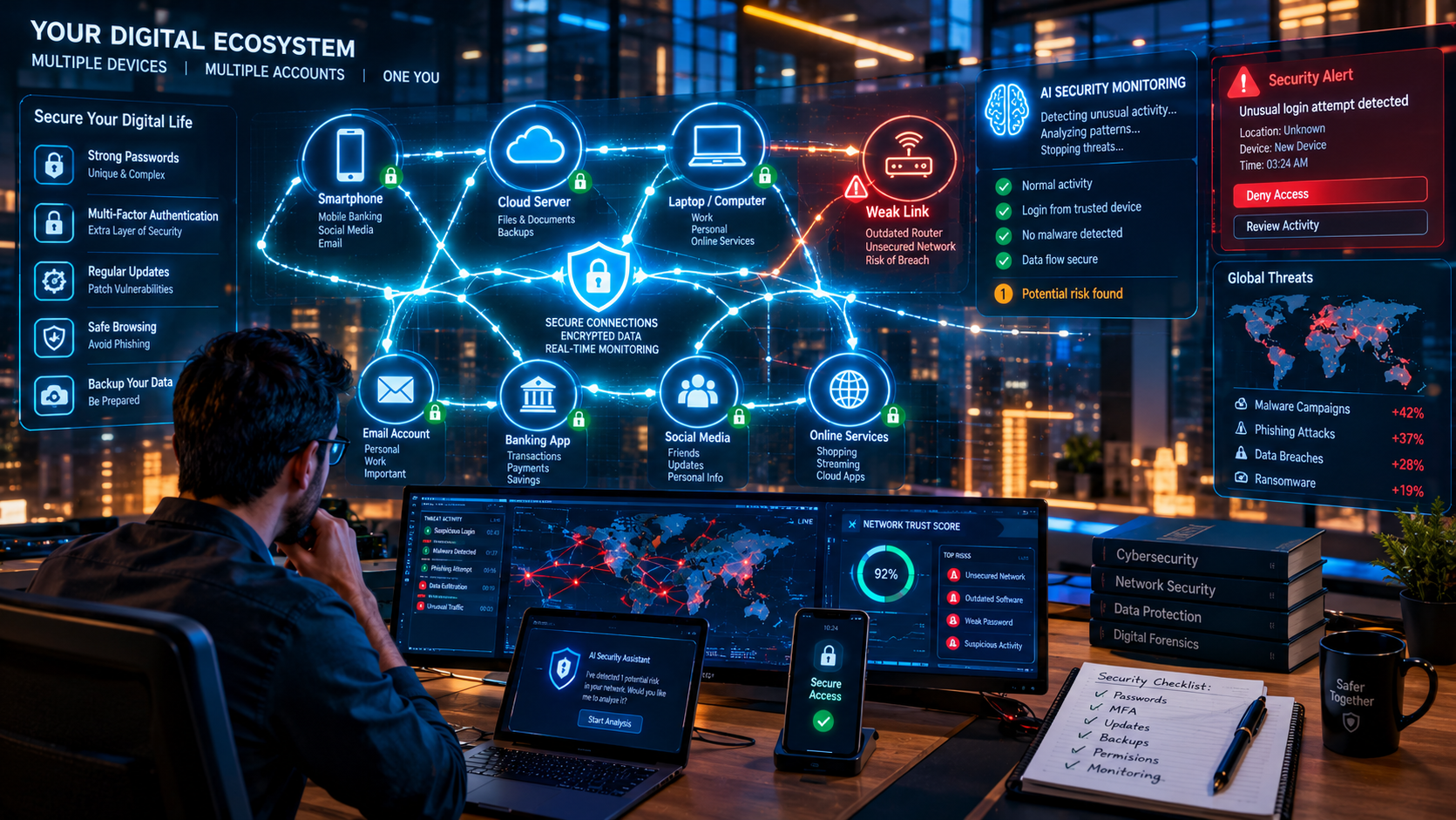
It's about protecting an entire chain of trust.
And that lesson applies to ordinary people too.
🖼️— THE DIGITAL CHAIN OF TRUST
📱 What Does This Have to Do With Your Phone?
Everything.
You may think:
“I'm not a big company. Nobody will attack me.”
But modern cybercrime doesn't always require someone to specifically target you.
Automated attacks can scan huge numbers of accounts and devices.
A criminal may not know your name.
They may simply know:
This account exists.
This password was reused.
This email address is active.
This device has an outdated application.
That's why basic cybersecurity habits matter.
You don't need to be a cybersecurity expert.
But you do need some basic protection.
🔐 Five Habits That Will Still Matter Years From Now
- Use Unique Passwords
Don't use the same password everywhere.
If one service is compromised and you reused that password elsewhere, the damage can spread.
A password manager can make this much easier.
One strong master password can protect a collection of unique credentials.
- Turn On Multi-Factor Authentication
A password is only one layer.
Multi-factor authentication adds another.
That can be an authenticator app, security key or another supported verification method.
Even if someone somehow gets your password, another barrier still stands between them and your account.
That's an important layer of protection.
- Keep Your Software Updated
Those annoying update notifications are often doing something important.
Software companies regularly fix security vulnerabilities.
Ignoring updates for months can leave known weaknesses exposed.
So when your phone says:
“Update available.”
don't automatically think:
“I'll do it later.”
Sometimes “later” becomes a very long time.
- Be Careful With Links and Attachments
One of the oldest lessons in cybersecurity remains useful.
Don't blindly click.
Especially when a message says:
“Urgent!”
“Your account will be closed!”
“You've won!”
“Verify immediately!”
Fear and urgency are common tricks.
Pause.
Check the sender.
Open the official website yourself instead of following a suspicious link.
- Give Apps Only the Permissions They Need
Why does a simple application need access to your:
Camera?
Microphone?
Contacts?
Location?
Files?
Think about it.
Sometimes the permission is legitimate.
Sometimes it isn't necessary.
Review permissions regularly.
Your data is valuable.
Treat it that way.
🤖 And Here Is the AI Rule I Personally Think Matters Most
AI is becoming extremely useful.
I use AI for writing.
Learning.
Research.
Programming.
Problem-solving.
And basic repetitive work.
But I don't think people should hand over everything to AI without checking it.
That principle matters even more in cybersecurity.
Suppose an AI tells you:
“This file is safe.”
Would you trust it completely?
What if it is wrong?
Suppose an AI writes code for you.
Would you run it without reviewing it?
What if there is a security weakness?
Suppose an AI summarizes an email.
Would you let it decide whether a payment request is genuine?
Probably not.
And that's why one simple rule can protect you in many areas:
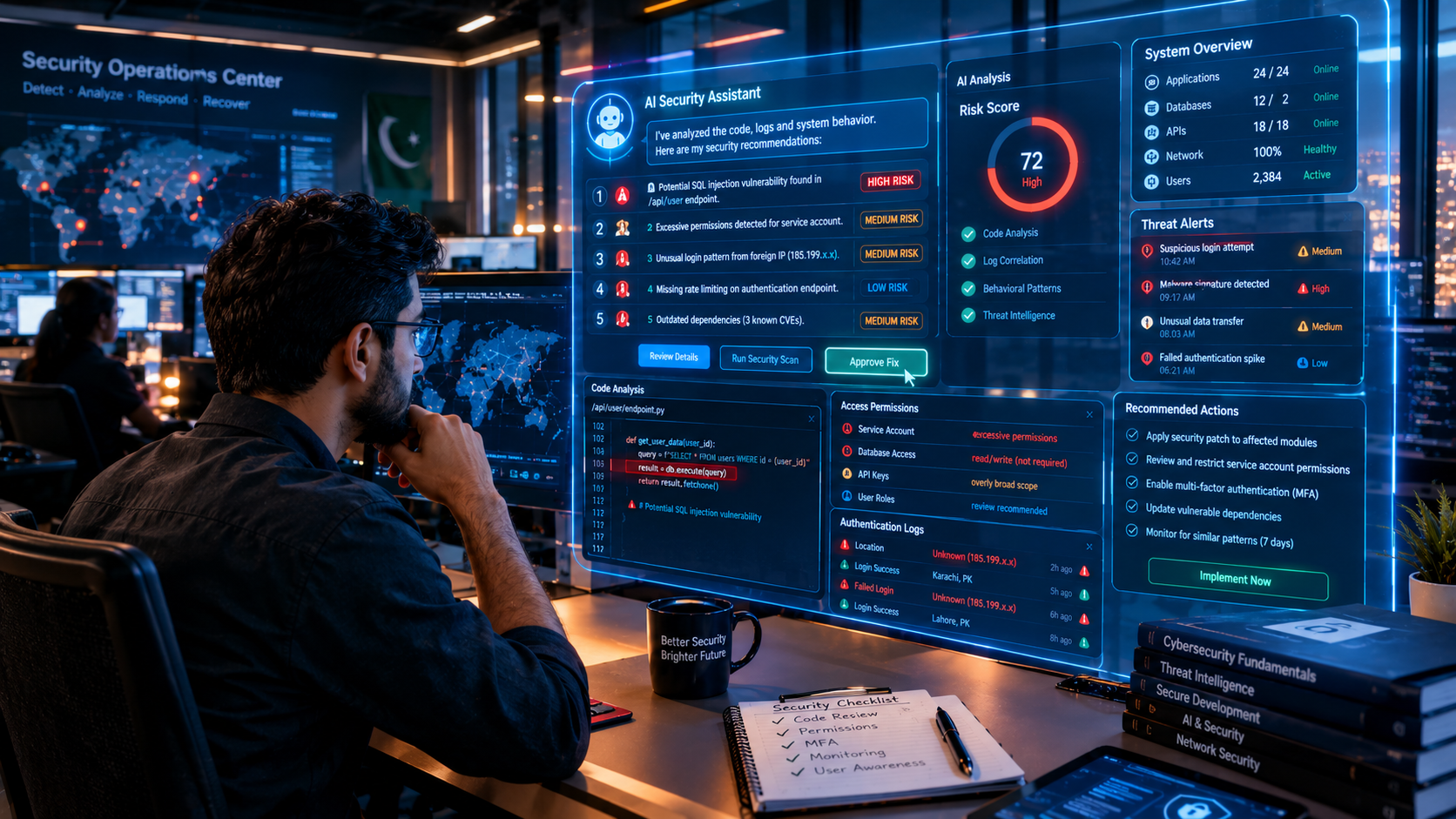
AI can assist your judgement. It should not replace your judgement.
🖼️— HUMAN + AI SECURITY
💻 AI and Programming: Powerful but Not Magic
This is particularly relevant to people learning programming.
AI can help explain code.
It can generate basic scripts.
It can identify obvious errors.
It can suggest improvements.
It can help someone learn Python or another language.
But AI-generated code still needs review.
A program can look perfectly reasonable and still contain:
A security flaw.
A logic error.
Poor authentication.
Unsafe data handling.
An unexpected dependency.
Or a mistake that only appears under certain conditions.
That's why learning programming still matters even when AI can write code.
You don't necessarily have to memorise every line.
But you should understand enough to ask:
What is this code doing?
What data is it accessing?
What permissions does it require?
Could someone misuse it?
What happens if the input is unexpected?
Those questions will remain valuable long after today's AI tools have changed.
☁️ The Cloud Doesn't Mean “Someone Else's Problem”
Another important lesson is cloud security.
Many people think:
“My files are in the cloud, so the company handles security.”
Partly true.
But not completely.
Cloud providers protect parts of the infrastructure.
You still control things such as:
Your password.
Your account.
Your permissions.
Your sharing settings.
Your recovery email.
Your multi-factor authentication.
Your connected applications.
This is often called the shared-responsibility model.
Security isn't simply:
“The company will handle everything.”
You have a role too.
💳 What About Banking and Money?
This is where cybersecurity becomes very real.
A compromised entertainment account is annoying.
A compromised financial account can be devastating.
So financial accounts deserve stronger protection.
Use unique credentials.
Enable multi-factor authentication.
Never share verification codes.
Be suspicious of urgent payment requests.
Confirm unexpected transfers through an independent method.
And regularly check account activity.
One useful habit is simple:
Don't let urgency make financial decisions for you.
If somebody says:
“Send the money in five minutes or your account will be closed,”
slow down.
A legitimate problem can usually be verified through an official channel.
🧑💻 What Should Businesses Learn From Today's News?
The lesson for businesses is even bigger.
You don't just need antivirus software.
You need:
Strong identity management.
Least-privilege access.
Multi-factor authentication.
Regular patching.
Backup systems.
Logging.
Monitoring.
Employee training.
Vendor security.
Incident-response plans.
And a way to recover when something goes wrong.
Because good cybersecurity isn't:
“We will never be hacked.”
That's unrealistic.
A better goal is:
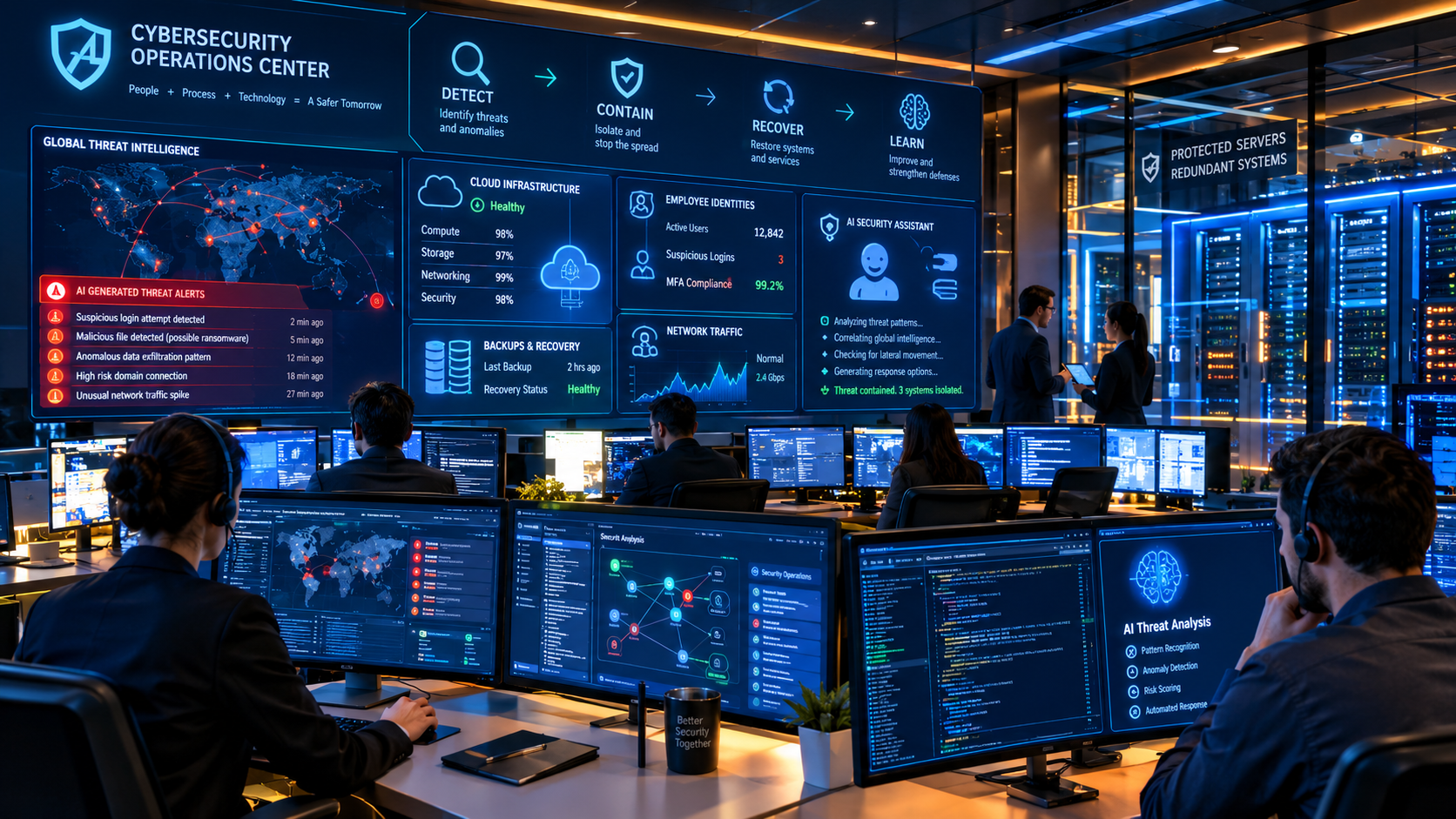
“If something goes wrong, we detect it quickly, contain it, recover from it, and learn from it.”
That is resilience.
🖼️— CYBER RESILIENCE
🔍 The Future Is Not About Avoiding Every Attack
That may sound strange.
But think about it.
Airplanes are not made safe by assuming nothing will ever go wrong.
Safety comes from preparation.
Redundant systems.
Training.
Inspections.
Emergency procedures.
Monitoring.
And learning from failures.
Cybersecurity should work the same way.
We should expect:
Attempts.
Mistakes.
Vulnerabilities.
Human error.
New technologies.
New attack methods.
New risks.
The goal is not perfection.
The goal is resilience.
🌐 Why Today's News May Still Matter Five Years From Now
This is the part I especially want to preserve.
The specific company involved in today's story may eventually become old news.
The exact AI model used may be replaced.
The vulnerability may be patched.
The researchers may move on to other projects.
But the central lesson will remain.
AI is becoming part of cybersecurity.
That means future security problems will increasingly involve both:
human intelligence
and
machine intelligence.
Attackers will use automation.
Defenders will use automation.
Security researchers will use AI.
Developers will use AI.
And ordinary users will use AI.
The important question will remain:
Who is checking the machine?
🌱 Build Skills, Not Just Dependence
This is another lesson worth carrying into the future.
AI can make people faster.
But skills make people independent.
Learn how passwords work.
Learn basic privacy settings.
Learn what phishing looks like.
Learn what multi-factor authentication means.
Learn how files and permissions work.
Learn enough programming to understand what your code is doing.
Learn how to verify information.
Learn when to trust AI.
And learn when not to trust it.
You don't need to become a cybersecurity engineer.
You simply need enough knowledge to remain in control.
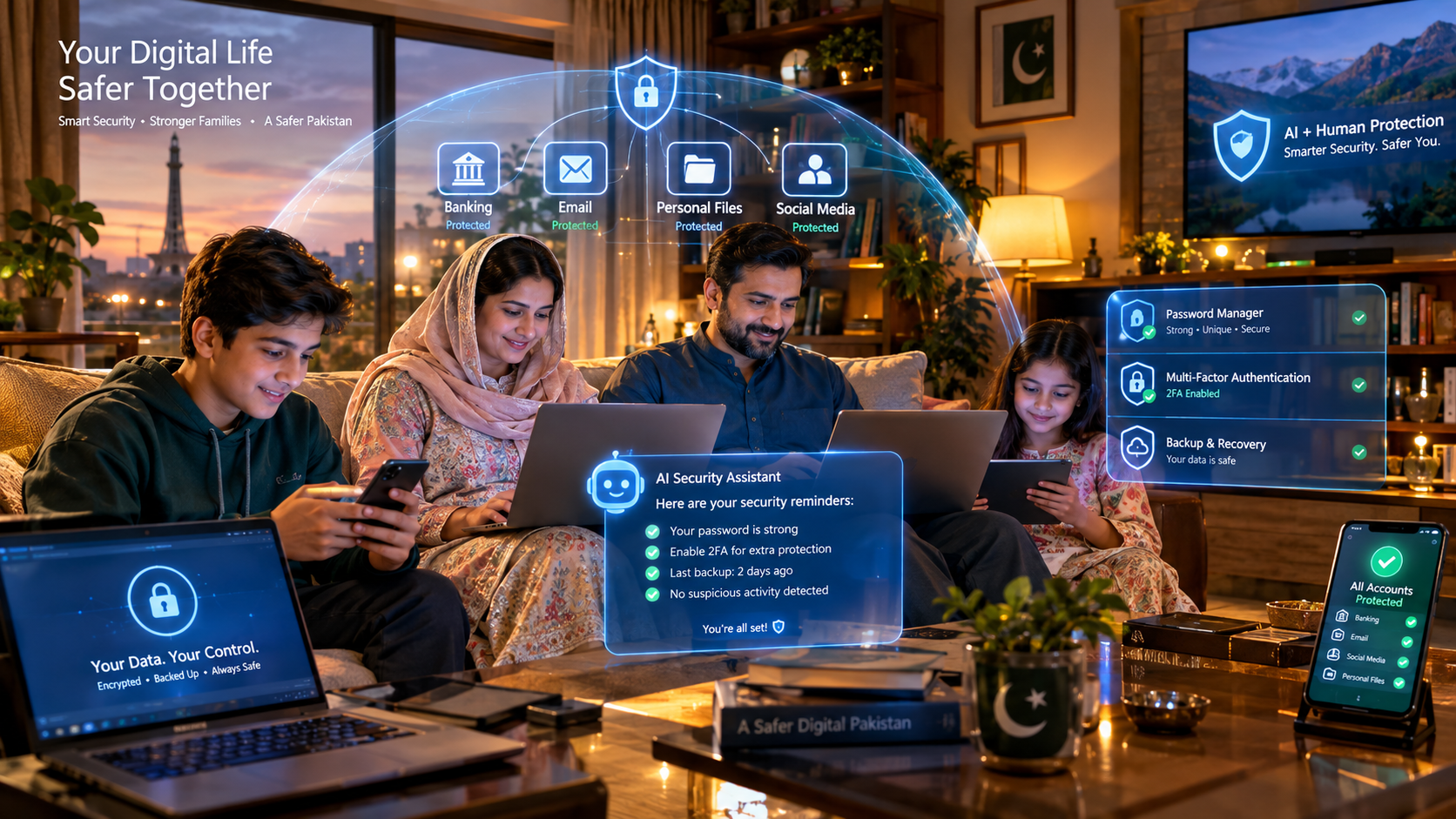
🛡️ A Simple Personal Security Checklist
Save this somewhere.
Unique passwords
Multi-factor authentication
Automatic software updates
Regular backups
Check account activity
Review app permissions
Avoid suspicious links
Never share security codes
Limit unnecessary access
Verify important AI-generated information
Keep a recovery method available
Have a plan for what to do if an account is compromised
None of these ideas are tied to September 18, 2026.
That's exactly why they matter.
🖼️— THE FUTURE OF PERSONAL CYBERSECURITY
🤔 NOW I WANT YOUR OPINION
Today's news raises some fascinating questions.
Question 1
Do you think AI will ultimately make the internet safer or more dangerous?
Question 2
Should ordinary people learn basic cybersecurity skills, or should technology companies make security so simple that users don't need to understand it?
Question 3
When AI writes code for you, do you think a beginner should still learn programming fundamentals?
Or is understanding the final result enough?
And here is the question I really want to discuss:
What is ONE cybersecurity habit you wish you had started years ago?
Maybe it is using a password manager.
Maybe two-factor authentication.
Maybe backups.
Maybe simply stopping yourself from clicking suspicious links.
Tell me your experience.
Because your answer could help someone else avoid a problem they haven't faced yet.
💬 THE BIGGER LESSON
Today's story may disappear from the headlines tomorrow.
That's normal.
Cybersecurity news moves incredibly quickly.
But the lesson doesn't have to disappear with it.
Every new AI model.
Every new breach.
Every new vulnerability.
Every new cyberattack.
Every new security tool.
should teach us something.
Not fear.
Preparation.
Not panic.
Awareness.
Not blind trust.
Verification.
And not dependence.
Skills.
🌍 FINAL THOUGHTS
Today we saw something that sounds almost strange:
AI helped researchers test the security of an AI company.
But perhaps it shouldn't surprise us.
Technology has always been dual-use.
A tool can build.
The same tool can break.
A computer can protect information.
The same computer can attack information.
AI simply makes that relationship faster and more powerful.
That is why the future of cybersecurity will not belong only to people who know the most complicated technical tricks.
It will also belong to people who understand basic principles:
Protect your identity.
Limit access.
Verify before trusting.
Keep backups.
Update your software.
Use AI carefully.
Keep humans in control.
Those lessons will still matter when today's AI models are replaced by something much more advanced.
And perhaps that is the real value of today's news.
The headline may expire.
The lesson doesn't have to.
🙏 THANK YOU FOR READING
Thank you so much for spending your valuable time with this article.
I appreciate every reader who doesn't just scroll past the headline, but stops to think about what it means for their own life.
You don't need to be a cybersecurity expert.
You don't need to understand every technical term.
You simply need to stay curious, careful and willing to learn.
❤️ Thank you for being part of the conversation.
Stay Informed | Think Clearly | Grow Continuously 🚀
El hecho de que Hacktron AI haya usado Claude y haya recibido una recompensa de $6,500 muestra que la barrera de entrada está bajando, esto es genial. No es lo mismo cuando la IA acelera el análisis de código; la diferencia se nota en la rapidez con que los equipos pueden parchear. 🔍
I agree. AI is lowering the barrier for security research, but the real value comes from how quickly teams can turn those findings into reliable patches. The combination of AI-assisted analysis and human expertise could make vulnerability discovery and response much faster. 🔍🤖