AI Chatbots in Education: Using T3AC to Boost Student Support
T3AC in Education automates routine student queries, such as admissions and timetable requests, allowing staff to focus on more critical tasks. This enhances efficiency, speeds up responses, and improves the student experience.
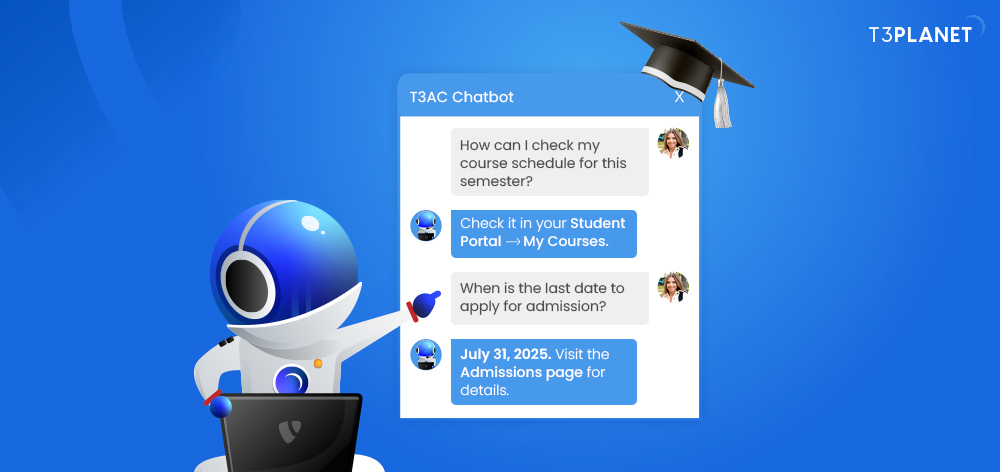
Why AI Chatbots Are a Must for Educational Institutions
Fast, Instant Responses
- Students today expect immediate answers to their queries about class schedules, deadlines, campus events, and more.
- AI chatbots provide instant, always-available responses, ensuring students never have to wait long for essential information.
Handling Routine Inquiries
- Many student questions are repetitive, like inquiries about office hours, registration processes, or room bookings.
- Chatbots are ideal for handling these repetitive tasks, freeing up staff to manage more personalized and complex student needs.
Supporting a Diverse Student Population
- AI chatbots can be configured to respond in multiple languages, which is particularly helpful for international students who may not be fluent in the institution's primary language.
- They are also designed to be accessible, making sure students with disabilities can interact easily with them.
Reducing Operational Costs
- Automating routine student interactions with chatbots reduces the need for additional support staff, which lowers costs.
- As the number of students grows, chatbots can handle more inquiries without requiring extra resources, making them a scalable solution.
How AI Chatbots Work
AI chatbots use advanced machine learning and natural language processing to understand and respond to student queries accurately. Here’s how they function:
Integration with Campus Systems
- Chatbots are integrated with existing campus platforms such as websites, student portals, or mobile apps, providing easy access for students.
- They pull information from the institution’s secure systems, ensuring responses are up-to-date and accurate.
Simple Setup and Continuous Maintenance
- Implementing a chatbot is straightforward and doesn’t require advanced technical expertise
- Institutions can train the chatbot using available resources such as student handbooks, academic calendars, and FAQs to ensure it delivers reliable information
Real-Time AI Responses
- AI-powered chatbots provide real-time answers based on the most current data from campus systems.
- The chatbot continuously improves by learning from interactions, offering more accurate and efficient responses over time.
Key Features of AI Chatbots
- 24/7 Availability: Chatbots are available at all times, so students can access help whenever they need it.
- Multilingual Support: Chatbots can be programmed to speak different languages, helping international students navigate campus services.
- Customizable Interface: Chatbots can be personalized to match the institution’s branding, ensuring a consistent user experience.
- Automatic Updates: Chatbots automatically update their knowledge base with the latest campus information, reducing the risk of outdated responses.
- Analytics and Insights: Chatbots track student interactions, providing institutions with valuable data on common queries and potential areas for service improvement.
How Chatbots Benefit Students, Staff, and Institutions
Students
- Chatbots offer fast, accurate answers to common student questions, reducing wait times and frustration.
- They provide support in multiple languages, ensuring accessibility for international students.
- Chatbots simplify the process of accessing essential campus information and services, enhancing the overall student experience.
Staff
- Chatbots handle routine inquiries, allowing staff to focus on more complex and personalized support for students.
- Staff experience reduced pressure from repetitive questions, making it easier to provide focused assistance.
Institutions
- Chatbots improve operational efficiency by automating routine tasks, saving both time and money.
- They ensure students always receive accurate, consistent information, improving the quality of campus services.
- With the ability to scale, chatbots allow institutions to manage increasing student inquiries without adding extra staff.
How to Implement a Chatbot at Your Institution
For successful chatbot integration, universities should:
- Identify Common Student Questions: Analyze frequently asked questions and train the chatbot to handle them accurately.
- Design an Easy-to-Use Interface: Make the chatbot intuitive and user-friendly to ensure smooth interaction for students.
- Keep Information Up to Date: Regularly refresh the chatbot’s knowledge base with current schedules, policies, and campus events.
- Monitor Chatbot Performance: Use analytics to track usage, monitor efficiency, and adjust the chatbot’s responses as needed.
- Train Staff: Ensure staff are equipped to manage and update the chatbot, keeping it relevant and effective.
Real-World Impact
A university that adopted an AI chatbot saw a significant decrease in response times, with students able to get answers to routine questions instantly. Staff were able to focus on more meaningful tasks, and the chatbot’s ability to scale helped manage increasing student inquiries without adding new staff members.
Conclusion
AI chatbots are revolutionizing student support by offering instant, 24/7 assistance and reducing staff workload. They also provide multilingual support, making help accessible to all students. By integrating AI chatbots, institutions improve efficiency, lower costs, and enhance the overall student experience.