How the Programmable DC Power Supply Enables Automated Testing Systems?
As electronic devices become more complex, manufacturers and research laboratories face growing pressure to improve testing accuracy, speed, and repeatability. Manual testing methods that once worked for small-scale projects are no longer efficient for modern production environments. This is where the programmable DC power supply becomes a critical component in automated testing systems.
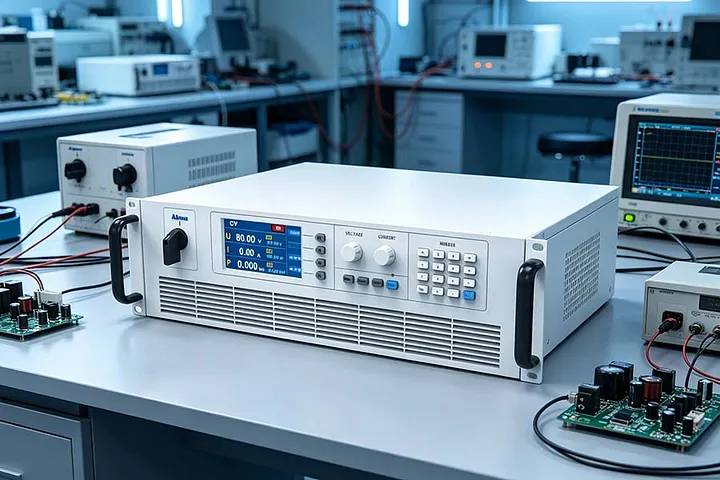
A programmable DC power supply is more than just a source of electrical power. It is an intelligent instrument capable of precise voltage and current control, remote communication, automated sequencing, and real-time monitoring. These capabilities enable engineers to integrate power supplies directly into automated test equipment (ATE), thereby reducing human intervention while enhancing testing consistency and efficiency.
The Role of Automated Testing Systems
Automated testing systems are designed to perform repetitive electrical and functional tests without manual operation. They are widely used in industries such as:
- Consumer electronics
- Automotive electronics
- Aerospace and defense
- Semiconductor manufacturing
- Telecommunications
- Renewable energy
- Battery and EV testing
In these environments, thousands of products must be tested daily. Manual operation would be slow, inconsistent, and expensive. Automated systems solve this challenge by combining software, sensors, instruments, and programmable equipment into a fully coordinated process.
The programmable DC power supply acts as the energy source within this ecosystem, delivering stable and adjustable power while communicating with the testing software.
Precise Voltage and Current Control
One of the biggest advantages of programmable DC power supplies is precision control. Automated testing often requires exact voltage and current values to simulate real-world operating conditions. For example, a testing sequence may require:
- 5V during startup testing
- 12V during normal operation
- 24V during stress testing
- Controlled current limits during fault simulation
A programmable power supply can switch between these settings automatically within milliseconds. This eliminates the need for technicians to manually adjust knobs or replace hardware during each testing stage.
High precision also ensures repeatable test results. Every device under test (DUT) receives the same electrical conditions, which improves quality assurance and reduces product variation.
Remote Programming and Communication
Modern programmable DC power supplies support remote communication protocols such as:
- USB
- RS232
- RS485
- LAN
- GPIB
- Modbus
These interfaces allow the power supply to communicate directly with computers, PLCs, and automated testing software.
Engineers can create scripts or software programs that fully control the power supply remotely. Commands can automatically:
- Set voltage and current
- Turn outputs on or off
- Trigger protection functions
- Measure output parameters
- Record test data
- Execute predefined testing sequences
This level of automation significantly reduces labor costs and increases operational efficiency.
For example, in a production line for communication devices, the automated testing software can power each unit, run performance diagnostics, collect measurement data, and move to the next device without any human interaction.
Fast Dynamic Response for Realistic Testing
Many modern electronic products experience rapid changes in power demand during operation. Smartphones, automotive electronics, and industrial control systems often generate sudden load changes that can expose weaknesses in power stability.
Programmable DC power supplies are designed with fast dynamic response capabilities. They can quickly adjust output voltage and current when load conditions change.This feature is especially important for:
- Transient response testing
- Battery simulation
- Power fluctuation analysis
- Startup and shutdown testing
- Overload and protection testing
Automated systems can use these capabilities to simulate real operating environments more accurately. Engineers can identify potential failures before products reach the market.
Integration with Automated Test Equipment (ATE)
Automated Test Equipment systems rely on multiple instruments working together in synchronization. A programmable DC power supply can easily integrate into ATE environments alongside:
- Digital multimeters
- Oscilloscopes
- Electronic loads
- Signal generators
- Data acquisition systems
- Thermal chambers
Using centralized software, engineers can coordinate all instruments simultaneously. For example, an automated test script may:
- Apply a specific voltage from the power supply
- Measure current consumption
- Capture waveform data from an oscilloscope
- Simulate varying loads
- Store test results in a database
- Generate a pass/fail report
This synchronized workflow dramatically improves testing speed and accuracy compared to manual methods.
Improved Production Efficiency
In manufacturing environments, speed is critical. Even small improvements in testing efficiency can result in significant cost savings.Programmable DC power supplies help manufacturers:
- Reduce manual intervention
- Minimize operator errors
- Increase throughput
- Shorten testing cycles
- Enable 24/7 automated operation
Because settings can be stored and recalled instantly, production lines can switch between different product models quickly without extensive reconfiguration.
For contract manufacturers producing multiple electronic products, this flexibility is extremely valuable.
Data Logging and Traceability
Modern quality control standards require detailed test records and traceability. Programmable DC power supplies can provide real-time monitoring and data logging during automated testing. Parameters commonly recorded include:
- Output voltage
- Output current
- Power consumption
- Protection events
- Timing sequences
- Test duration
This data can be integrated into manufacturing execution systems (MES) or cloud-based monitoring platforms.
If a product later fails in the field, engineers can review historical testing data to identify possible causes. This improves troubleshooting and long-term reliability analysis.
Enhanced Safety and Protection
Automated systems must operate safely, especially when testing high-power or sensitive electronics. Programmable DC power supplies include built-in protection features such as:
- Over-voltage protection (OVP)
- Over-current protection (OCP)
- Over-temperature protection (OTP)
- Short-circuit protection
These safety mechanisms help protect both the device under test and the testing equipment itself.
In automated environments, protection functions can also trigger alarms, stop test sequences, or notify operators automatically when abnormal conditions occur.
Applications in Emerging Technologies
As industries evolve, programmable DC power supplies are becoming even more important in advanced testing applications.
Electric Vehicle Testing
EV systems require complex battery simulation and high-power testing. Programmable power supplies can simulate battery packs, charging conditions, and regenerative systems during automated testing.
Renewable Energy Systems
Solar inverters, energy storage systems, and smart grid devices require dynamic testing under varying voltage and current conditions. Automated programmable power systems help validate performance and efficiency.
Semiconductor Validation
Semiconductor devices require highly precise low-noise power during testing. Programmable power supplies provide stable output for wafer testing, IC validation, and reliability analysis.
IoT and Smart Devices
Connected devices often operate under multiple power states. Automated testing ensures proper performance during sleep modes, wireless transmission, and peak power conditions.
The Future of Automated Testing
As Industry 4.0 and smart manufacturing continue to expand, automated testing systems will become increasingly intelligent and interconnected. Future programmable DC power supplies are expected to include:
- AI-assisted diagnostics
- Cloud connectivity
- Predictive maintenance
- Advanced waveform simulation
- Energy recovery systems
- Higher power density designs
These advancements will further improve automation efficiency while reducing operational costs and energy consumption.
Conclusion
Programmable DC power supplies have become essential tools in modern automated testing systems. Their ability to provide precise control, remote programmability, fast dynamic response, and seamless integration makes them ideal for advanced manufacturing and research environments.
By enabling faster, safer, and more reliable testing processes, programmable DC power supplies help companies improve product quality, reduce costs, and accelerate innovation. As electronic technologies continue to evolve, the importance of intelligent programmable power solutions will only continue to grow.