Why Renewable Energy Companies Need AC Grid Simulators for Inverter Testing?
The global transition toward renewable energy is accelerating rapidly. Solar farms, wind power plants, battery storage systems, and microgrids are being deployed across the world to reduce carbon emissions and improve energy sustainability. At the heart of these renewable energy systems lies a critical component: the power inverter.
Inverters convert the direct current (DC) electricity generated by renewable energy sources such as solar panels and batteries into alternating current (AC) electricity that can be used by the grid and electrical devices. However, integrating renewable energy into modern power grids introduces a wide range of technical challenges. Renewable energy systems must operate safely, reliably, and efficiently under many different grid conditions.
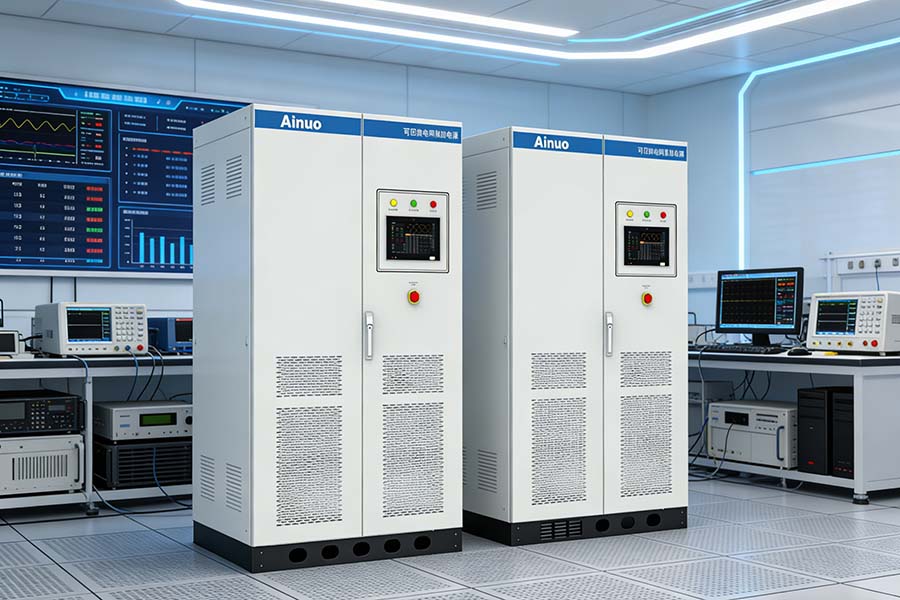
This is where AC grid simulators become essential tools. AC grid simulators enable renewable energy companies to test inverters under controlled and realistic grid conditions before deploying them in the field. These advanced testing systems replicate the behavior of real electrical grids, allowing engineers to validate performance, ensure compliance with international standards, and improve system reliability.
In this article, we will explore why renewable energy companies rely on AC grid simulators for inverter testing and how these tools support the development of modern power systems.
Understanding the Role of Inverters in Renewable Energy Systems
Renewable energy systems typically generate electricity in DC form. For example:
- Solar photovoltaic (PV) panels generate DC power from sunlight.
- Battery energy storage systems store energy in DC form.
- Fuel cells also produce DC electricity.
However, the electrical grid operates using AC power. To deliver electricity to homes, businesses, and utilities, renewable energy systems must convert their DC output into grid-compatible AC power.
This conversion is performed by grid-connected inverters, which serve several important functions:
- Converting DC electricity to AC electricity
- Synchronizing with grid voltage and frequency
- Controlling power quality
- Protecting the grid during disturbances
Modern inverters are highly sophisticated power electronics devices that must interact intelligently with the grid. Their behavior directly affects the stability and reliability of the entire power system.
The Challenges of Integrating Renewable Energy Into the Grid
Traditional power grids were designed for centralized power generation from large power plants such as coal, gas, or nuclear facilities. Renewable energy sources, however, are often distributed and intermittent.
This introduces several new challenges for grid operators and equipment manufacturers.
Intermittent Power Generation
Solar and wind energy depend on environmental conditions. Cloud cover, wind fluctuations, and seasonal variations can cause rapid changes in power output.
Inverters must respond dynamically to these variations while maintaining stable grid operation.
Grid Stability Concerns
High penetration of renewable energy can affect grid stability by influencing:
- Frequency regulation
- Voltage control
- Power quality
Inverters must be capable of supporting the grid during these fluctuations.
Grid Code Compliance
Governments and utilities enforce strict grid codes to ensure that renewable energy systems behave properly when connected to the grid. These codes define how inverters should react during events such as:
- Voltage dips
- Frequency deviations
- Grid faults
- Harmonic disturbances
Testing these behaviors is essential before equipment can be deployed commercially.
What Is an AC Grid Simulator?
An AC grid simulator is a programmable power source designed to emulate the behavior of an electrical grid in a laboratory environment.
Unlike a traditional AC power supply, a grid simulator can reproduce complex grid conditions and disturbances that occur in real power networks. Typical capabilities of AC grid simulators include:
- Programmable voltage and frequency
- Single-phase and three-phase output
- Harmonic injection
- Phase imbalance simulation
- Voltage sag and surge testing
- Frequency fluctuation simulation
- Bidirectional power flow
By reproducing these conditions in a controlled environment, engineers can evaluate how renewable energy inverters interact with the grid.
Why Renewable Energy Companies Use AC Grid Simulators
1. Ensuring Compliance With International Grid Standards
Renewable energy systems must comply with numerous international and regional grid standards before they can be connected to the utility grid. Examples of widely used standards include:
- IEEE 1547
- UL 1741
- EN 50530
- VDE-AR-N 4105
- IEC 62116
These standards define how inverters should behave during grid disturbances.AC grid simulators allow engineers to reproduce these standardized test conditions. By running automated compliance tests, manufacturers can verify that their inverters meet regulatory requirements before certification.
Without grid simulation, verifying compliance would require testing on a live grid, which would be impractical and potentially unsafe.
2. Simulating Grid Disturbances
Power grids are not perfectly stable systems. They constantly experience disturbances caused by changes in load demand, generation fluctuations, and faults. Common grid disturbances include:
- Voltage sags
- Voltage swells
- Frequency deviations
- Harmonic distortion
- Phase imbalance
- Grid outages
Inverters must respond appropriately to these events to avoid destabilizing the grid.AC grid simulators allow engineers to intentionally create these disturbances in a controlled environment. This enables thorough validation of inverter behavior under extreme conditions.
For example, engineers can simulate a sudden voltage drop to verify whether an inverter continues operating or disconnects according to grid code requirements.
3. Testing Low Voltage Ride-Through (LVRT) and High Voltage Ride-Through (HVRT)
One of the most critical requirements for grid-connected renewable energy systems is ride-through capability.
Ride-through refers to the ability of an inverter to remain connected to the grid during temporary voltage disturbances. There are two key types:
Low Voltage Ride-Through (LVRT)
The inverter must continue operating when the grid voltage temporarily drops.
High Voltage Ride-Through (HVRT)
The inverter must tolerate temporary overvoltage events.
Grid simulators enable engineers to precisely replicate these conditions and verify that inverters respond correctly.
This testing is essential because sudden disconnection of renewable generation during grid disturbances could worsen power outages.
4. Improving Inverter Control Algorithms
Modern renewable energy inverters use sophisticated control algorithms to regulate power flow and maintain grid stability.
These algorithms control functions such as:
- Active and reactive power output
- Frequency response
- Voltage support
- Power factor control
AC grid simulators allow engineers to test and optimize these algorithms under different grid scenarios.By adjusting parameters such as voltage and frequency dynamically, engineers can observe how the inverter responds and fine-tune its control behavior.
This process helps improve the performance and stability of renewable energy systems.
5. Supporting Research and Development
AC grid simulators are essential tools in the research and development phase of renewable energy technologies.
During R&D, engineers often need to experiment with new inverter designs, control strategies, and grid integration methods.
Grid simulators provide a flexible testing environment where engineers can quickly replicate a wide range of scenarios.
This enables faster development cycles and allows companies to bring innovative renewable energy technologies to market more quickly.
6. Enabling Hardware-in-the-Loop Testing
Many advanced testing laboratories now use Power Hardware-in-the-Loop (PHIL) testing methods.
In PHIL systems, real hardware devices interact with simulated grid models in real time. This allows engineers to study how inverters behave within complex power networks.AC grid simulators play a crucial role in PHIL setups by providing the physical power interface between simulation software and real hardware.
This approach allows highly realistic testing without requiring large-scale field deployments.
7. Testing Energy Storage and Hybrid Systems
Renewable energy installations increasingly include battery energy storage systems (BESS) to stabilize power output and improve grid reliability.
Inverters used in these systems must manage multiple energy sources simultaneously, including solar panels, batteries, and the grid.
Grid simulators allow engineers to test these hybrid systems by replicating grid conditions while interacting with battery simulators and solar array simulators.
This enables comprehensive validation of complex renewable energy architectures.
Benefits of AC Grid Simulators for Renewable Energy Companies
Using AC grid simulators offers several important advantages for renewable energy manufacturers and developers.
Improved Product Reliability
By testing equipment under a wide range of simulated grid conditions, companies can identify potential issues before products reach the market.
This improves reliability and reduces the risk of field failures.
Faster Certification and Compliance
Grid simulators streamline compliance testing by reproducing the exact conditions required by regulatory standards.
This accelerates the certification process and reduces development delays.
Reduced Testing Costs
Testing directly on utility grids can be expensive and difficult to control.
Grid simulators eliminate the need for large field testing setups and allow repeatable testing within laboratory environments.
Safer Testing Environment
Simulating grid faults in a laboratory is far safer than intentionally causing disturbances on a live electrical grid.
Grid simulators enable engineers to assess extreme scenarios without risking damage to infrastructure.
The Future of Grid Simulation in Renewable Energy
As renewable energy penetration continues to increase, grid simulation technologies will become even more important.
Future trends in inverter testing include:
- Advanced grid-forming inverter testing
- Integration with smart grid communication systems
- Large-scale microgrid simulation
- AI-driven testing and optimization
AC grid simulators will continue to evolve to support these emerging technologies and help ensure that renewable energy systems remain stable, efficient, and reliable.
Conclusion
Renewable energy is transforming the global power landscape, but integrating solar, wind, and energy storage systems into existing electrical grids requires careful engineering and rigorous testing.
Power inverters play a central role in this process by converting renewable energy into grid-compatible electricity and supporting grid stability. Ensuring that these devices operate reliably under all grid conditions is essential for maintaining a secure and resilient energy infrastructure.
AC grid simulators provide the controlled testing environment needed to validate inverter performance, simulate grid disturbances, and verify compliance with international standards. By enabling precise and repeatable testing, these systems help renewable energy companies develop more reliable technologies, accelerate innovation, and safely integrate clean energy into modern power grids.
As renewable energy adoption continues to expand worldwide, AC grid simulators will remain indispensable tools for engineers working to build the next generation of sustainable power systems.