Antarctica: The Frozen Continent at the End of the World
A geographical map of Antarctica, showing the South Pole and surrounding oceans.
Introduction
Antarctica is the southernmost continent on Earth, containing the geographic South Pole. It is situated almost entirely south of the Antarctic Circle and is surrounded by the Southern Ocean.
With an area of 14,200,000 square kilometers, it is the fifth-largest continent. Unlike any other landmass, 98% of Antarctica is covered by ice, averaging at least 1.6 kilometers (1 mile) in thickness. It is the coldest, driest, and windiest continent, having the highest average elevation of all the continents.
Geography & Climate
The Ice Sheet
The Antarctic ice sheet is the largest single mass of ice on Earth. It contains 60% of the world's fresh water. If all of this ice were to melt, global sea levels would rise by approximately 60 meters (200 feet).
Massive icebergs floating in the Southern Ocean, broken off from the ice shelf.
Extreme Climate
Coldest Place on Earth: The lowest natural temperature ever directly recorded at ground level was −89.2°C (−128.6°F) at the Soviet Vostok Station.
Windiest Continent: Katabatic winds can reach speeds of over 320 km/h (200 mph).
Desert: Despite the ice, Antarctica is technically a desert because it receives very little precipitation (snow or rain) annually.
Seasons
Summer (November to February): Temperatures rise slightly, and the sun does not set (Midnight Sun).
Winter (March to October): Temperatures plummet, and the sun does not rise (Polar Night).
Wildlife of Antarctica
Despite the harsh conditions, Antarctica supports a variety of unique wildlife adapted to the cold.
Penguins
Antarctica is famous for its penguin colonies. Species include:
Emperor Penguins: The largest species, breeding during the winter.
Adélie Penguins: Known for their distinctive white rings around their eyes.
Chinstrap and Gentoo Penguins: Common along the Antarctic Peninsula.
Emperor Penguin chicks huddled together for warmth in the colony.
Marine Life
Seals: Weddell seals, Crabeater seals, and Leopard seals inhabit the ice edges.
Whales: Humpback, Blue, and Orca (Killer) whales migrate to Antarctic waters during summer to feed on krill.
Krill: Tiny shrimp-like creatures that form the base of the Antarctic food web.
Human Presence & Research
Antarctica has no permanent human residents. However, it is home to numerous scientific research stations.
Research Stations
Approximately 70 research stations operate on the continent.
Countries including the USA, Russia, China, UK, France, and Australia maintain facilities.
Amundsen-Scott South Pole Station: Located exactly at the geographic South Pole.
The Amundsen-Scott South Pole Station, a hub for scientific research at the pole.
Scientific Focus
Researchers study:
Climate Change: Ice core samples reveal Earth's climate history.
Astronomy: The clear, dry air makes it ideal for observing space.
Biology: Studying extremophiles (organisms that survive in extreme conditions).
The Antarctic Treaty
Antarctica is governed by an international agreement known as The Antarctic Treaty, signed in 1959.
Key Provisions
Peaceful Use: The continent is dedicated to peace and science; military activity is prohibited.
Nuclear Ban: Nuclear explosions and disposal of radioactive waste are forbidden.
Territorial Claims: Existing territorial claims are frozen; no new claims can be made.
Environmental Protection: Strict rules protect wildlife and prevent pollution.
Tourism in Antarctica
Tourism has grown significantly since the 1990s, though it remains regulated to protect the environment.
Visitor Numbers: Approximately 50,000 to 80,000 tourists visit per season.
Activities: Zodiac boat cruises, wildlife watching, kayaking, and polar plunges.
Restrictions: Tourists cannot bring non-native species (like seeds or soil) and must maintain distance from wildlife.
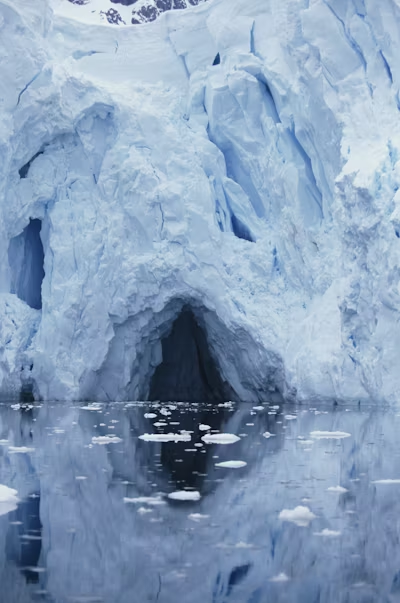
The pristine ice shelves and mountains attract adventurers and scientists alike.
Natural Phenomena
Aurora Australis
Also known as the Southern Lights, this natural light display is visible during the winter months. It is caused by charged particles from the sun colliding with Earth's atmosphere.
The Aurora Australis dancing over the icy landscape of Antarctica.
Blood Falls
A unique feature in the Taylor Glacier where iron-rich saltwater flows out, oxidizing upon contact with air to create a bright red waterfall.
Conservation Challenges
Antarctica faces several modern threats:
Climate Change: Warming temperatures are causing ice shelves to collapse (e.g., Larsen B Ice Shelf).
Overfishing: Krill fishing impacts the food chain for whales and penguins.
Invasive Species: Tourists and ships may accidentally introduce non-native plants or insects.
Mining Ban: Currently prohibited under the Madrid Protocol, but subject to review in the future.
Conclusion
Antarctica remains one of the last true wildernesses on Earth. It is a place of extreme beauty, scientific importance, and international cooperation.
As a global commons, it belongs to no single nation but is vital for understanding our planet's climate and history. Protecting this frozen continent ensures that its unique ecosystems and natural wonders remain preserved for future generations.
Sources:
Wikipedia: Antarctica
British Antarctic Survey
The Antarctic Treaty Secretariat
NASA Earth Observatory