The Future of Artificial Intelligence: Opportunities and Challenges
Introduction
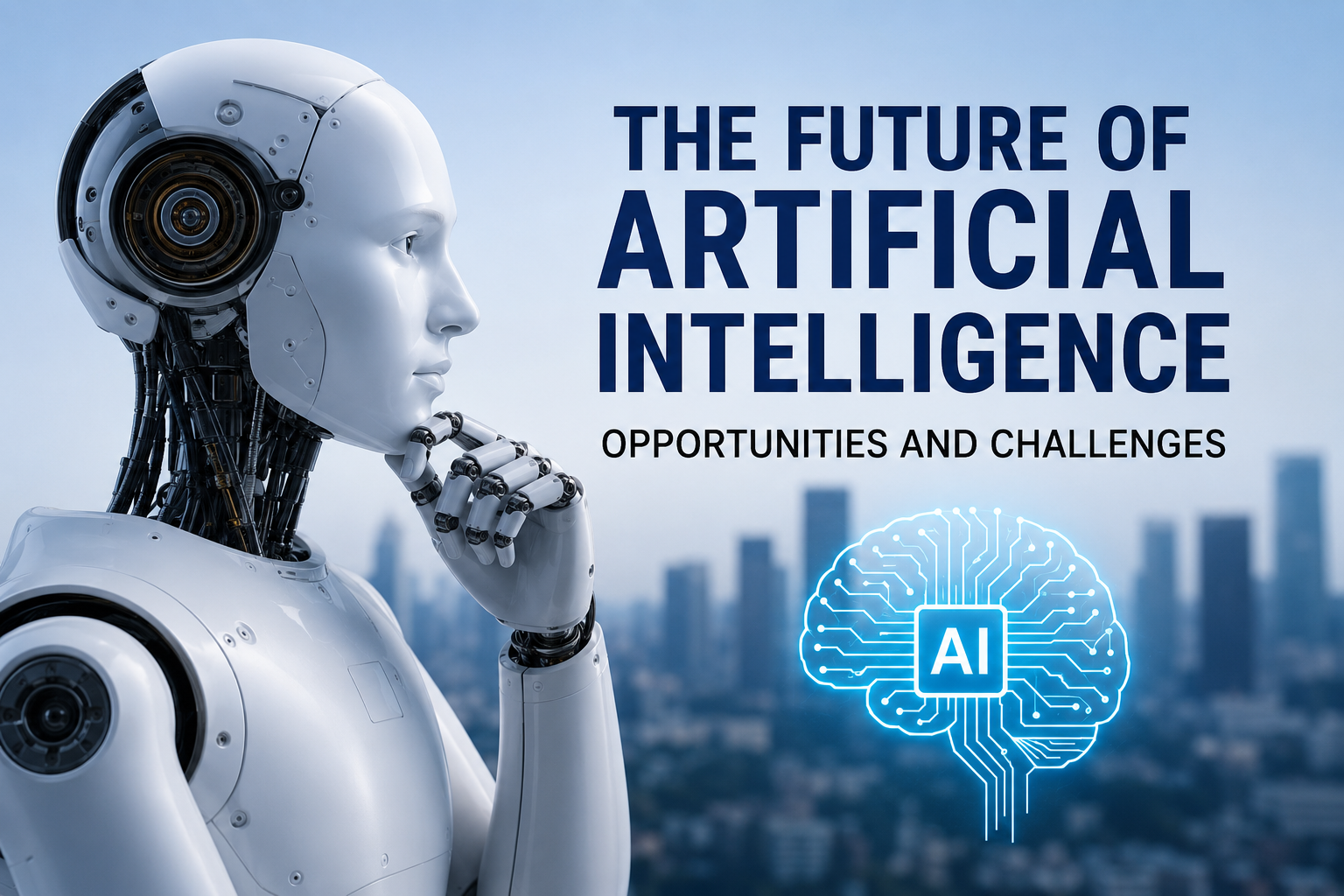
Artificial Intelligence (AI) is no longer a futuristic dream—it has become part of our everyday lives. From smartphones and voice assistants to online shopping, healthcare, and transportation, AI is changing the way we live and work. It helps businesses make better decisions, improves productivity, and creates new opportunities across almost every industry.
At the same time, AI brings important challenges. Questions about privacy, employment, ethics, and security have become more significant as AI systems become more powerful. Understanding both the benefits and the risks is essential for building a future where technology serves humanity.
What Is Artificial Intelligence?
Artificial Intelligence refers to computer systems that can perform tasks requiring human intelligence. These tasks include learning from data, recognizing images, understanding language, solving problems, and making decisions.
Popular examples of AI include:
Voice assistants like Siri and Google Assistant
Recommendation systems on Netflix and YouTube
Chatbots for customer support
Self-driving vehicle technology
AI-powered medical diagnosis
AI continues to evolve rapidly, becoming smarter and more useful every year.
The Growth of AI Around the World
Governments, universities, and technology companies are investing billions of dollars in AI research. Businesses use AI to automate repetitive tasks, improve customer service, and analyze large amounts of information within seconds.
Countries around the world are competing to become leaders in AI innovation because they recognize its importance for future economic growth.
Opportunities of Artificial Intelligence
- Better Healthcare
AI helps doctors detect diseases earlier, analyze medical images, and recommend treatments. This leads to faster diagnosis and improved patient care.
- Improved Education
AI-powered learning platforms provide personalized lessons based on each student's strengths and weaknesses, making education more accessible.
- Higher Productivity
Businesses use AI to automate repetitive work, allowing employees to focus on creative and strategic tasks.
- Economic Growth
AI creates new industries, new careers, and opportunities for entrepreneurs while increasing business efficiency.
- Scientific Research
Researchers use AI to study climate change, discover medicines, and analyze complex scientific data faster than ever before.
- Smarter Transportation
AI improves traffic management, navigation, and vehicle safety while supporting the future of autonomous transportation.
Challenges of Artificial Intelligence
- Job Displacement
Automation may replace certain jobs, requiring workers to learn new skills and adapt to changing industries.
- Privacy Concerns
AI systems often process large amounts of personal information, making data protection and privacy essential.
- Ethical Issues
AI decisions can sometimes reflect bias if they are trained on unfair or incomplete data.
- Cybersecurity Risks
As AI becomes more advanced, cybercriminals may also use it for sophisticated attacks, requiring stronger security systems.
- Overdependence on Technology
Relying too heavily on AI may reduce critical thinking and problem-solving skills in some situations.
How AI Is Changing Daily Life
Today, AI is already part of our daily routines:
Online shopping recommendations
Face recognition on smartphones
Language translation
Smart home devices
Banking fraud detection
Navigation apps
Online customer support
Many people use AI every day without even realizing it.
The Future of Artificial Intelligence
Experts believe AI will continue transforming industries such as healthcare, agriculture, finance, education, manufacturing, and space exploration.
Future AI systems may help solve global challenges including climate change, food security, disease prevention, and disaster prediction. However, responsible development, transparency, and ethical regulations will be essential.
Governments, businesses, researchers, and citizens must work together to ensure AI benefits everyone.
Conclusion
Artificial Intelligence is one of the most influential technologies of the 21st century. It offers remarkable opportunities to improve healthcare, education, business, and everyday life while also presenting serious ethical and social challenges.
The future of AI depends not only on technological innovation but also on responsible human decisions. By developing AI ethically and using it wisely, society can create a future where humans and intelligent machines work together to improve life for everyone.
Thank you for reading! If you enjoyed this article, please leave an upvote, comment, and share it with others on Steemit