A tiny chip that behaves like a real brain cell — the future starts here
#Artificial Neuron Stuns Scientists by Imitating Real Brain Cells
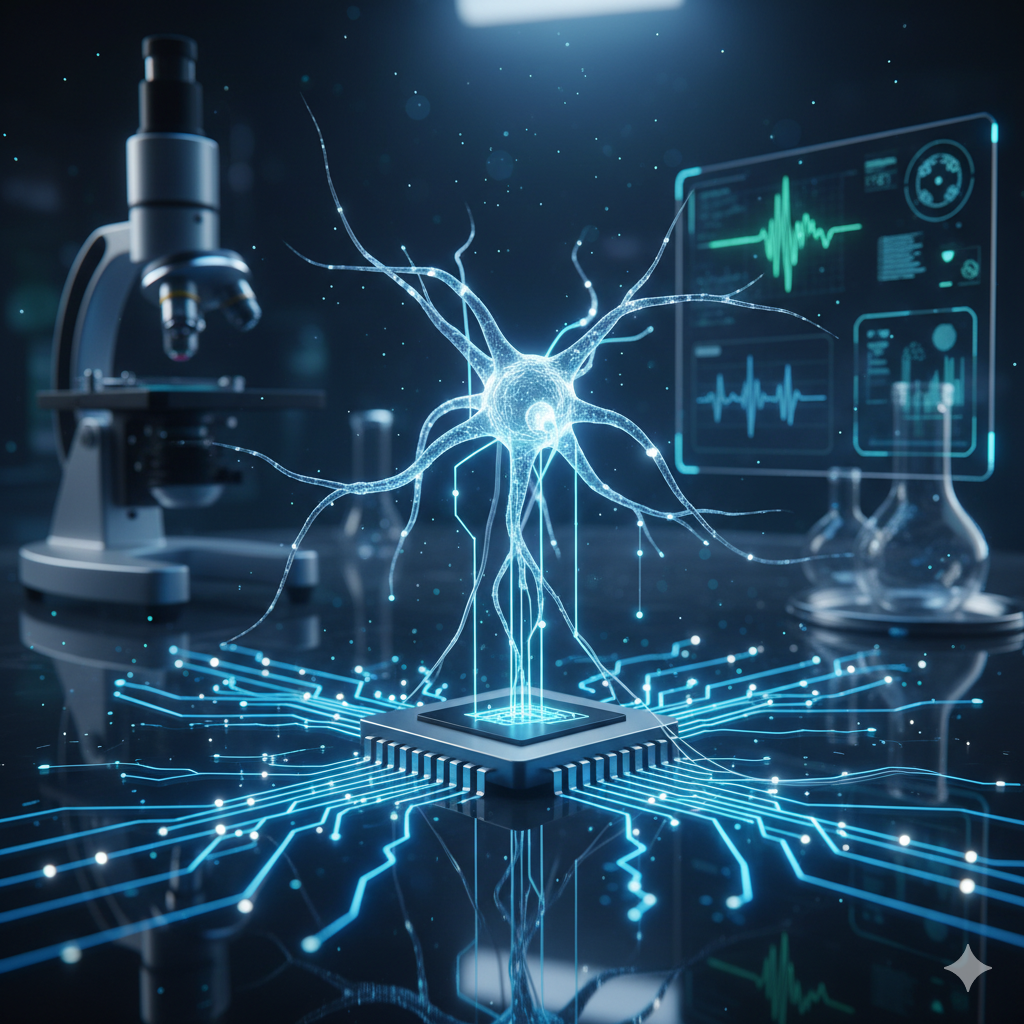
Scientists have built an artificial neuron capable of copying real brain-cell behavior across multiple regions with up to 100% accuracy. This discovery opens the door to compact, brain-like chips for advanced robotics, sensing, and AI applications.
A global research team has unveiled a tiny device that behaves uncannily like a real brain cell—and sometimes better than AI networks that use dozens of units.
In lab tests, scientists fed electrical signals into their “transneuron,” then matched its responses against recordings from macaque brain regions tied to vision, movement, and planning. With a few electrical tweaks, this single artificial neuron copied all three—with up to 100% accuracy.
“This is big,” said Professor Sergey Saveliev of Loughborough University. “One artificial neuron can be tuned to act like multiple types of real neurons. That means future devices could process visual scenes or control movement using just a handful of these units.”
Unlike traditional silicon chips that simply imitate patterns, the transneuron actually computes like a biological cell. Change the input, and it changes its firing rate. Feed it two signals at once, and it reacts differently depending on their timing—something that normally requires a small AI network.
The breakthrough hints at compact, brain-inspired hardware that could push robotics, prosthetics, and real-time sensing far beyond today’s limits.