Space Satellites: 1975 to 1990
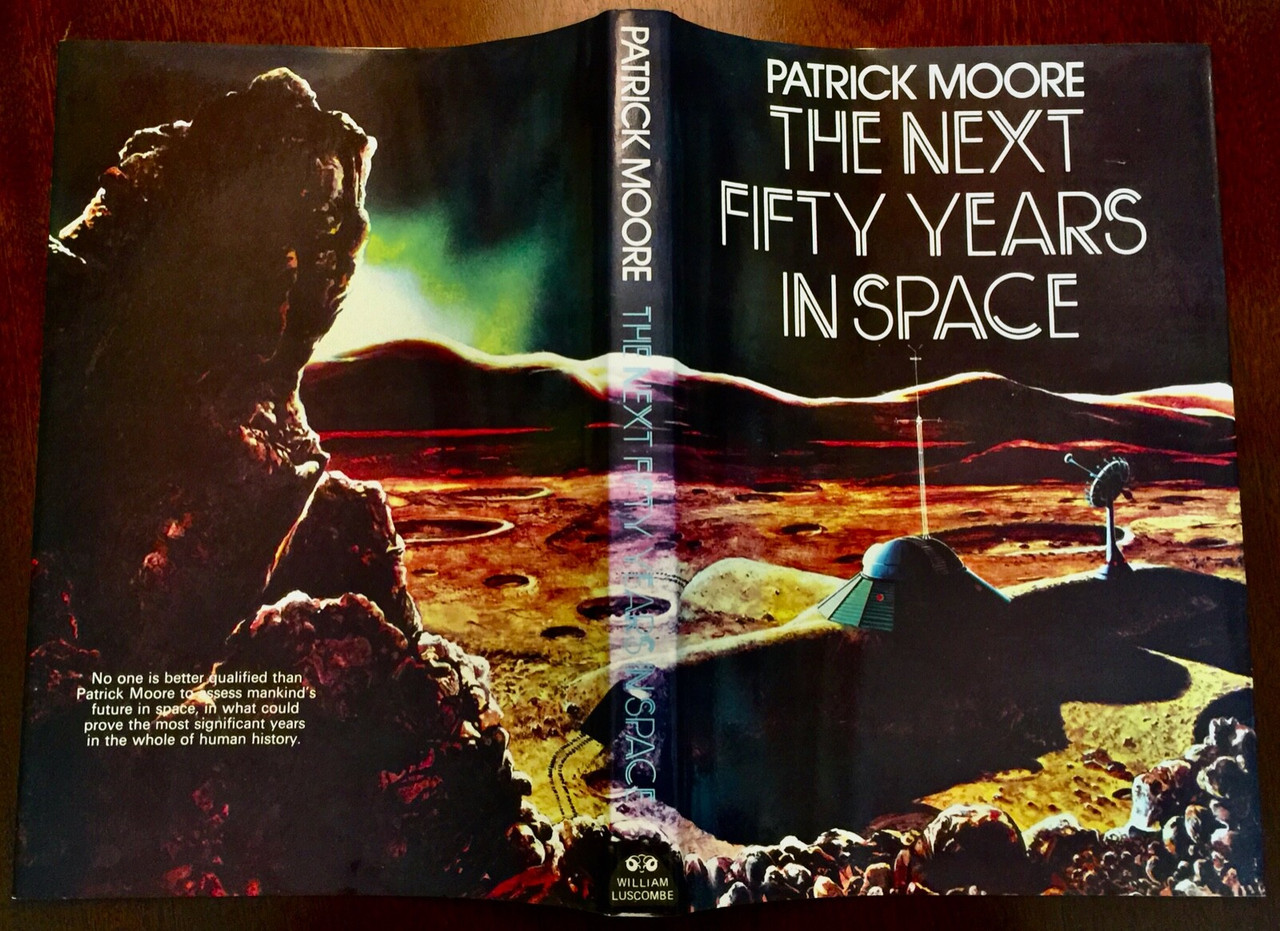
In the second chapter of The Next Fifty Years in Space Patrick Moore finally gets down to the serious business of predicting the future. Space Satellites: 1975 to 1990 looks forward to the development and deployment of artificial satellites over the next fifteen years. This period of time began less than twenty years since the launch of Sputnik 1, but already hundreds of satellites had followed the Soviet pioneer into orbit. Most of these had been launched by the Soviet Union and the United States, but they had also been joined by a few other nations: Japan, China, Italy, France, and Britain:
It is sad to have to put Britain at the tail-end of the list, but we are still suffering from the after-effects of the restrictions imposed by the Explosives Act of 1875, which so effectively stopped the rocket pioneers here from carrying out practical experiments in the vital early period when von Braun and his colleagues were hard at work, first at their Rocket Flying Field near Berlin and then at Peenemünde. ―Moore 23
The speed of progress, the astoundingly low fatality rate in manned missions, and the great boon to the progress of science and technology all point to a rapid continuation, but Moore advises a little caution:
Alas, there are several “buts” which have to be taken into account not only with regard to satellites, but also affecting the whole of the rest of the space programme. The worst of these is the danger of a nuclear war which would cause a fantastic amount of damage, and which might even bring civilization to an unpleasant and permanent end ... The second consideration is finance. Space research is not cheap, and by everyday standards the amount of money involved is colossal ... Thirdly, we must remember that we are entering a new environment, and there is always the danger that something will go disastrously wrong. ―Moore 23 ... 24 ... 29
Moore declines to debate the political question here, as the ramifications are too great. As for the financial question, he is a pragmatist:
There have always been lobbyists who call for an end to the whole programme, so that the money saved can be diverted to “feed the starving millions”, etc. On the face of it the demand looks reasonable: but is it? First, nobody but an idealist living in an ivory tower would expect the money saved to be put to good use, and it would almost certainly be used to buy more armament of the conventional type. Secondly, the amounts involved are very small when compared with a national budget ... During 1970 the British people spent seventy-five times as much money on alcohol as the Government did upon space projects. ―Moore 24
As for the dangers posed by such things as radiation, meteoritic bombardment, and zero gravity, Moore takes confidence from the fact that these have had little impact on the speed of progress over the first eighteen years of the Space Race, and he does not propose to take the possibility of a catastrophic setback into account when he makes his predictions in The Next Fifty Years in Space:
But it would be foolish to be over-confident, and we do not yet have all the answers. ―Moore 29
Military Applications of Satellites
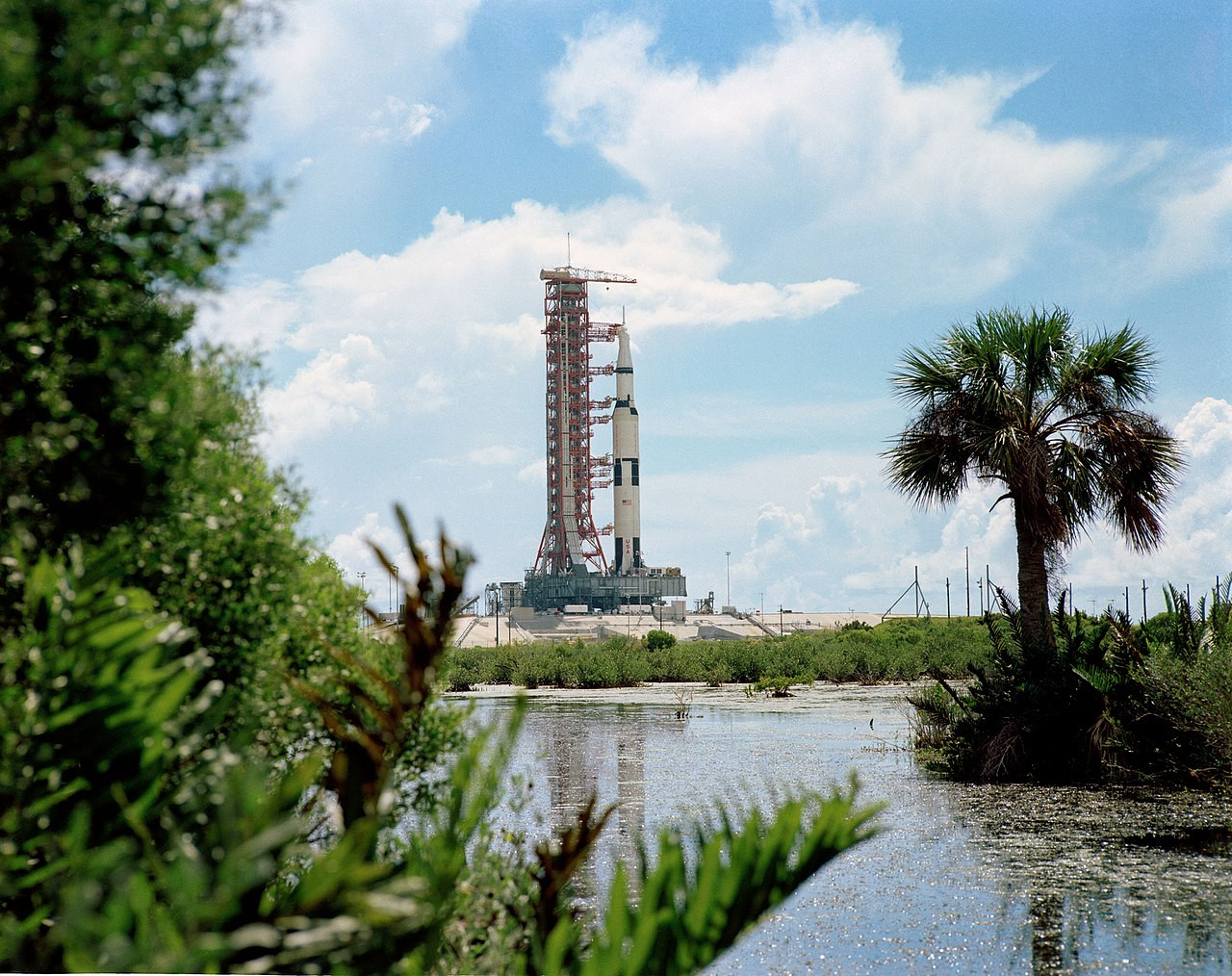
Moore is quick to dispatch to the realm of science-fiction any fanciful notions the reader may have of future wars being fought in space, but he is well aware that there are many practical uses to which the military can put the humble satellite:
But reconnaissance is another matter, and here an orbiting satellite is vastly superior to any aircraft, because it can fly unrestricted over any part of the world. There is no doubt that American satellites have provided detailed information about Russian airfields, launching sites and installations of all kinds―or that the Kremlin has obtained similar information about the United States. It has been estimated, probably with truth, that over 70 per cent. of Russian and over 50 per cent. of American satellites are purely “military”, using the term in a broad sense. This is a most depressing state of affairs. ―Moore 29–30
Moore briefly discusses another military use of satellites, one which I had never heard of before: FOBS, or Fractional Orbital Bombardment System, a warhead delivery system that uses a low Earth orbit to reach the target. The advantage of such a system is that attack can come from any direction, whereas ICBMs launched in the Soviet Union against the United States would come from the north―and vice versa. Both sides decommissioned and dismantled their FOBS programs in the 1980s because they could not compete with SLBM’s (submarine-launched ballistic missiles). Moore closes this brief discussion with a hope that has actually been fulfilled―well, sort of:
I fear that the FOBS will remain in the minds of military strategists for some time yet―in fact, until the final end of the senseless Cold War and the beginning of a real understanding between the nations. When this will be, only time can show; but with any luck at all it should be before 2025. ―Moore 30
Officially, the Cold War came to an end when the Soviet Union was formally dissolved on 26 December 1991, but it certainly did not lead to any real rapprochement between East and West. Today political commentators use the term Second Cold War to refer to the current state of affairs. I think Patrick would be very disappointed with the way things have turned out.
Earth Resources Satellites
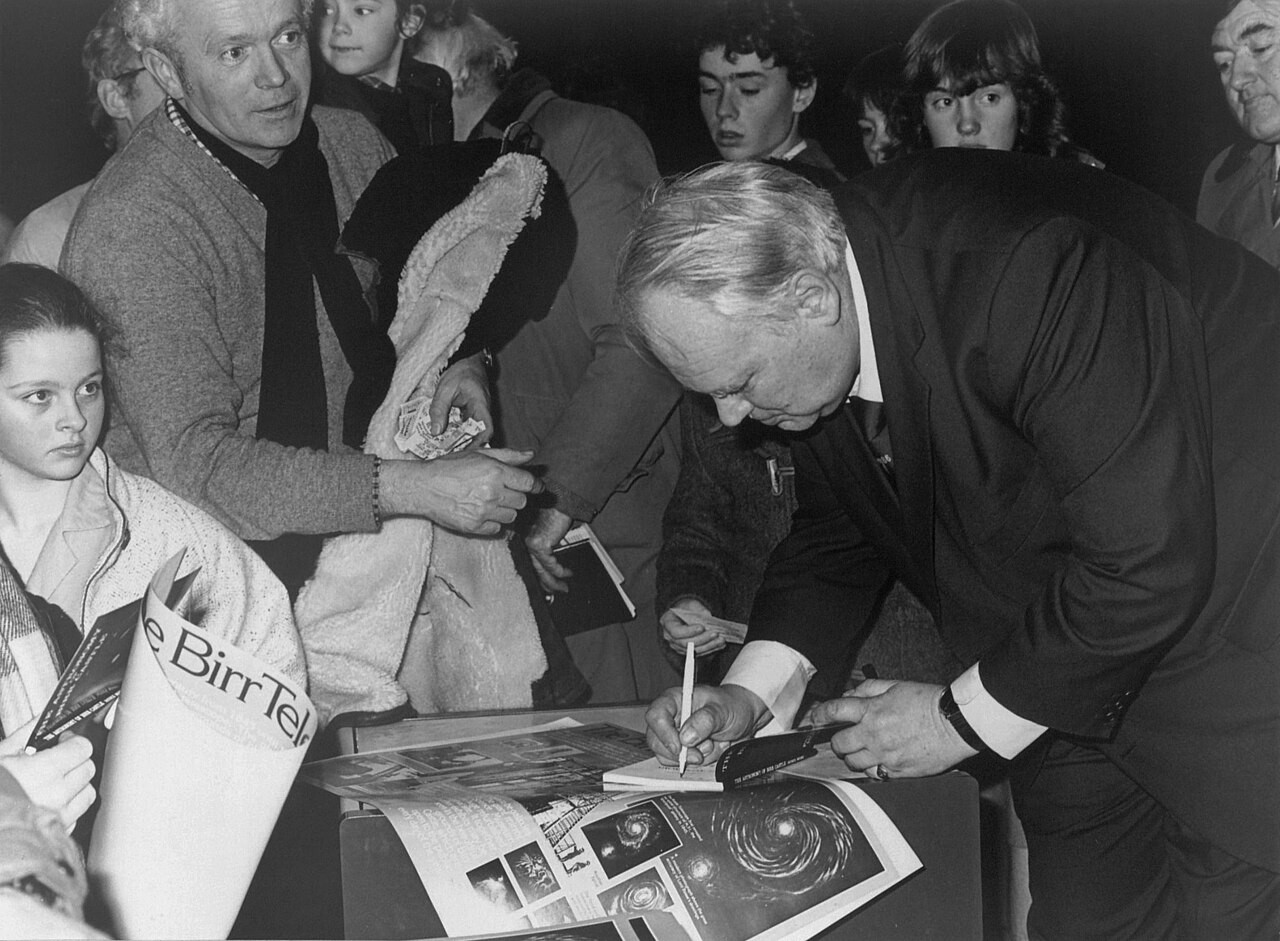
The use of satellites to gather intelligence about our planet’s natural resources rather than to surveil one’s enemies was a relatively recent innovation when Moore wrote The Next Fifty Years in Space. The first ERTS, or Earth Resources Technology Satellite, was Landsat 1, which was launched from Vandenberg Air Force Base in California in 1972. Landsat 2 through 9 were launched at irregular intervals over the following fifty years. The last two are still active today:
Between now [1975] and 1990 there will be many other Earth Resources satellites. A few dozen of them should by then be orbiting the world, and the coverage will be both continuous and complete. ―Moore 30
If Google’s AI Overview is to be trusted, this prediction was not too far off the mark:
In 1990, the number of active dedicated Earth resource (remote sensing) satellites in orbit was relatively small, numbering fewer than 10–15 operational, major platforms. Key active satellites included Landsat 4 and 5 (USA), SPOT 1 and 2 (France), IRS-1A (India), and various Soviet Resurs-F/Cosmos land-observation satellites. Source: MDPI ―Google AI Overview
Another of Moore’s predictions that have been borne out by time concerns the use of satellites to discover new reserves of material resources:
The amount of oil available is not limitless. If Mankind continues to use it up at the present fantastic rate, then sooner or later (perhaps sooner rather than later) the supply will run out completely; and I would be the last to advocate that we should locate all possible oil-fields, by using satellites, and then work them out. But if there are major undiscovered oilfields, we need to know where they are. We will then be in a better position to decide how much we dare take from them. ―Moore 31
And Google’s response to my query:
Yes, oil reserves and, more commonly, promising geological indicators of oil, have been identified using satellite technology. Satellites use techniques like mapping gravitational forces, detecting surface oil seeps via radar, and analyzing vegetation changes to pinpoint potential deposits. Source: Hayadan ―Google AI Overview
Perhaps one of the easiest predictions to make concerned the use of satellite coverage for meteorological purposes―easy because this prediction had already been fulfilled by 1975. Moore thought that such a venture would begin as a sort of hurricane watch:
I envisage a full-scale “hurricane patrol” by satellite which will be internationally organized, and which will keep watch for twenty-four hours a day. The cost of such a patrol would be more than offset by the advantages of it, and if it is not in action before 1990 I will be very surprised. This leads on, in turn, to a network of meteorological satellites which will give constant information about the state of the Earth’s atmosphere, and will undoubtedly help to improve the currently uncertain science of weather forecasting. There is nothing revolutionary in this; the first meteorological satellites went up in the 1960s, and the main need now is for more of them, carrying the latest types of instrumentation. ―Moore 31
According to Wikipedia, the first meteorological satellite was actually Vanguard 2, which was launched in February 1959, but it was largely unsuccessful. The first successful weather satellite, TIROS-1, was launched in April 1960 with the express aim of monitoring hurricanes. This was followed by nine more TIROS satellites and seven Nimbus Satellites. Moore’s prediction of a “hurricane patrol” was fulfilled by TIROS-9, which was launched in January 1965―so once again Moore was predicting the past:
The TIROS-9 satellite, launched in 1965, gave the first complete daily coverage of the entire sun-illuminated portion of the Earth. ―A History of Environmental Satellite Systems
Communications Satellites
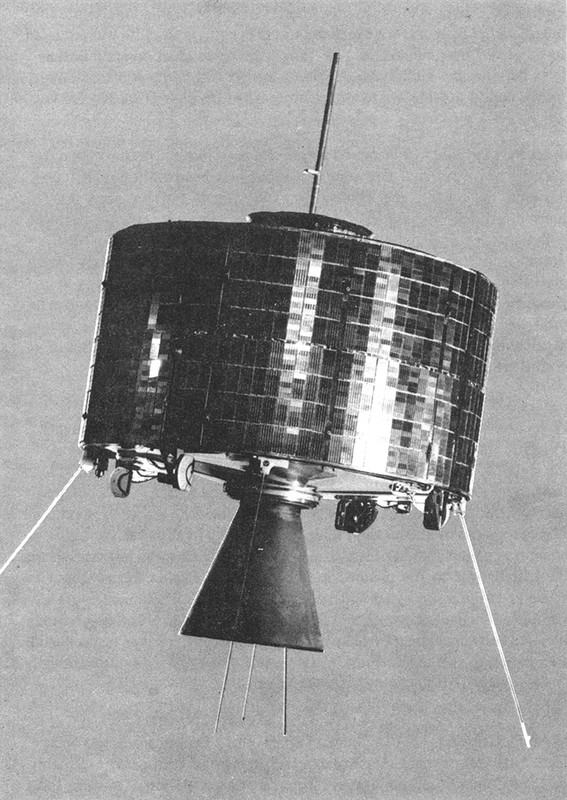
Satellites in Earth orbit can also be used to facilitate global communications, a venture which Moore hopes will be marked by the spirit of international cooperation. Another English prophet had anticipated him in this field:
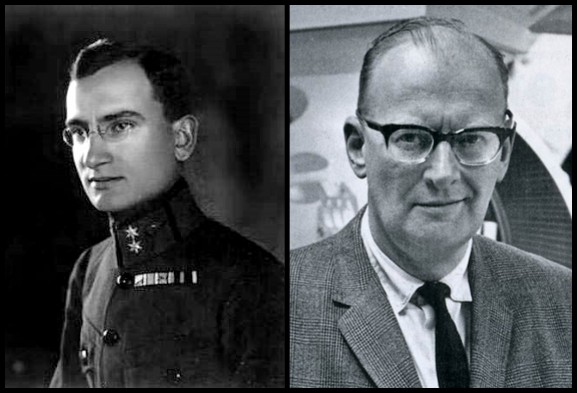
... today we have satellites in “stationary” orbits, keeping pace with the Earth as it spins. This, incidentally, was originally a British concept, as it was first put forward by Arthur Clarke in a famous paper published in Wireless World in 1945. ―Moore 34
Arthur C Clarke’s geostationary orbits had actually been first proposed in 1929 by the Slovenian engineer Herman Potočnik. Potočnik also came up with the idea of the Wohnrad, a space station shaped like a giant rotating wheel, which Stanley Kubrick and Clarke used in 2001: A Space Odyssey.
For the first time in this book Moore goes a little overboard with his predictions:
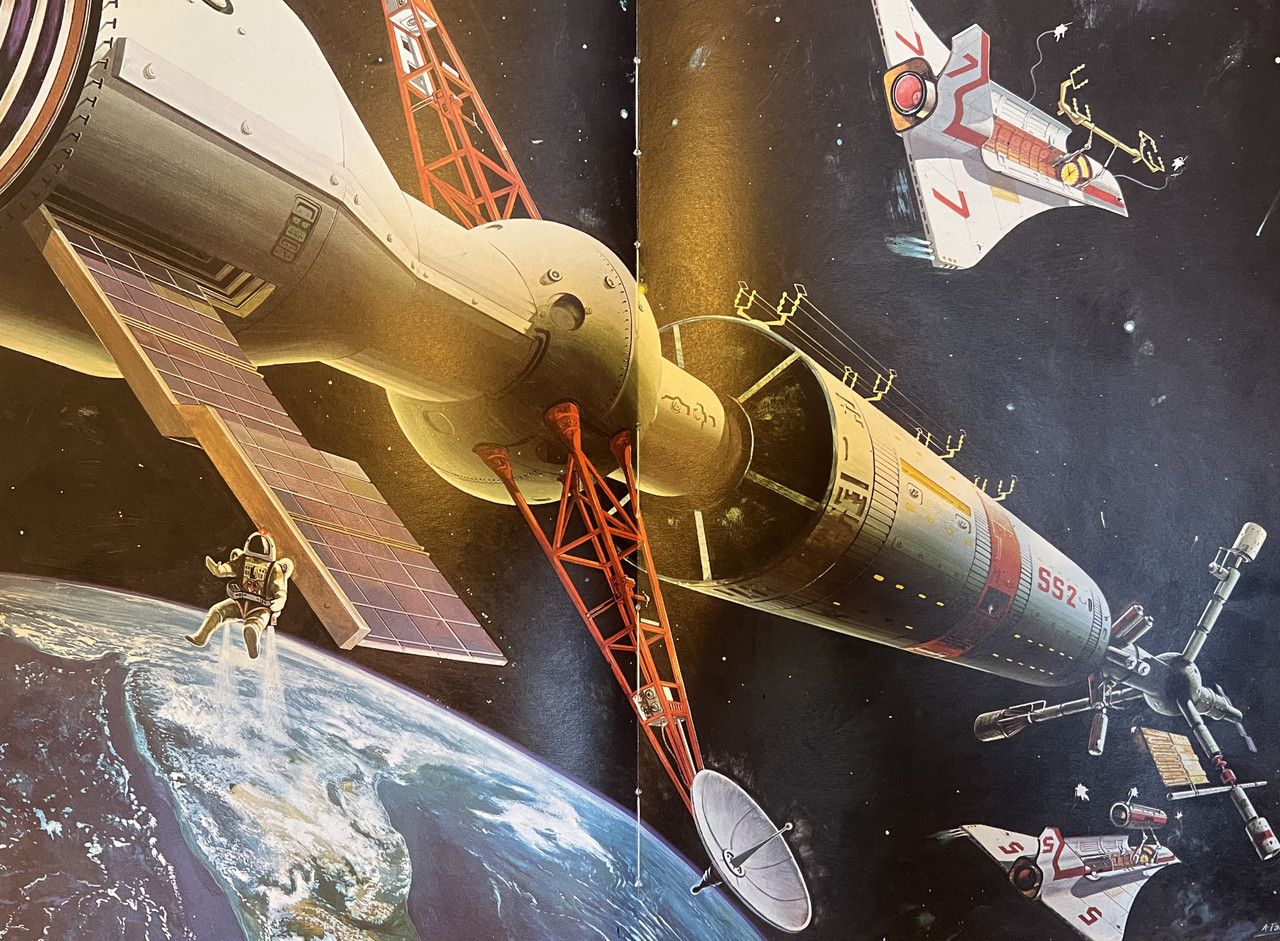
Because communications satellites are bound to become more and more important as time goes on, I suggest that they will be built on a really elaborate and massive scale, and that they will be periodically serviced by human crews who will make regular visits to them. At the moment this is not practicable, and if a satellite goes wrong there is nothing to be done about it; but by 1990 the space-shuttle principle, about which I will have more to say in Chapter 3, should have been developed to a point where going out to service a satellite will be no more difficult than going by aeroplane from London to Cape Town. ―Moore 34
The space-shuttle has come and gone, but this prediction still seems far-fetched. Nevertheless, Moore’s overall assessment of the situation was sound:
In view of all this there should be a whole fleet of communications satellites in orbit within the next twenty years, and if they can be maintained at reasonable cost the price charged for using them ought to come down. Much depends upon political developments, but at any rate the communications satellite has come to stay. ―Moore 34–35
Satellites and Science
Moore could hardly go wrong when it came to foreseeing the scientific uses to which satellites may be put:
Of special interest to astronomers are the OAO vehicles, or Orbiting Astronomical Observatories. Once above the atmosphere, their instruments can be used to study all the radiations coming from space, and not only those which can filter down through the air toward the ground. For instance, there are stars which send out vast amounts of energy in the form of X-rays, and these can be studied only from “‘up above’’. There have already been many satellites designed to make special investigations of the so-called cosmic rays (actually, high-speed particles) which come from deep space, and whose origin is still very much of a mystery. Before 1990 there should have been really striking advances in the astronomy of regions beyond the Solar System. ―Moore 35
The OAO Satellites were four space observatories launched by NASA between 1966 and 1972. They are not well known today, but they have been followed into space by some of the best-known satellites we have ever launched: the Hubble Space Telescope, the Chandra X-Ray Observator, the Spitzer Space Telescope, the Compton Gamma Ray Observatory, the Kepler Space Telescope, SOHO, Euclid, and most recently the James Webb Space Telescope.
To Sum Up
To sum up: by 1990 the number of satellites should have been increased very considerably. Many of the vehicles will be in permanent orbits, and will be regularly serviced. Others will be sent up for specific tasks, and will be brought down again when their programmes have been completed! We may hope that the really useful satellites will be under international control, if only because all humanity can benefit from these man-made moons. ―Moore 35–36
All things considered, this prediction held up well. According to Space Stats, there were more than 1,800 orbital launches between 1975 and 1990. Moore’s hopes for closer international cooperation, however, were not fulfilled. Of the 1,800 launches, only 37 were carried out by the European Space Agency, which was created in 1975 and had initially ten member states. By 1990 ESA had thirteen members. The remaining launches were all conducted by individual nation states: USSR or Russia, USA, France, Japan, Italy, China, UK, India, Israel, Brazil, North Korea, Iran, South Korea, Australia, and Germany.
And that’s a good a place to stop before the next stage of our journey.
References
- Patrick Moore, The Next Fifty Years in Space, With Drawings by Andrew Farmer, William Luscombe Publisher Limited, The Mitchell Beazley Group, Artists House, London (1976)
Image Credits
- The Next Fifty Years in Space: William Luscombe publisher Limited, Andrew Farmer (illustrator), foyled-again (photographer), Fair Use
- Patrick Moore Signing Copies of The Astronomy of Birr Castle: © The Glucksman Library, University of Limerick, University of Limerick Digital Library, Fair Use
- Apollo 17 on Its Launching Pad: NASA, Kennedy Space Center, Public Domain
- Syncom 2: NASA, Space Science Data Coordinated Archive, Public Domain
- Herman Potočnik: Anonymous Photograph, Public Domain
- Arthur C Clarke: James Vaughan (photographer), ITU Pictures, Creative Commons License
- Space Station and Shuttles: Andrew Farmer (artist), The Next Fifty Years in Space, Pages 26–27, Fair Use
Useful Resources