Oil & Lubricant Filling Machine Buying Guide
Viscosity is what trips people up when shopping for oil filling equipment. A machine built for water-thin liquids will underperform on lubricants, greases, and heavier oils, full stop. Here's what actually matters, based on two decades building filling and packaging machinery out of Sharjah.
Anyone comparing oil lubricant machine manufactures in UAE should start with the mechanism inside the machine, not the spec sheet marketing.
Why Oil Filling Needs Its Own Equipment
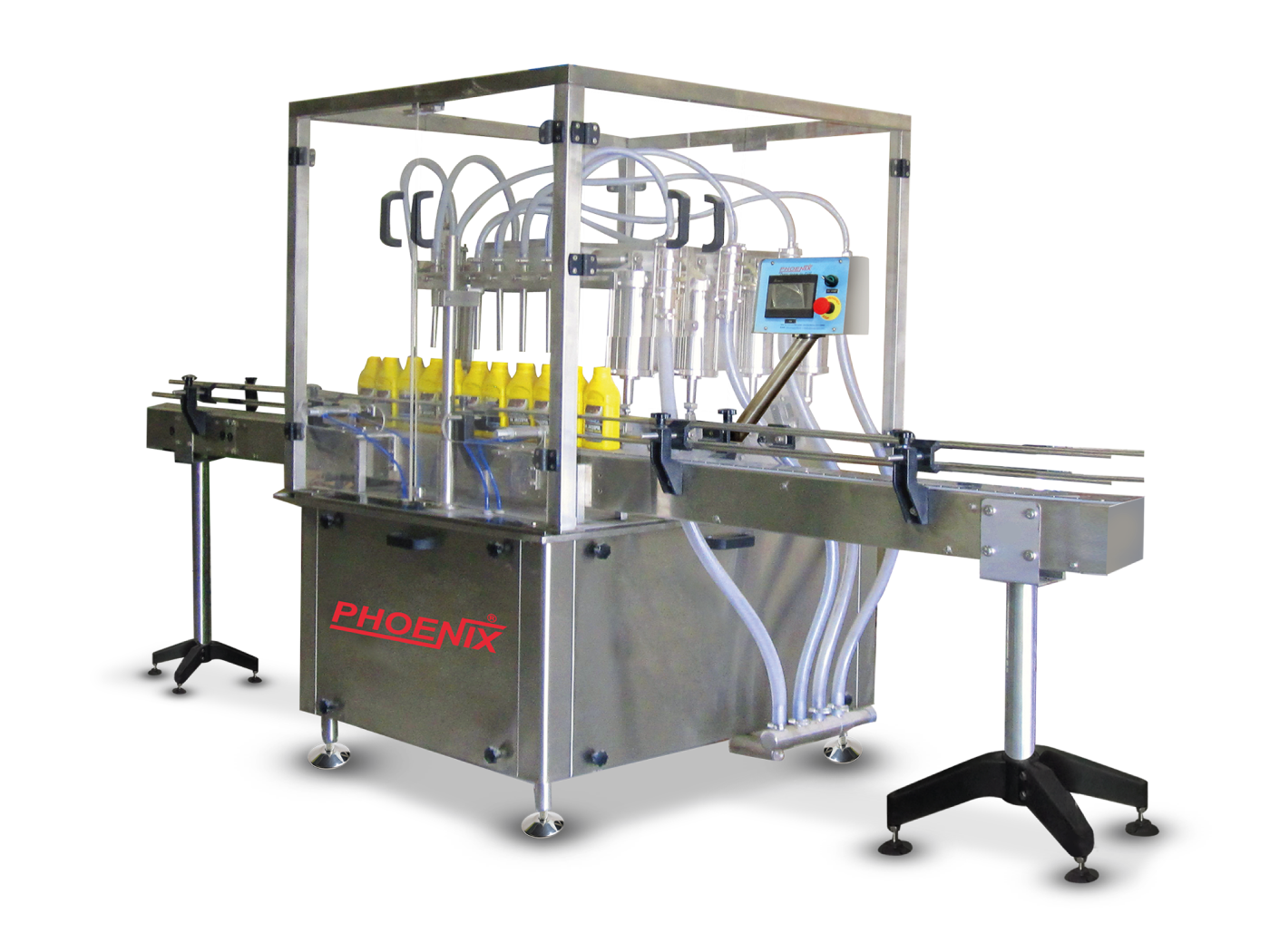
Most liquid fillers are calibrated around something close to water. Oils and lubricants don't play by that rule — some engine oils run thin, but greases and heavy gear oils are genuinely viscous, and a machine dialed in for one will over- or under-fill the other. That's why our oil and lubricant range runs on servo-driven filling heads. Servo control holds an accurate dose across a wider viscosity range than gravity or pneumatic systems can manage.
Picking Your Head Count
Basically a throughput dial:
1.4-head servo pail filling machine — pails and buckets, lower unit count per cycle, built for bulk lubricants and industrial oils in larger formats.
2.8-head servo filling machine — the middle ground for standard bottle formats.
3.12-head servo filling machine — our highest-throughput standard option.
**Automatic piston filling machine **— a different mechanism, piston displacement rather than servo flow. Better when you need precise, repeatable dosing on viscous liquids and aren't chasing maximum speed.
More heads means more units per cycle, but also a bigger machine and a bigger invoice. Size the line to what you're actually producing.
Container Format Matters Just as Much
Bottles — motor oil and smaller lubricant containers, usually paired with our automatic or semi-automatic linear capping machines right after filling.
**Pails and buckets **— bulk lubricants and greases, which is why the 4-head configuration exists as its own category.
A bottle-format machine can't just be retrofitted for pails. The container handling is built around the format from day one.
We Also Build for Olive Oil
Same underlying problem, different product. An olive oil filling machine has its own viscosity range and its own contamination concerns — olive oil oxidizes and picks up off-flavors faster than industrial lubricants do, so fill speed and headspace control end up mattering more than they would filling a bucket of grease. Tell us up front if you're filling olive oil. Don't assume an industrial oil line will just work for it.
After the Filling Head
Filling is rarely the last step:
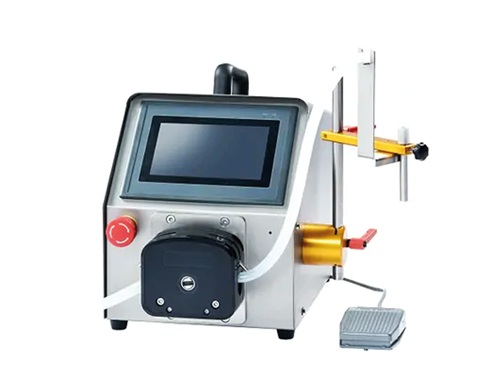
Capping — automatic or semi-automatic linear cappers seal the container right after filling, before spillage or contamination becomes an issue. If you're looking at a capping machine in Dubai, match it to your filling automation level rather than buying whatever's cheapest — a manual capper paired with an automatic filler just moves the bottleneck downstream.
Induction sealing, when it's warranted — our Sigma II (water-cooled) and Sigma III (air-cooled) units add a foil seal under the cap. For anything going through distributors or crossing borders, this matters more than people expect, usually right around the first damaged shipment. Some operations also ask us about a vacuum sealer for this stage, though it's worth noting vacuum sealing and induction sealing solve different problems — vacuum sealing removes air and extends shelf life, induction sealing gives you the tamper-evident foil barrier. Which one you need depends on the product, not just the container.
Building a Line From Scratch? Start Here
Filling head first — the non-negotiable core.
Match your capping automation to your filling automation, or a manual capper just becomes the new bottleneck.
Add induction sealing when export or distributor requirements call for it, not as a default.
Facilities running several oil or lubricant products through shared lines also tend to need CIP cleaning between batches, and this is one of those things people don't ask about until it's already a problem — if you're shopping among lubricant processing machine and CIP system manufacturers, raise it during initial spec conversations, not after installation.
Frequently Asked Questions
Servo vs. piston filling for oils — what's the real difference?
Servo uses motor-controlled flow to dose precisely across a range of viscosities and scales well across multiple heads. Piston filling uses mechanical displacement for a fixed dose per cycle, usually the better pick for very viscous products or where dosing consistency outweighs raw speed.
Can one machine handle both thin oils and thick greases?
Not reliably. Give your supplier the full viscosity range you'll be running so the heads get specified correctly — this isn't something you want to find out after the machine's already installed.
Do I need induction sealing?
Depends on distribution. Products going through distributors, sitting on retail shelves, or crossing borders benefit from the extra tamper evidence and leak protection. Short, direct, local distribution — less critical.
How many heads do I actually need?
Match it to your target units per hour, not the biggest machine in the catalog. Eight heads is usually the practical middle ground between pail-format bulk filling and high-volume bottle lines, but talk to us about your actual numbers before committing
Get Your Line Specified
Tell us your container format, viscosity range, and target output. We'll recommend the head count and mechanism that fits — standard oils, olive oil, or a full lubricant line with CIP requirements. See our full Oil & Lubricants Machines range or contact us.
Ready to move forward? Visit phoenix-pack.com to browse our full range of filling, capping, and sealing machines, or reach out directly and we'll help you spec the right line for your production.