Why Is Battery Simulator Critical for Fast-Charging Technology?
Fast-charging technology has rapidly moved from a premium feature to a basic expectation. Consumers want smartphones that recharge in minutes, electric vehicles that can add hundreds of kilometers of range during a short stop, and energy storage systems that can respond instantly to grid demands. Behind these advancements lies a complex challenge: charging a battery faster without compromising safety, lifespan, or performance. This is where a battery simulator becomes critically important.
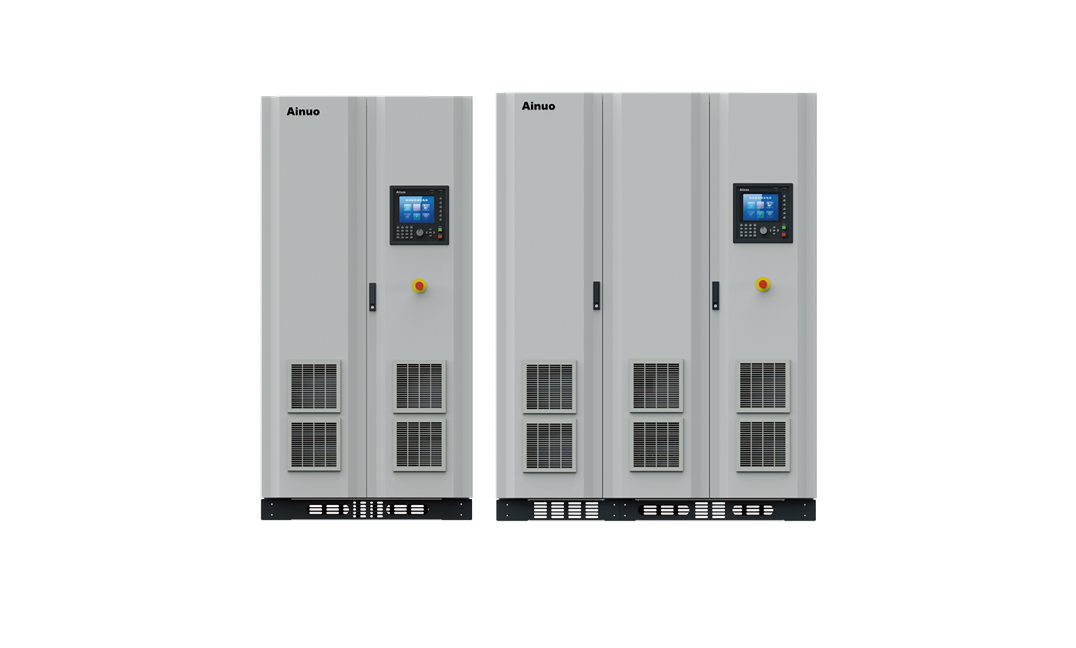
A battery simulator is a software or hardware-based system that models and predicts battery behavior under various operating conditions. In the context of fast charging, battery simulators are indispensable tools that allow engineers, researchers, and manufacturers to understand, test, and optimize how batteries respond to extreme charging rates—long before real-world deployment.
Understanding the Complexity of Fast Charging
At first glance, fast charging seems straightforward: increase the charging current and reduce charging time. In reality, batteries are electrochemical systems with tightly coupled electrical, thermal, chemical, and mechanical processes. When charging rates increase, these processes interact in non-linear and sometimes unpredictable ways.
Key challenges of fast charging include:
- Rapid heat generation due to internal resistance
- Risk of lithium plating on the anode
- Accelerated material degradation
- Increased mechanical stress within electrodes
- Non-uniform current and temperature distribution
These phenomena can severely reduce battery lifespan or, in extreme cases, cause safety failures. Physical testing alone cannot efficiently capture all these interactions across the wide range of operating conditions encountered during fast charging. A battery simulator provides the controlled, repeatable environment needed to explore these complexities in depth.
Accelerating Development Cycles
Developing fast-charging technology through physical testing alone is time-consuming and expensive. Each design iteration—whether it involves a new cell chemistry, charging profile, or cooling strategy—requires building prototypes and running long-duration tests.
Battery simulators dramatically reduce this burden by enabling virtual experimentation. Engineers can simulate thousands of charging scenarios in a fraction of the time it would take to perform physical tests. This allows teams to:
- Rapidly evaluate different fast-charging strategies
- Identify unsafe operating regions early
- Optimize designs before committing to hardware
As a result, development cycles shrink from years to months, enabling companies to stay competitive in fast-moving markets such as electric vehicles and consumer electronics.
Enhancing Safety in Fast-Charging Systems
Safety is the most critical concern in any battery system, especially under fast-charging conditions. High energy density combined with high charging power creates a narrow margin for error. Battery simulators play a central role in identifying and mitigating safety risks.
Advanced battery simulators can model:
- Internal temperature rise and heat dissipation
- Effects of abnormal charging conditions
- Thermal runaway initiation and propagation
- Impact of cooling system failure
By integrating electrical, thermal, and electrochemical models, battery simulators offer a comprehensive understanding of how a battery behaves under stress. This allows engineers to design systems that achieve fast charging while maintaining robust safety margins.
Optimizing Charging Algorithms and Battery Management Systems
Fast charging is not just a hardware challenge—it is also a software challenge. Battery management systems (BMS) rely on sophisticated algorithms to control voltage, current, and temperature during charging. Poorly designed algorithms can negate even the best hardware designs.
Battery simulators are essential for developing and validating these algorithms. They allow engineers to test how different charging profiles affect:
- Battery temperature
- Degradation mechanisms
- State-of-charge accuracy
- Long-term performance
Using simulation, engineers can design adaptive charging strategies that dynamically adjust based on battery temperature, age, and usage history. This ensures charging remains fast when conditions allow and conservative when risks increase.
Extending Battery Lifespan Despite Fast Charging
One of the biggest trade-offs in fast-charging technology is battery longevity. High charging rates often accelerate aging processes, leading to reduced capacity and increased internal resistance over time. Consumers, however, expect batteries to last for years—even with frequent fast charging.
Battery simulators enable long-term aging analysis that would be impractical with physical testing alone. By simulating hundreds or thousands of charge cycles, engineers can:
- Predict capacity fade and resistance growth
- Compare the long-term effects of different fast-charging strategies
- Optimize cell design for both speed and durability
This insight allows manufacturers to deliver fast-charging products without sacrificing battery lifespan, improving customer satisfaction, and reducing warranty costs.
Supporting Innovation in Battery Materials and Design
New materials and cell architectures are constantly being developed to improve fast-charging performance. From advanced anode materials to novel electrolytes and electrode structures, innovation is accelerating—but experimental validation remains costly and slow.
Battery simulators act as a bridge between theory and experimentation. Researchers can simulate how new materials behave under high charging rates, identifying bottlenecks such as ion transport limitations or excessive heat generation. This helps guide experimental efforts toward the most promising concepts and reduces wasted resources.
In many cases, simulation results determine whether a new material or design is viable before a single prototype is built.
Scaling from Cells to Full Systems
Fast-charging challenges extend beyond individual battery cells. In real-world applications, batteries are assembled into modules and packs, integrated with cooling systems, power electronics, and control software. Interactions at the system level can significantly affect fast-charging performance.
Battery simulators enable system-level analysis, allowing engineers to:
- Predict temperature gradients across large battery packs
- Identify cell imbalance during fast charging
- Optimize thermal management and pack architecture
This is especially critical for electric vehicles, where uneven heating or degradation among cells can limit performance, reduce usable capacity, and shorten overall system life.
Meeting Regulatory, Environmental, and Consumer Expectations
As fast-charging technology becomes more widespread, regulatory requirements and consumer expectations are increasing. Manufacturers must demonstrate safety, reliability, and environmental responsibility—all while delivering exceptional performance.
Battery simulators support these goals by providing:
- Data for safety certification and compliance testing
- Predictive models for warranty and lifecycle analysis
- Insights into efficiency and energy losses
In a market where battery-related incidents can severely damage brand reputation, simulation-driven confidence is a strategic advantage.
Conclusion
Fast-charging technology is reshaping how we use energy, but it comes with significant technical challenges. A battery simulator is not merely a development tool—it is a foundational technology that makes fast charging viable, safe, and sustainable.
By enabling faster development, improved safety, optimized charging algorithms, extended battery life, and accelerated innovation, battery simulators play a critical role in advancing fast-charging technology. As charging speeds continue to increase and battery systems become more complex, the importance of battery simulation will only grow.
In the push toward a faster, cleaner, and more electrified future, battery simulators are the invisible engines powering progress.