Paste, Click, Exposed: How Block Explorers Read Your Entire Wallet
There is a simple demonstration that does more to explain Bitcoin privacy than any lecture: take an address you have used, paste it into a public block explorer, and look at what comes back. The results are usually sobering, and they are available to literally anyone with an internet connection.
The Anatomy of an Exposure
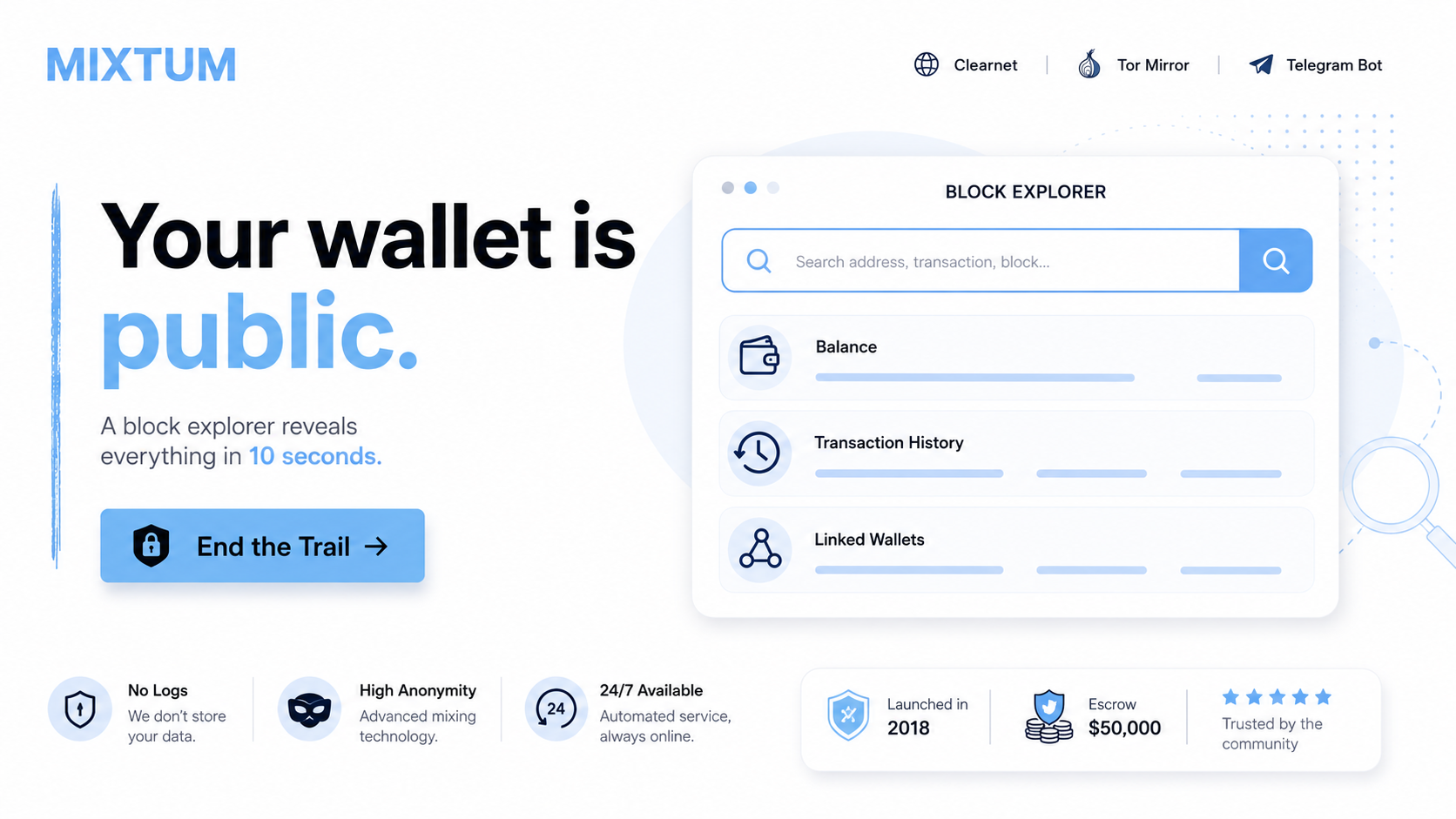
A block explorer is a search engine for the blockchain. Type in an address and it returns, instantly: the current balance, the total amount received and sent over the lifetime of the address, and a chronological list of every transaction. Each transaction entry shows the counterparties, the amounts, and the exact time. None of this requires authentication, because the Bitcoin ledger is public by design.
For most people, the first reaction is mild surprise. The second reaction — once they realize this is true of every address they have ever used — is concern.
From One Address to Your Whole Financial Life
The exposure compounds. Analysts use heuristics like common-input-ownership (multiple inputs to one transaction are likely controlled by the same entity) and change-output detection to group addresses into clusters. A single identified address can therefore reveal an entire wallet structure. Add a single point of identity linkage — a KYC exchange withdrawal, a public donation, a forum post containing an address — and the cluster gets a name attached to it.
Why a Fresh Address Does Not Save You
A common assumption is that generating a new receiving address solves the problem. It does not. The moment you spend coins from that fresh address alongside coins from an old one — or send change back to a clustered address — the analysis links them. Address hygiene helps at the margins, but it cannot undo the deterministic links the ledger records.
What Coin Replacement Changes
This is where a coin-replacement mixer differs structurally from address management. MixTum does not try to obscure links between your addresses; it removes the link between your old coins and your new ones entirely. Incoming BTC is exchanged for coins purchased from independent investors at major cryptocurrency exchanges. The output is sourced from the market, not from your history.
The privacy is layered. Output is delivered in randomized amounts across two or more transactions, with randomized delays up to six hours, defeating both volume correlation and timing correlation. The commission is randomized between 4 and 5 percent, which prevents an analyst from subtracting a known fee to reverse-engineer the original amount. There is no registration, no logging, and all order data is deleted on completion. A PGP-signed guarantee accompanies every order, verifiable at bitlist.co/pgp.
A Worked Example
Suppose your address shows a clear pattern: regular incoming payments of similar size, classic for a salary or recurring client. That pattern alone tells an observer a great deal. Run those coins through MixTum and the output arrives in irregular amounts, at irregular times, sourced from exchange markets. The recognizable pattern disappears. The block explorer test now leads nowhere useful.
Discussion: Have you ever looked up your own address on an explorer? What surprised you most about what was visible?
Run the test, then end the trail → https://mixtum.io or https://t.me/mixtum_bot