The Evolution of Transactions: From "Click-to-Confirm" to Autonomous Algorithms
- Context: The Era of Manual Control is Sunsetting
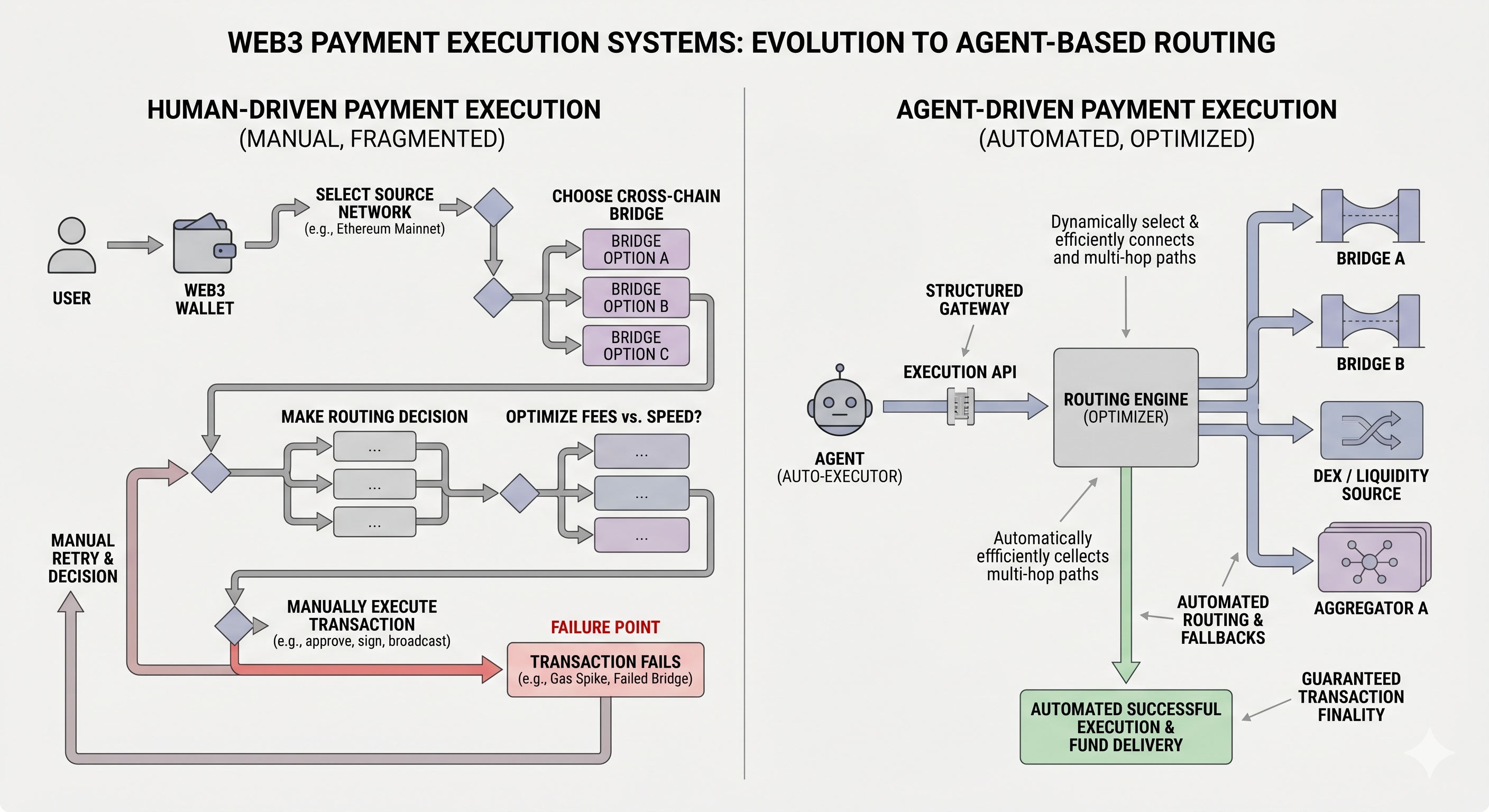
The current blockchain landscape is overburdened by routine. Every operation requires a user to act as an expert: knowing which chain has the best liquidity, where fees are lowest, and which bridge is most secure. This "User-Initiated" model is simply not scalable for the next billion users or the next million bots.
The problem is exacerbated by the explosion of L1 and L2 solutions. DefiLlama statistics show over 100 active blockchains, leading to a critical fragmentation of capital. The current model of human interaction with this environment is too slow and prone to error to keep pace with the market.
- Defining Payment Agents
Agentic payments are an algorithmic approach to asset management. Software agents act on behalf of the owner, making decisions based on market signals or pre-set rules.
This opens the door to:
Streaming payments and complex B2B workflows.
Institutional-grade liquidity management.
Smart contracts that autonomously initiate their own transfers.
Unlike humans, agents operate 24/7 and process volumes of data that are impossible to analyze manually.
- The Infrastructural Barrier
Most modern protocols are optimized for UX (User Experience) rather than AX (Agent Experience).
The primary obstacles include:
Route Complexity: The need to manually select bridges and providers.
Unpredictability: Fluctuating fees and slippage risks.
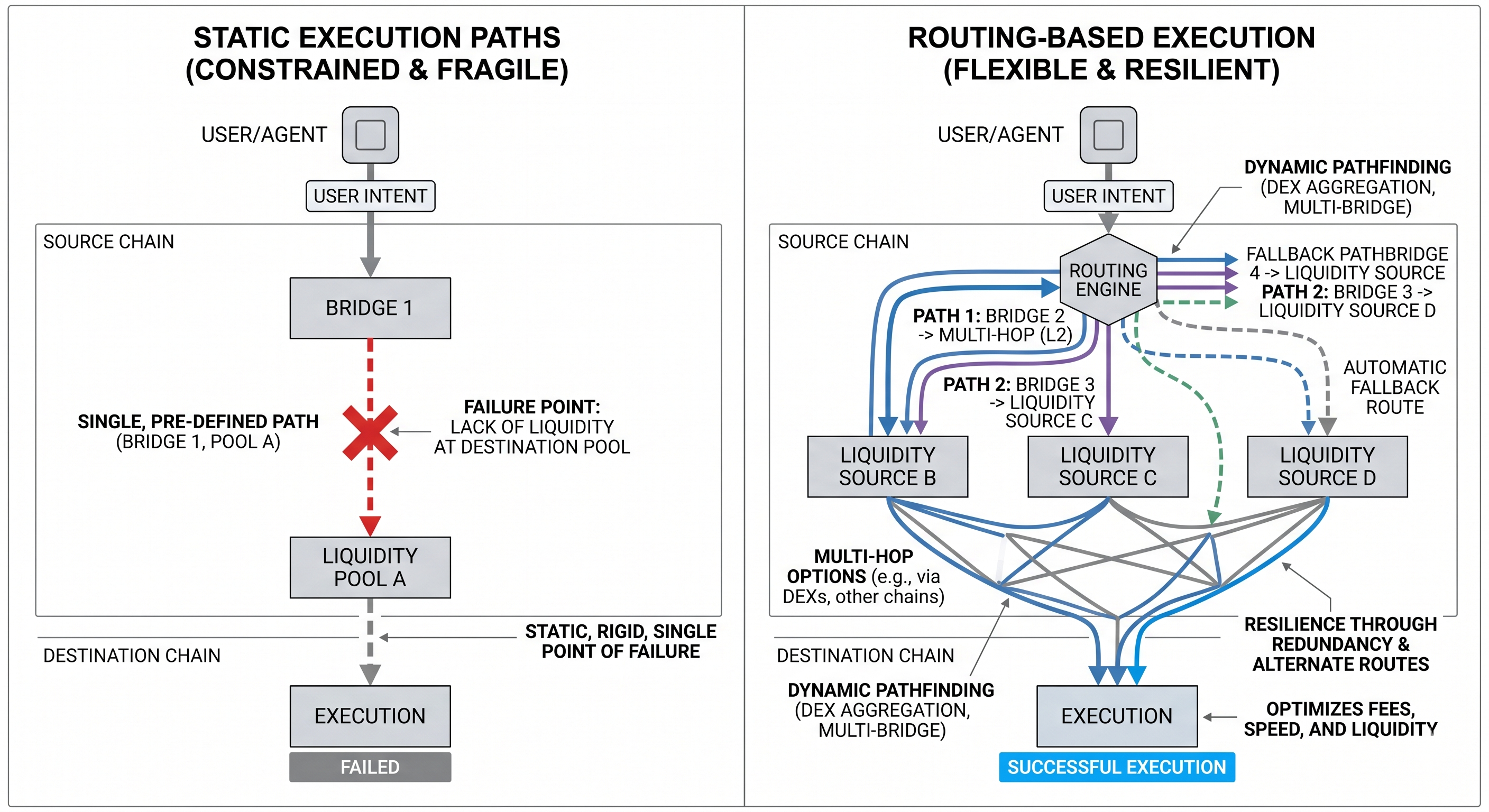
Criticality of Failure: High failure rates in cross-chain bridges (source) make scaling impossible for bots. Autonomous systems require guarantees, not "best efforts."
- What the "Agentic Economy" Needs
To transition to the next level, the industry requires:
Total Network Abstraction: The agent shouldn't care about the chain's name, only the asset's utility.
Dynamic Liquidity: Seamless access to capital regardless of its location.
Automatic Fallbacks: If one route is blocked, the transaction must reroute without developer intervention.
- CrossCurve in the Cross-Chain Ecosystem
Players like Bungee and LayerZero have laid the groundwork for connectivity. However, CrossCurve (crosscurve.fi) goes further by offering a dynamic execution layer.
CrossCurve doesn't just connect point A to point B; it constructs the optimal trajectory for an asset using all available liquidity sources. For a software agent, CrossCurve acts as the ideal "engine," handling logistical complexity and ensuring high success rates even in volatile conditions.
- Forecast: The Age of Invisible Payments
In the coming years, the focus will shift from "wallets for people" to "protocols for agents." Payments will become a continuous stream. Systems that provide reliable, abstracted execution will become the backbone of the financial world. CrossCurve demonstrates that the future belongs to flexible routing rather than rigid, hard-coded pathways.