What happens to Microsoft Stock?
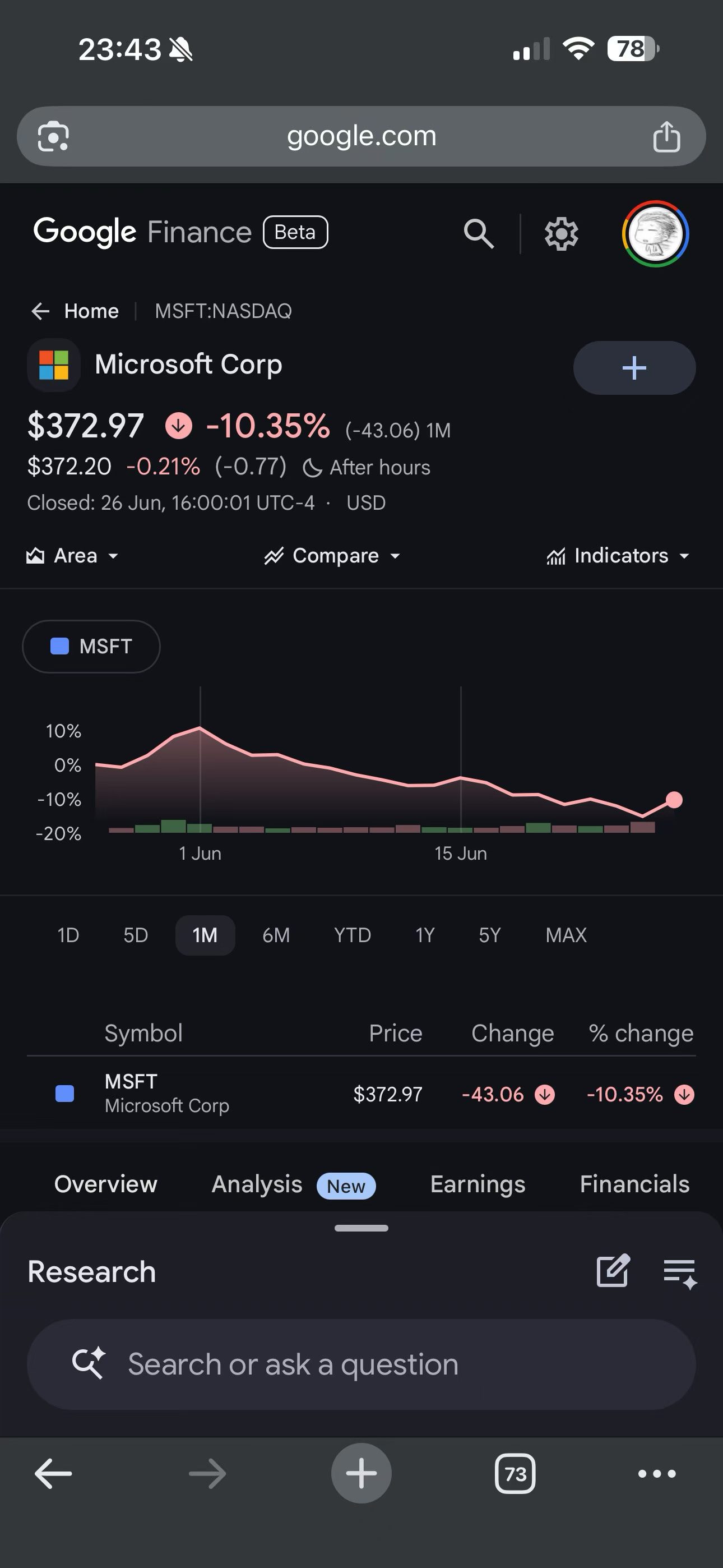
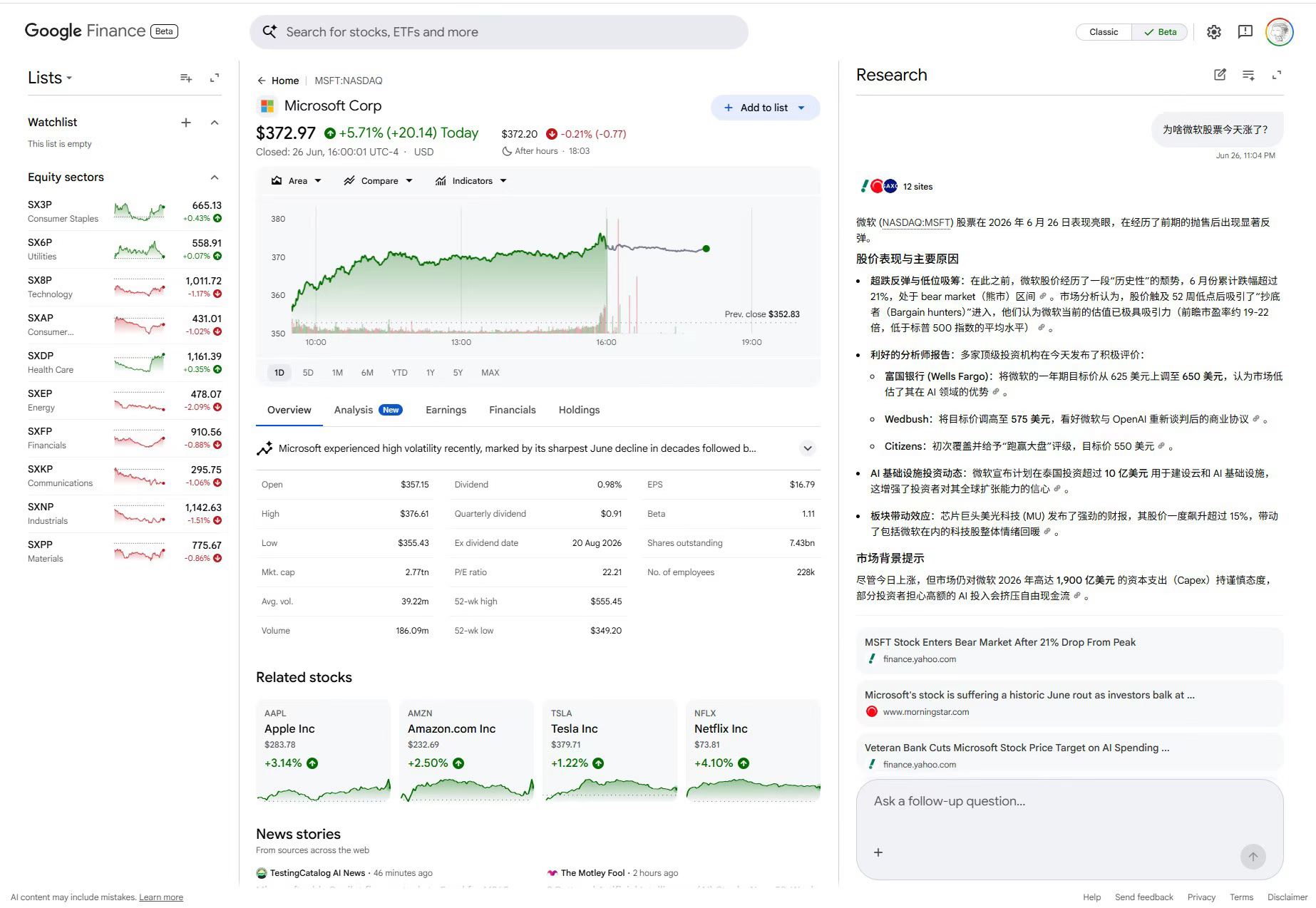
Microsoft declined sharply in June 2026, entering bear market territory despite strong earnings. Catalysts include concerns over massive AI capital expenditures and a securities fraud lawsuit regarding Copilot adoption. Analysts project a potential rebound next quarter, viewing the current valuation as an attractive entry point for long-term AI leadership.
Bullish
Cloud and AI Growth Acceleration: Azure revenue grew approximately 40% in the most recent quarter, with AI-related business reaching a $37 billion annual run rate, representing a 123% year-over-year increase. Management reports that demand for AI infrastructure continues to exceed available supply, signaling a sustained growth trajectory into late 2026.
Strong Institutional Backing and Buy Ratings: Despite recent price volatility, Wall Street maintains a "Strong Buy" consensus with over 40 buy ratings. Major firms like Wedbush and Morgan Stanley have reiterated outperform ratings with price targets exceeding $600, suggesting that analysts view the June drawdown as a significant buying opportunity rather than a structural failure.
Productivity Ecosystem Expansion: The company is implementing global pricing updates for Microsoft 365 suites effective July 1, 2026, expected to drive upsell revenue. Furthermore, over 90% of Fortune 500 companies have adopted Copilot capabilities, reinforcing the company's dominant competitive moat in enterprise software and agentic computing.
Bearish
Escalating AI Capital Expenditures: Investors are increasingly alarmed by the scale of infrastructure spending, with calendar 2026 capital expenditures projected to reach approximately $190 billion. This massive investment has already compressed free cash flow and raised concerns about the timing and sustainability of AI monetization margins.
Ongoing Securities Fraud Litigation: Microsoft faces a shareholder class-action lawsuit alleging it misled investors about the actual adoption and technical performance of Copilot and Azure AI. This legal overhang, with a response deadline in August 2026, has significantly dampened near-term sentiment and introduced fresh regulatory uncertainty.
Regulatory and Antitrust Scrutiny: The Federal Trade Commission has expanded its investigation into the company's practice of bundling AI and productivity software with its cloud ecosystem. These regulatory headwinds focus on potential anti-competitive behavior, which could lead to structural changes in how the company's most profitable segments are integrated.


Steem to the Moon!
- You can rent Steem Power via rentsp!
- You can swap the TRON:TRX/USDT/USDD to STEEM via tron2steem!
- You can swap the STEEM/SBD to SUI via steem2sui!
- You can swap the STEEM/SBD to SOL Solana via steem2sol!
- You can swap the STEEM/SBD to ETH Ethereum via steem2eth!
- You can swap the STEEM/SBD to Tether USDT (TRC-20) via steem2usdt!
- You can swap the STEEM/SBD to TRX (TRON) via steem2trx!
- You can swap the STEEM/SBD to BTS (BitShares) via steem2bts!
- Register a free STEEM account at SteemYY!
- Steem Block Explorer
- ChatGPT/Steem Integration: You can type !ask command to invoke ChatGPT
- Steem Witness Table and API
- Other Steem Tools

Support me, thank you!
Why you should vote me? My contributions
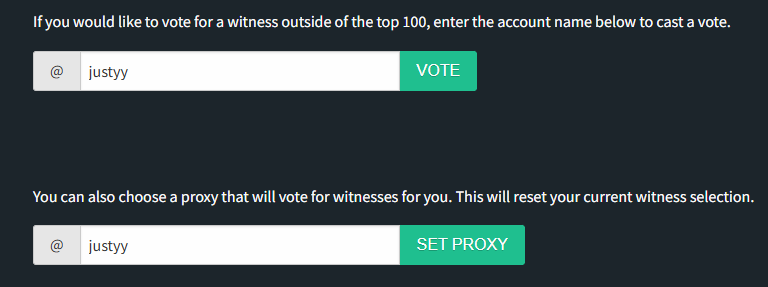
Please vote me as a witness or set me as a proxy via https://steemitwallet.com/~witnesses
Your in-depth analysis on Microsoft's AI-related growth is fascinating, especially with the AI infrastructure demand exceeding available supply. I'm curious to see how the company addresses this surge in demand going forward. 💻📈