This Is My Day-to-Day Life
The invisible labor and physical reality of my survival.
Writing has always been my lifeline - it is the one path I can still pursue even when my system is navigating a complex landscape of physical symptoms, flare-ups, and intense internal storms or trigger threats that often leave me bedbound.
As these challenges have grown multifold throughout a short decade, the logistics of health maintenance and the labor of staying alive have become separate jobs in themselves.
I operate on limited spoons per day, but on days when the storm hits, my nervous system simply drains; the spoons don't work anymore - they just suddenly disappear.
It isn't that I'm just passing out or feeling sleepy; it's that my system forced-quits. I don't just fall asleep; I lose consciousness into a state of involuntary, heavy shutdown without warning.
This isn't a nap that I can control or resist. These incidents have happened in the middle of a house move, on a loud ferry ride, and even in the back of a taxi.
All of the above are separate from the episodes where I am pushed to the brink of passing out during intense panic attacks.
Navigating both extremes simultaneously - the sudden shutdowns and the high-intensity episodes - requires a constant, exhausting vigilance.
Can you imagine different kinds of anxiety stacking on top of each other?
This is what reminds me I cannot sustain the pace the world demands like everybody else. When my system shuts down, it means: Goodnight. RIGHT NOW. RIGHT HERE.
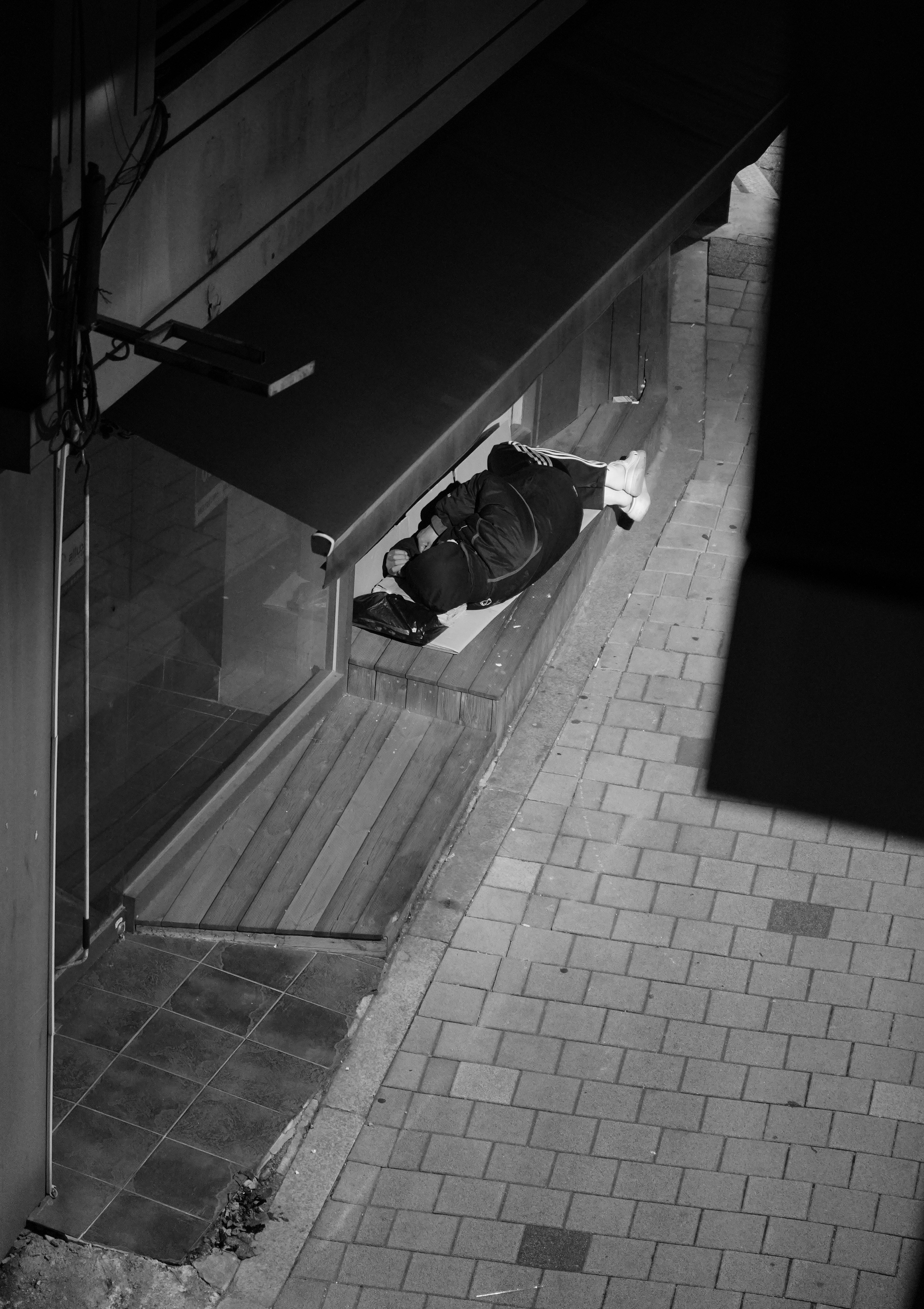
Photo by Haewon Oh on Unsplash
While I still take on remote gigs as a specialized contributor for SaaS/tech research and academic studies, the work itself is naturally inconsistent.
When you add my body's attitude - the sudden, forced-quits and shutdowns - nothing ever resembles stable or reliable.
Many of these specialized tasks are cut off in the middle of a live sessions or timed tasks. This doesn't just mean I lose the pay for the energy I've already spent; it also affects my reputation points.
I probably accumulating more bad records from incomplete sessions than actual completed projects.
When I say my life is high maintenance, I am not talking about luxury or the high life.
For me, maintenance is purely functional - it is the essential cost of keeping my entire being from a total collapse. It isn't just a nervous system short-circuit; it is the reality that when the storm hits, my whole body is wrecked.
Most of this work isn't buyable; it is the massive, invisible labor I perform daily.
This is why my routine is so rigorous. I manage every nutritional input, prepping meals to save on costs while optimizing my health - like specific smoothies to counter the side effects of my medication and the daily issues and triggers. My days are a clockwork of timing supplements and meds for peak function.
It is a cruel irony: either my system forced-quits into a Fibromyalgia-driven shutdown when I need to be present, or my CPTSD jolts me awake in a state of high-alert panic for no good reason when I desperately need to rest.
Everything is interconnected: the trauma that triggers the flashbacks, the chronic anxiety that drains my battery, and the secondary anxiety of fearing the next coming storm. For me, this is a wretched total system failure.
Because of all that, my nights require a safety cocoon to deal with the storm. It isn't just that I'm waking up mid sleep; it's an hourly jolt of terror - the physical shock of feeling as if I am being chased and shot by a rifle - forcing me out of sleep with a violence so intense that almost every time, I am left with the sensation that my heart is about to fail me.
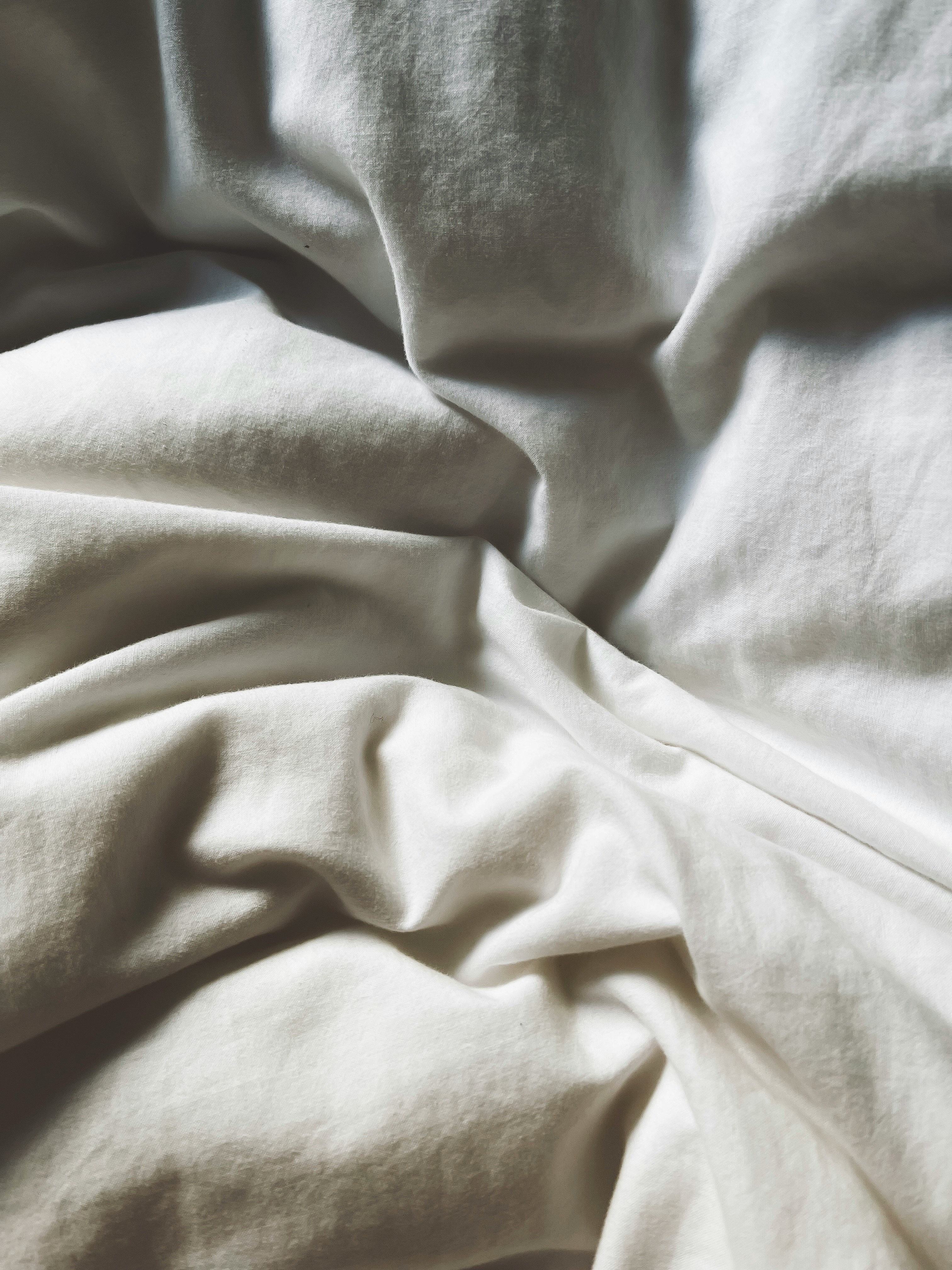
Photo by Laura Cleffmann on Unsplash
My therapist has recommended weighted blankets and compression pants to provide the deep-pressure input my nervous system needs to stay grounded. I have to make do with whatever I have: I wrap myself tightly in a light blanket with a heavy pillow tucked inside as a makeshift anchor - like a baby being swaddled.
I've recently added a calming essential oil roll-on to my routine. To be honest, I dislike the scent of this particular blend and I'm not yet sure if it's actually helping, but if it provides even a small measure of assistance in keeping my system steady, I don't mind sticking to it.
I supplement my routine with specific breathwork 4–4–4 for immediate calming and 4–7–8 to attempt sleep - alongside techniques like butterfly hugs and EMDR eye movements to soothe and ground myself during intense moments.
These are my manual overrides. When everything becomes too violent for these tools to manage, I will need my clonazepam as the final safety switch.
I will do whatever I need to keep myself from falling apart and avoid the last resort of the emergency ward. Last year, a single crisis was the tipping point. Within a year, the wreckage of one unwanted encounter led me to the ER for suspected heart failure and revealed underlying cardiac issues that are still under investigation.
It was during this period that my system started flooding me with a wave of new, debilitating symptoms that I am still learning to manage.
While my childhood CPTSD had been managed and under control for years, this second trauma - inflicted over time by a separate group - finally revealed a new layer of CPTSD.
Though they had been traumatizing me for some time, it wasn't until last year that the damage crossed the line into an official diagnosis and a surge of major physical symptoms.
This weight is what finally triggered the Fibromyalgia symptoms - a storm of multiple pains of various intensities across my entire body - leading to the diagnosis.
Imagine the feeling of suddenly being stabbed, skin being scraped, your bones breaking, and nerves being twisted; imagine ant bites and needles driven into your nailbeds. These are the kinds of pain I am living with.
I have an upcoming CT scan, Holter monitoring, and an echocardiogram. To be honest, I dare not think too much about what those tests might show.
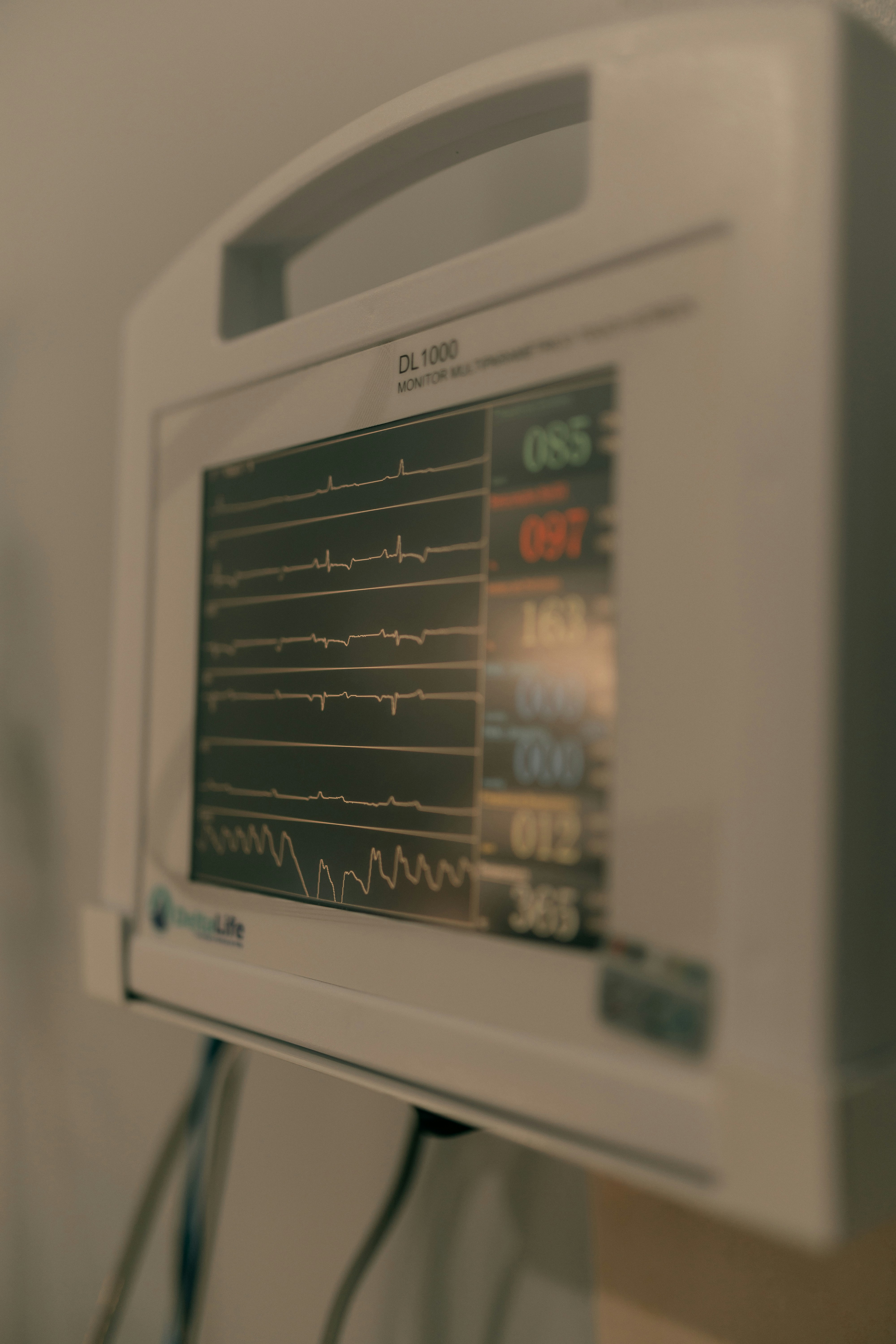
Photo by Alexander Mass on Unsplash
My earliest confirmed memory of a panic attack traces back to elementary school; I was only seven. By the time I bought my first car at 21, I was already a veteran of a biological struggle I didn't yet have the words for.
I had to rush the purchase because a public commute was impossible; the daily panic attacks were so violent they would melt even waterproof makeup - a biological or chemical reaction I still don't logically understand.
I would arrive at work with greasy hair from the sweat and stress, my skin pale and drained, and deep dark circles under my eyes. It was so obvious that my boss - a man who was usually never observant of such things - would insist I put on lipstick just to appear presentable.
Since I spiraled in 2017, I have lost the ability to drive. I'm unable to look at the moving road ahead without an overwhelming sense of fear - the same gut-wrenching sensation as the dropping motion of a rollercoaster with a constant, paralyzing conviction that the car is about to crash.
To cope, I am forced to look sideways just to stay calm. This is why I feel a particular surge of anger when the driver ignores the GPS and ask me for directions; they are inadvertently triggering me by forcing my gaze on the road ahead.
I still renew my license in the hope that I will recover that independence one day. I now rely almost entirely on e-hailing. My outings are restricted to hospitals and clinics; I avoid socializing to prevent unnecessary spending, and luckily, the church is just next door, so I can still walk there.
I follow a strict low-stimulation protocol throughout the day - not just for sleep hygiene, but also to manage the pain.
Because of my ASD and sound sensitivity, I am constantly trying to control my environment.
I've become increasingly sensitive to the sound of neighbors' raised voices or people blaring audio and talking on speakerphones.
Even a doorbell can trigger a flashback, I am still contemplating removing mine entirely. To prevent sensory overload, I rely heavily on earplugs and noise-canceling headphones; they are my PPE.
My phone has also remained on silent since 2017. With the rare exception of expected medical calls, it is no longer a device for traditional calls or messaging.
My capacity is extremely limited, and everything can feel overwhelming, which is why I am often unable to keep in touch with others despite the technology available.
I can no longer work out like I used to; there is no more HIIT, weight training, or gym sessions. My physical activity has to be a strict rehabilitation phase where the only movements allowed are tightly controlled and slow.
I cannot afford to let my system inflame; because for me, an anxiety spike and a Fibromyalgia flare are tethered.
This shift is also due to a severe wrist injury that caused a secondary injury on the other side from imbalanced exertion. While my doctor has prescribed Pilates as part of my recovery, but it is not yet part of my routine.
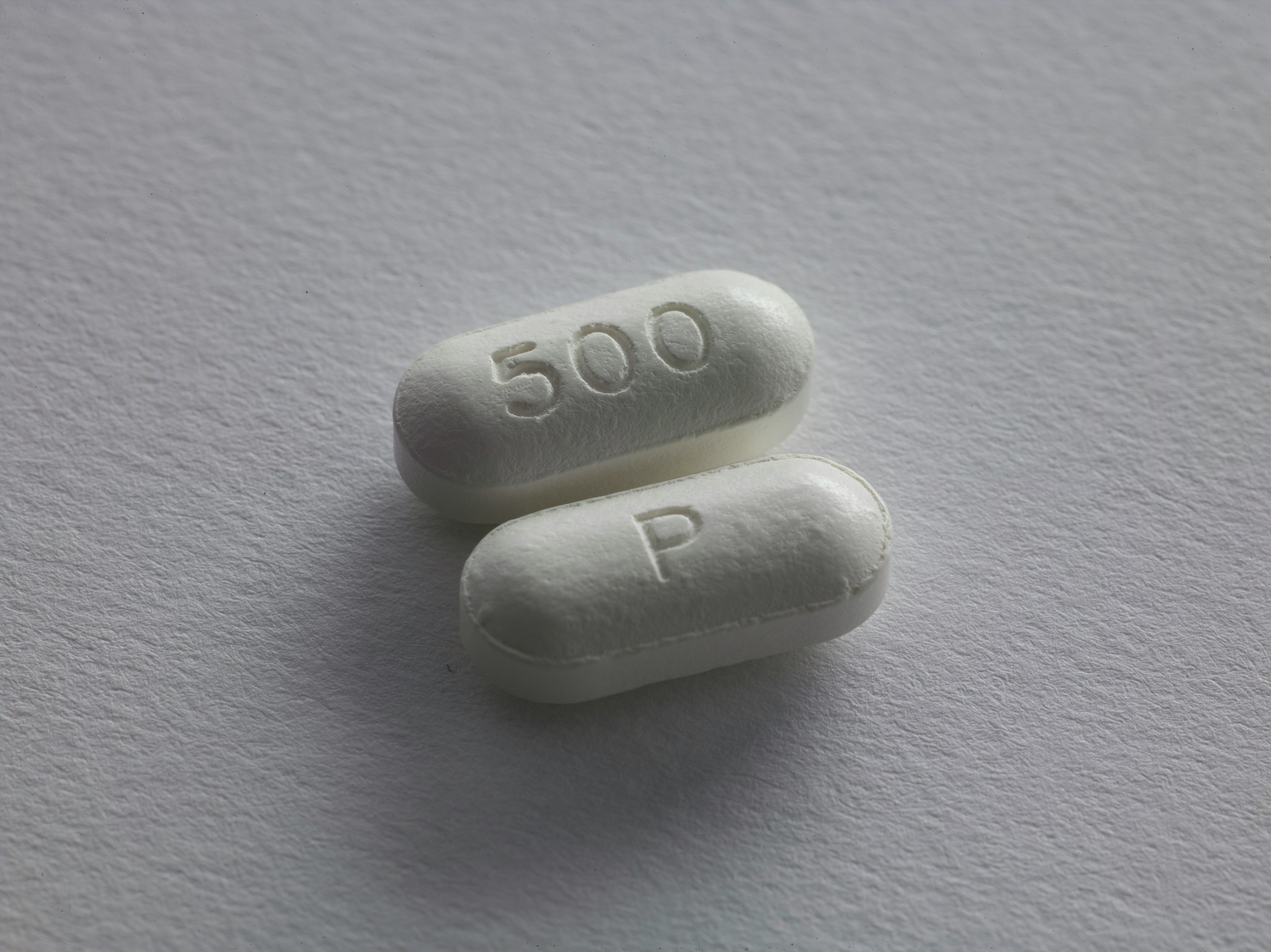
Photo by Thought Catalog on Unsplash
These therapies and routines - including acupuncture and other forms of rehabilitation - are the ways I will be able to sit upright at my desk without reliance on heavy painkillers like Tramadol.
I have the prescription, but I refused to take it. Since my attacks occur multiple times a day and only last a few minutes, traditional medication doesn't even have time to take effect before the surge passes.
My doctor has already warned me about the risk of addiction; relying on this particular medication would mean facing a potential opioid crisis of my own.
Most people only calculate hospital bills, but the true price includes the staggering human labor and time costs required to manage a system in constant flux. These are the hidden cost.
Every hour I cannot spend at my desk is an hour I am not working; it is a direct loss of my capacity and my livelihood.
To be clear, I'm not a shopaholic Barbie- most of what I earn goes directly toward my recovery, maintenance and rehabilitation I've described.
I am sharing this because I am MIA far too often. This serves as a collective status update for those who have reached out; it allows me to provide the necessary context all at once, so I don't have to spend my limited energy repeating these details individually.

©Britt H.
Thank you for reading this.
More about the person behind the writing in My Introductory Post
If you’d like to support my writing — you can consider buying me a coffee here Any support holds immense significance for a disabled neurodivergent like me.
I don't know how you get time to write as well. I feel the inconsistent gig work drains you, and the fact that it will not last. This also led me to enter into multiple ventures, but I can't do everything. I enjoy new things.
Having health conditions and working is very easy to get lost in not working at all.
For me fitness and playing games are the things that sustain me. I don't know what I'll do without them including the people that care for me.
You are so lucky to have people that care for you
That is the only thing I care for, my siblings despite me being a burden. I don't talk much and still my parents love me.
I don't know how it feels when you get to suffer alone. I deeply commend you and hope you get people that care for you.
It touches me deeply that your family is there for you. I’m sure they don’t see you as a burden, or you wouldn’t feel that level of care and love from them.
I was on good terms with my siblings until I fell sick many years ago. It wasn't that I asked for money or anything from them; their behavior just changed suddenly, and we are no longer in contact. Maybe it is hard to tolerate someone in my situation. I don’t know.
People get busy in their own lives, and that will happen till the end. Yes, people are sympathetic at the start, but things begin to fade. It happens so much that you get disillusioned. In the end, it is better to suffer alone and not burden others. If they want to see, they will know.
I am the eldest, yet everyone who visits does not seem to think so. I have seen that people usually do not have good relations with their siblings, egos or something of the sort. Or perhaps I am this way and they followed. Let us see if it will fade as the years go by.
That is the hard truth of life, nothing is forever. People move on, new people come into our lives, and the cycle continues. I hope that despite these changes, things remain stable and fine for you for a long, long time.
For some people, writing and drawing are just as much of an outlet as gaming. I see it all around me, in my own family. One of my children made a 24-hour shift pattern lifestyle. And work only a few nights a week, earns enough. Staying at home is preferred,no visitors. I think this is also typical of highly sensitive and creative people. It can be a bit lonely, but on the other hand, they aren’t exactly social butterflies and tend to be more introverted. If not alert the anxiety creeps in slowly. With or without panic attacks.
🍀❤️
@wakeupkitty
Everything you say seems like a good life to me, but financially....uh.... I have made my life avoiding people, not interacting at all. I see how people become in chase of money. There is no winning and going by. As a kid it may be all fun and to be fair it still is. Having responsibilities, like you, there are no off days. My parents didn't have them.
So I must go out and grind. Although there is no meaning for me, I can provide for people that care for me.
Upvoted! Thank you for supporting witness @jswit.
Thank you!
🍀❤️
@wakeupkitty
Thank you for the support!