Five Cognac Producers That Turn Charente Into a Living Cellar
Charente rewards travelers who like to understand how a product is made, not only how it tastes. Cognac here is tied to mapped vineyard crus, acidic white wine, double distillation in copper alembics, slow maturation in French oak, and blending decisions that may use eaux-de-vie of very different ages. Around Cognac and Jarnac, those technical steps are visible in stone warehouses, dark cellars, tasting rooms, and the quiet roads between vineyard parcels.
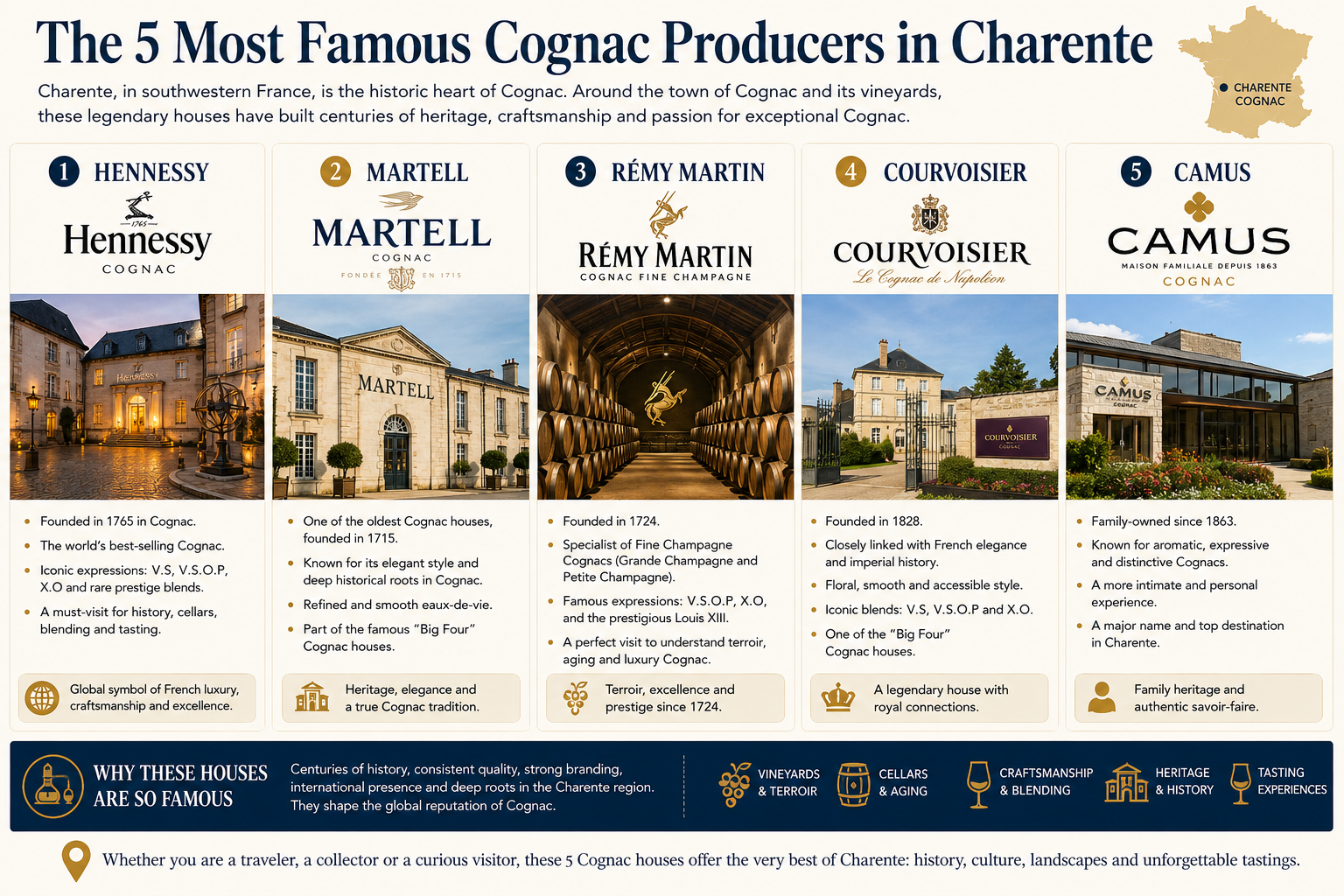
The region’s most recognizable names are Hennessy, Martell, Rémy Martin, Courvoisier, and Camus. They are not famous for one identical reason. One house explains international scale, another shows historic continuity, another focuses attention on Grande Champagne and Petite Champagne terroir, while another keeps a family-owned identity in a market often associated with large global brands.
What the Great Cognac Houses Reveal About Charente
Hennessy is the clearest example of Cognac as a global luxury product with local roots. Its visitor experience helps connect large inventories of eaux-de-vie with the practical logic of blending: younger components provide energy, older ones add depth, and the cellar master’s task is to preserve a recognizable profile year after year. For travelers, this makes the house useful as a first technical lesson in how scale and consistency can coexist.
Martell brings the discussion back to heritage. Its long history in Cognac, elegant positioning, and refined blends make it a strong stop for visitors interested in architecture, brand archives, and polished tasting spaces. The value of Martell is not only in the glass but also in how it demonstrates the link between commercial history, local stone buildings, oak casks, and centuries of reputation building.
Rémy Martin gives the itinerary a more terroir-focused angle. The house is strongly associated with Fine Champagne Cognac, made from eaux-de-vie from Grande Champagne and Petite Champagne. This distinction is important because it shows that Cognac is not a neutral spirit category; soil, grape origin, distillation choices, barrel age, and humidity all influence aroma, texture, and persistence.
Reading the Five Names Through Practical Travel Details
Courvoisier is closely connected with Jarnac and the image of French elegance. Its accessible style helps beginners understand the difference between fresh fruit, floral notes, vanilla from oak, spice, and the softer texture found in older blends. A visit can work especially well for travelers who want history and tasting clarity without starting from the rarest or most expensive bottles.
Camus provides a valuable contrast because of its family-owned character. In a region where several major houses operate on a vast international scale, Camus is often appreciated for a more personal identity and an aromatic style that invites comparison. This makes it useful for visitors who want to see how family continuity, selection, and visitor atmosphere can shape the perception of a Cognac house.
For a balanced route, each producer can be treated as a separate lesson:
-
Hennessy: scale, international distribution, and blending discipline.
-
Martell: historic depth, refined presentation, and architectural heritage.
-
Rémy Martin: terroir, Fine Champagne identity, and premium aging.
-
Courvoisier: Jarnac history, approachable profiles, and classic prestige.
-
Camus: family ownership, aromatic individuality, and a more intimate tone.
The place where travelers stay can make those lessons easier to absorb. After cellars, tastings, and vineyard roads, a private historic property with oak beams, dressed stone, preserved period furniture, and modern comfort keeps the same material language as the region itself. For readers comparing houses, routes, and accommodation formats, villas in Charente can fit naturally into a slower Cognac journey, especially when privacy and architectural character matter as much as proximity to tastings.
These five houses became reference points because they combine production knowledge with public accessibility. Their reputations depend on controlled aging, reliable blending, recognizable ranges, strong export presence, and the ability to teach visitors what is happening inside the cask. That educational role is important: once someone has seen copper stills, smelled damp oak, and compared V.S.O.P with X.O, the category becomes easier to understand.
Charente is also practical for comparison. Distances between key towns are manageable, the landscape changes gradually, and the route between major houses can include riverside walks, limestone façades, vineyard roads, and small restaurants where regional food gives context to the drink. Instead of treating Cognac as a single tasting stop, travelers can build a sequence that moves from industrial prestige to family craft and from technical process to cultural memory.
The Lasting Taste of the Region
The strongest reason to visit these producers is not to decide which one is “best.” Hennessy, Martell, Rémy Martin, Courvoisier, and Camus each clarify a different part of Cognac: scale, age, terroir, elegance, and family identity. Together, they turn Charente into a readable landscape, where vineyards, cellars, oak, stone, and time explain why this corner of France continues to define one of the world’s most respected spirits.