Cold Room UAE: Choosing the Right System
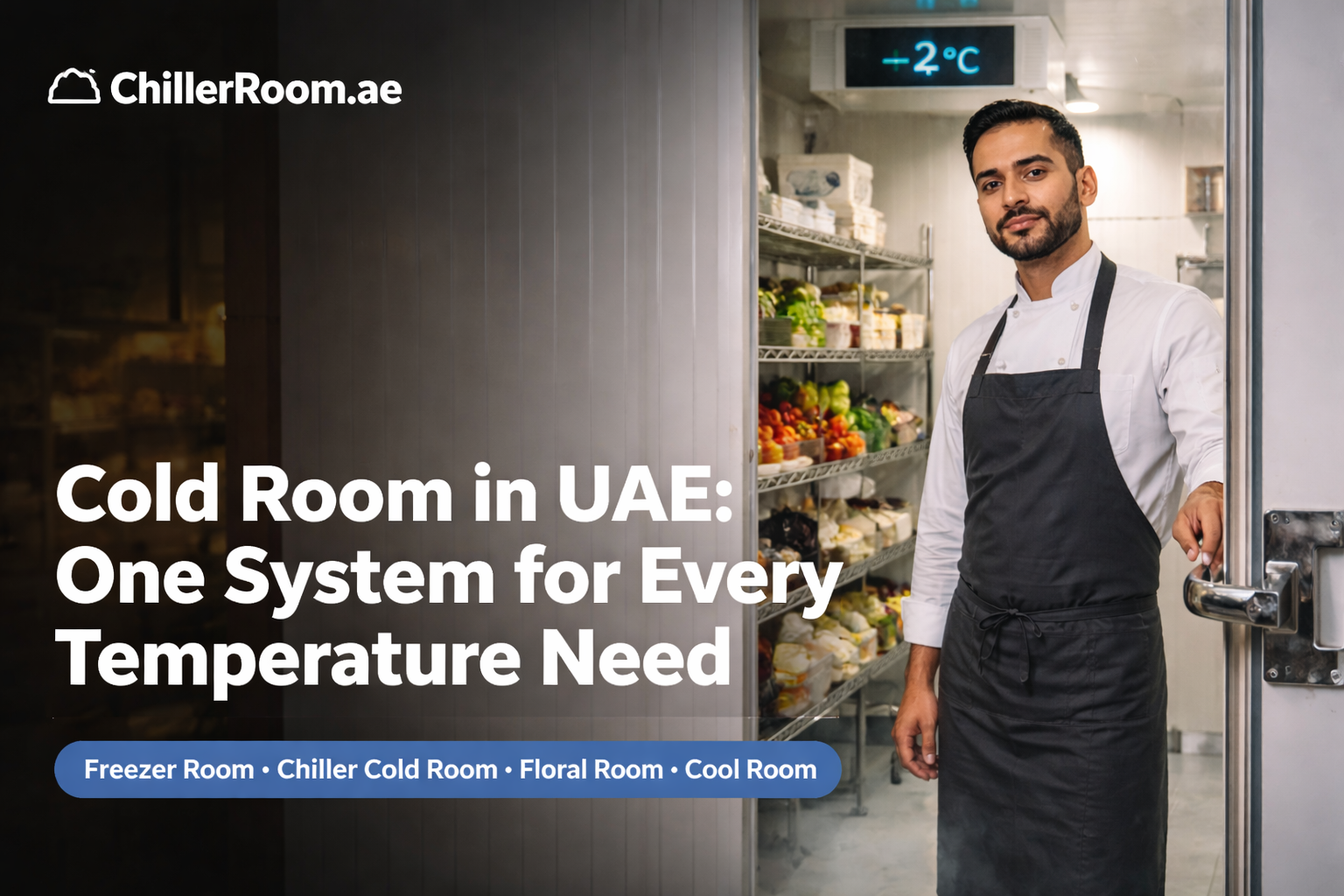
❄️ Introduction
In high-temperature environments, cold storage isn’t optional — it’s essential.
When outside temperatures cross 45°C, even short exposure can damage food, flowers, or pharmaceuticals.
But here’s the problem:
Most businesses don’t realize that a “cold room” is not just one system — it’s a category of different solutions, each designed for a specific purpose.
Choosing the wrong one leads to:
Product loss
High energy costs
System failure
🧊 What Is a Cold Room?
A cold room is a temperature-controlled, insulated storage space designed to maintain stable internal conditions regardless of external heat.
But not all cold rooms are the same.
There are multiple types, each built differently depending on:
Temperature range
Product type
Usage pattern
⚠️ Cold Room vs Chiller Room (Important)
Many people use these terms interchangeably — but they are not the same.
Cold room → general term (includes all types)
Chiller room → operates above freezing (0°C to +8°C)
👉 This difference matters because it affects:
Insulation thickness
Equipment selection
Energy consumption
🏭 Main Types of Cold Rooms
Here are the main systems businesses use:
A. Chiller Room (0°C to +8°C)
Used for:
Fresh food
Dairy
Beverages
Pharmaceuticals
Designed for:
Frequent access
Fast temperature recovery
B. Freezer Room (-18°C to -25°C)
Used for:
Frozen meat
Seafood
Ice cream
Requires:
Heavy insulation
More powerful refrigeration
👉 This is one of the most demanding systems to design.
C. Floral Cold Room (+2°C to +5°C)
Used for:
Flowers
Plants
Special requirements:
High humidity (90–95%)
Low airflow
Ethylene control
👉 Even small design mistakes can damage flowers quickly.
D. Cool Room (+8°C to +15°C)
Used for:
Wine
Chocolate
Certain produce
Benefits:
Lower energy consumption
Stable mild temperature
🔄 When Do You Need a Multi-Temperature System?
Sometimes one system isn’t enough.
You may need a multi-zone cold room if:
You store different product types
Your business is expanding
You operate a logistics or distribution setup
👉 Important:
These systems must be designed from the start — they cannot be easily modified later.
⚙️ What Makes Cold Rooms Fail
Most failures are not due to equipment, but poor design.
Common issues:
Systems not rated for high ambient temperatures
Insufficient insulation
Poor airflow design
Frequent door openings
Lack of maintenance
👉 In hot climates, small mistakes become expensive quickly.
🌡️ Design Challenges in Hot Climates
Cold rooms in extreme environments face unique problems:
High Ambient Temperature
Reduces system efficiency and increases load.
Dust & Sand
Blocks condenser coils and reduces performance.
Humidity
Can damage insulation over time.
Door Usage
Every opening brings in hot air, increasing the workload.
🔋 How to Improve Efficiency
To reduce costs and improve performance:
Use proper insulation thickness
Install air or strip curtains
Clean condensers regularly
Use inverter compressors
Minimize door openings
👉 These small changes can reduce energy use significantly.
🧠 Key Takeaways
A cold room is not a single system — it’s a category
Each type is designed for a specific purpose
Wrong system choice leads to major losses
Climate plays a huge role in performance
Design matters more than price
🔗 Full Guide
If you want a complete breakdown (types, engineering specs, costs, and real-world examples), you can read the full guide here:
👉 https://chillerroom.ae/cold-room-in-uae/
📌 Final Thoughts
Choosing the right cold room is one of the most important decisions for any business handling temperature-sensitive products.
The best systems are not the cheapest —
They are the ones designed correctly for the job.