Fruit Ripening in UAE: What Most Systems Miss
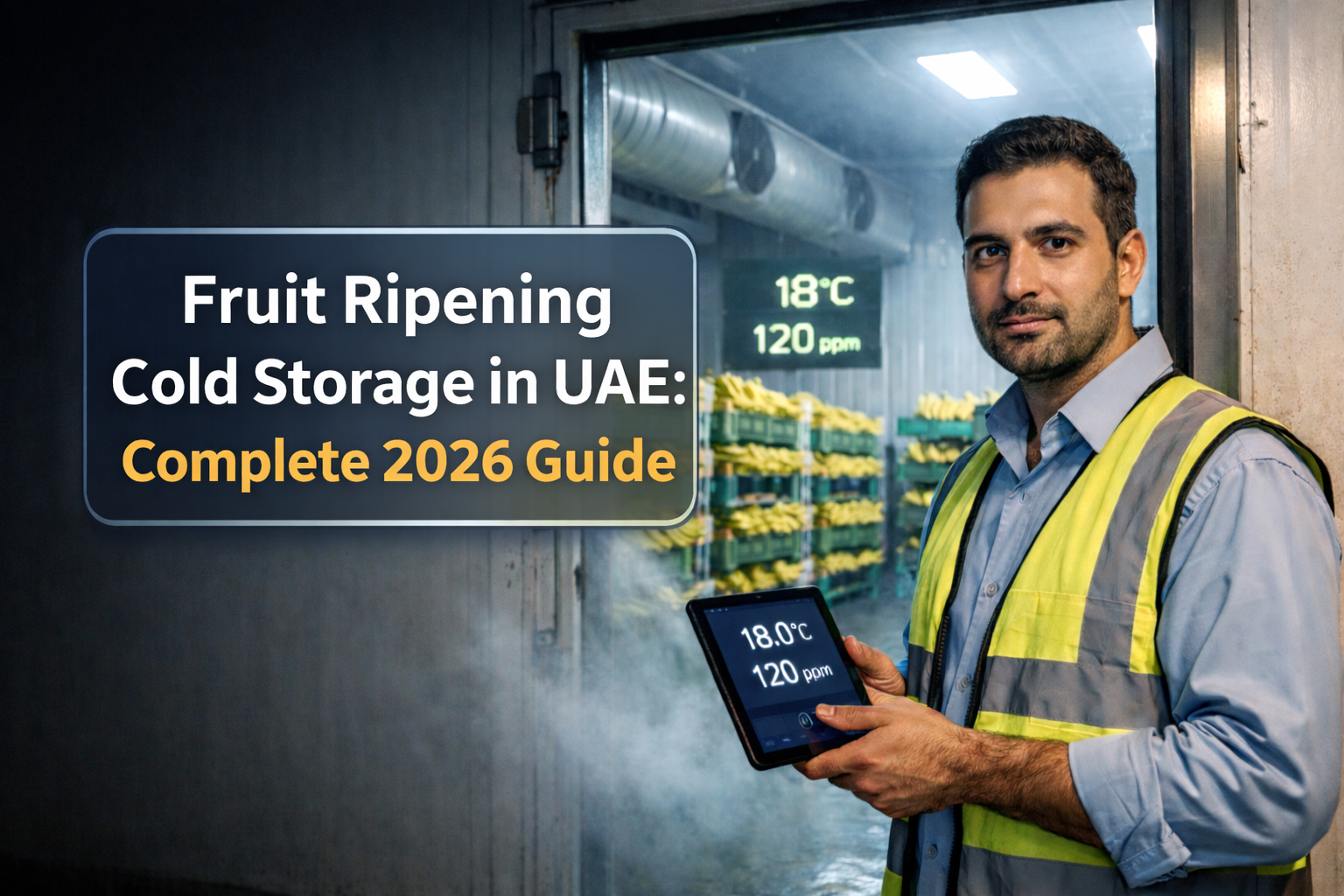
🍌 Introduction
Fruit ripening sounds simple — store fruit, wait, and sell.
But in reality, especially in hot climates, it’s a controlled scientific process.
Without the right system, you get:
Uneven ripening
Product loss
Poor quality fruit
This is why modern fruit businesses rely on ripening cold storage systems.
❄️ What Is Fruit Ripening Cold Storage?
Fruit ripening cold storage is a controlled environment system that manages:
Temperature
Airflow
Humidity
Ethylene gas
Carbon dioxide (CO₂)
👉 In simple terms:
It allows you to control when and how fruit ripens.
🌡️ Typical Ripening Temperatures
Different fruits need different conditions:
Bananas → 14°C to 18°C
Mangoes → around 20°C to 22°C
Avocados → 15°C to 18°C
👉 Important:
Temperatures above 25°C are generally avoided for consistent results.
⏱️ How Long Does Ripening Take?
Initial reaction: 24–72 hours
Full ripening: 4–6 days
This depends on:
Fruit type
Initial maturity
System design
⚙️ How the Ripening Process Works
Here’s what actually happens:
Fruit is loaded in the raw (mature-green stage)
Ethylene gas is introduced
Respiration increases
Heat and CO₂ are generated
Cooling removes excess heat
CO₂ is controlled through ventilation
Fruit develops color, texture, and sweetness
🧪 Why Engineering Matters
In hot climates, systems face extra challenges:
Outside temperatures can reach 45–50°C
High humidity affects performance
Long transport cycles impact fruit condition
This creates:
High heat load
Mixed ripening behavior
👉 A basic cold room cannot handle this properly.
🍃 Ethylene & CO₂ — The Hidden Factors
Ethylene (Ripening Trigger)
Used in small doses (10–150 ppm)
Applied for 12–24 hours
It starts the ripening process.
Carbon Dioxide (CO₂)
Builds up during ripening
Too much slows or disrupts the process
👉 Both must be controlled carefully.
🌬️ Airflow Is More Important Than You Think
Most failures come from poor airflow.
Airflow ensures:
Even temperature distribution
Proper gas circulation
Uniform ripening across all pallets
👉 Without airflow design, results become inconsistent.
🌡️ Air Temperature vs Fruit Temperature
This is one of the biggest mistakes.
Air may show the correct temperature
But fruit inside pallets can be 2–4°C higher
👉 This is why pulp temperature monitoring is critical.
⚠️ Common Reasons Systems Fail
In real-world operations, failures usually happen due to:
Poor airflow design
No CO₂ control
No pulp temperature monitoring
Undersized condenser units
Weak system design for high ambient heat
👉 It’s rarely just one issue — it’s a combination.
🔋 Energy Use & Cost Reality
Fruit ripening systems are energy-intensive.
Large systems can:
Consume 30,000+ kWh/month
Run continuously under load
👉 Efficiency depends heavily on system design.
💰 Typical Cost Range
Costs vary based on scale, but generally:
Medium to large systems → priced per pallet
Smaller systems → higher cost per unit
👉 Larger setups benefit from better efficiency.
🧠 Key Takeaways
Fruit ripening is a controlled biological process
Ethylene starts ripening, and CO₂ influences it
Airflow determines consistency
Fruit temperature matters more than air temperature
System design affects both quality and cost
🔗 Full Technical Guide
If you want a deeper breakdown (engineering design, airflow systems, cost calculations), you can read the full guide here:
👉 https://chillerroom.ae/fruit-ripening-cold-storage-uae/
📌 Final Thoughts
Fruit ripening systems are not just storage — they are precision-controlled environments.
When designed correctly, they:
Improve quality
Reduce waste
Increase profitability
When designed poorly, losses are unavoidable.
The difference always comes down to engineering and setup.