What is crypto mining?
What is crypto mining?
Cryptocurrency mining uses specialized computing resources to add blocks to a proof-of-work (PoW) blockchain. Adding a new block to a blockchain validates and records the latest batch of transactions and simultaneously mints new digital tokens.
The process of cryptocurrency mining is the “work” in a proof-of-work blockchain. Crypto miners use vast amounts of computing power as they compete to solve a complex math puzzle. The fastest miner to solve the puzzle is awarded the privilege of adding the newest block to a blockchain. They also collect transaction fees and the newly minted cryptocurrency associated with that block.
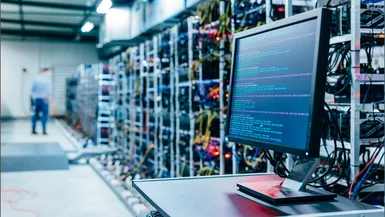
Cryptocurrency mining requires substantial computing power, which is typically measured in hashes per second—also known as a miner’s hash rate. (“Hashing” is a cryptographic function that converts variable inputs like transaction information into fixed-length strings of characters, or hashes.) Crypto miners use specialized hardware, including application-specific integrated circuits (ASICs) and graphics processing units (GPUs).
Anyone with an Internet connection and enough computing power to compete with other miners can choose to mine for cryptocurrency. Crypto mining is decentralized by nature, which supports the security of a proof-of-work blockchain.
How does crypto mining work?
Cryptocurrency mining is a complex process that requires sophisticated technical skills. But how exactly does it work? Here are the basic steps for using mining to process a pool of cryptocurrency transactions:
Transactions are pooled for verification. New cryptocurrency transactions, initiated but not yet complete, are grouped into what miners call a pool. Each transaction consists of information about the transaction itself plus a transaction processing fee.
Unverified transactions are bundled into a block. Miners bundle together some or all of these unverified transactions to form a block. If many transactions are pooled and awaiting verification, miners may prioritize the transactions based on transaction size, transaction age, or the associated processing fee.
Miners race to solve a complex math puzzle. With a block assembled, the race to mine this new block officially begins. Miners use powerful computing hardware to solve a complex puzzle, which requires finding a specific number—a nonce—that produces a hash when combined with the block’s data.
The bottom line
Many crypto miners would say that the best cryptocurrency to mine is the one that’s the most profitable. That may be true—but anyone who cares about the environmental impact of their crypto investments might consider avoiding proof-of-work tokens altogether. If you’re looking at Bitcoin, or another proof-of-work cryptocurrency, then do some research on the associated energy consumption and ecological footprint. Opting for proof-of-stake or another more energy-efficient consensus mechanism might align better with an environmentally conscious choice.