Crypto Swap Slippage Explained: How Fixed and Floating Rates Affect Your Final Exchange Amount
Why Some Crypto Swaps Finish With a Different Amount Than Expected
A crypto user starts an exchange and sees one expected amount. After the transaction confirms on-chain, the final payout changes. This is one of the most common situations in cryptocurrency exchanges, especially during volatile market conditions. The reason is usually crypto swap slippage.
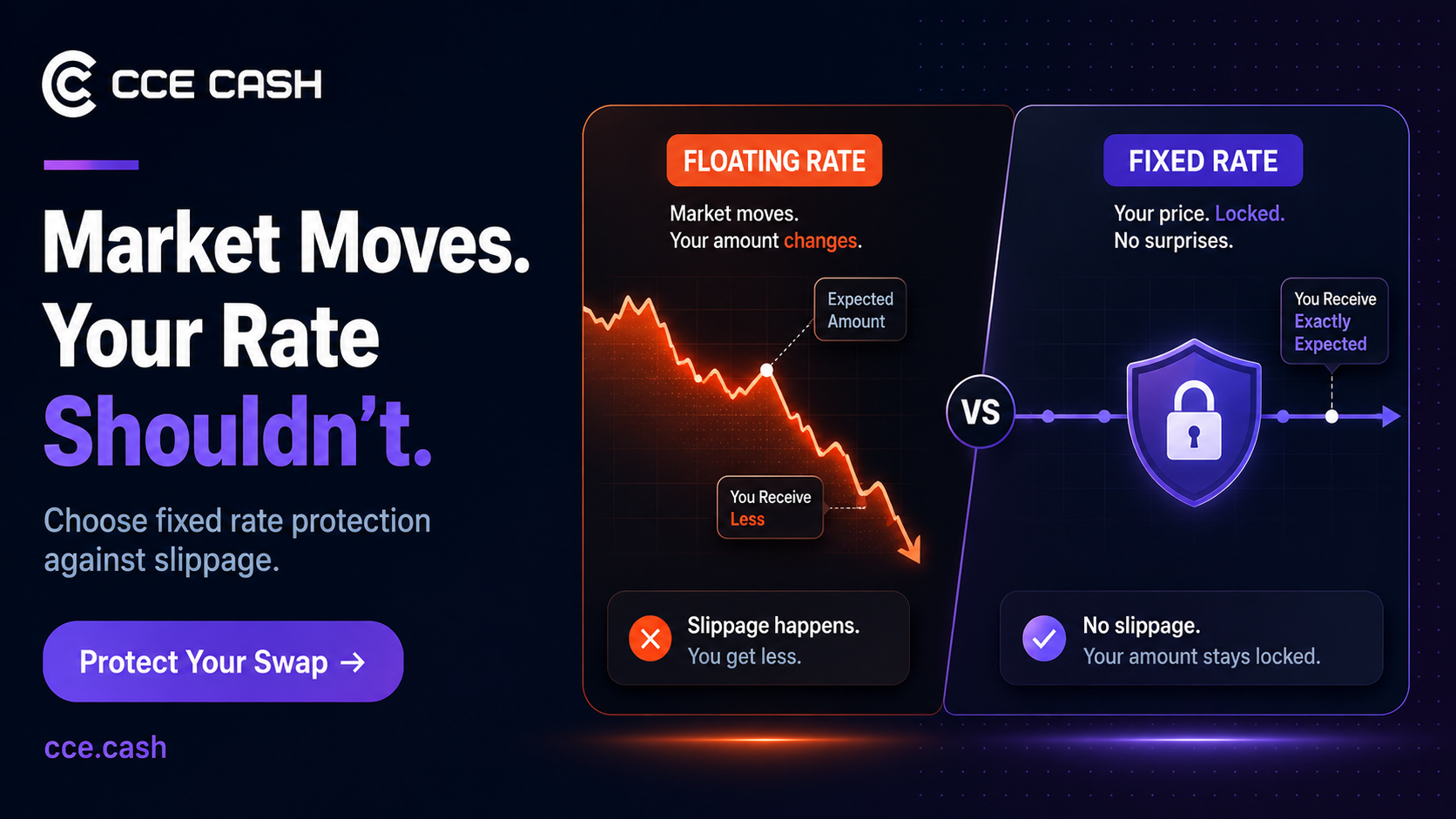
Slippage happens when the market changes between:
Order creation
Blockchain confirmation
Final exchange execution
For users exchanging assets across different chains, understanding this process is important.
What Causes Rate Slippage?
Several factors can create rate slippage during a crypto exchange:
Fast market movement
Slow blockchain confirmations
High network congestion
Low transaction fees
Volatility between assets
Example scenario:
A user swaps DOGE for BTC during a busy market period. The order initially displays one BTC amount. However, Dogecoin price moves before the blockchain confirms the transaction.
The final BTC amount changes because the exchange followed live market pricing during confirmation time.
Floating Rate Risk vs Fixed Rate Protection
Floating rate exchanges follow real-time market movement.
This means:
Users may receive more if the market improves
Users may receive less if the market drops
Some users prefer floating rates because they allow flexible market-based execution.
Others prioritize predictability instead.
Fixed rate protection locks the exchange rate temporarily. According to the CCE Cash FAQ, fixed rates remain locked for 10 minutes if the transaction arrives on time and matches the exact order amount.
This helps reduce uncertainty during volatile periods.
Why Blockchain Confirmation Speed Matters
Crypto exchanges cannot finalize until deposits receive blockchain confirmations.
According to the CCE Cash FAQ, low network fees can delay confirmations significantly.
That extra waiting time increases exposure to:
Price movement
Rate changes
Volatility
This is why experienced crypto users often check network conditions before sending large swaps.
How CCE Cash Handles Exchange Flexibility
CCE Cash supports both floating and fixed exchange rates inside a fully automated exchange system.
The platform supports cross-chain swaps between assets including:
BTC
ETH
USDT
DOGE
TRX
SOL
XMR
TON
AVAX
BNB
LTC
BCH
Users can:
Exchange without registration
Select preferred rate mode
Track orders in real time
View blockchain explorer links
Use the service across devices without an app
Discussion question:
Would most users rather prioritize execution speed or price certainty during volatile crypto markets?