The World of Crypto: From Digital Money to a Decentralized Future
**What Is Crypto? (The Concept of Digital Currency)
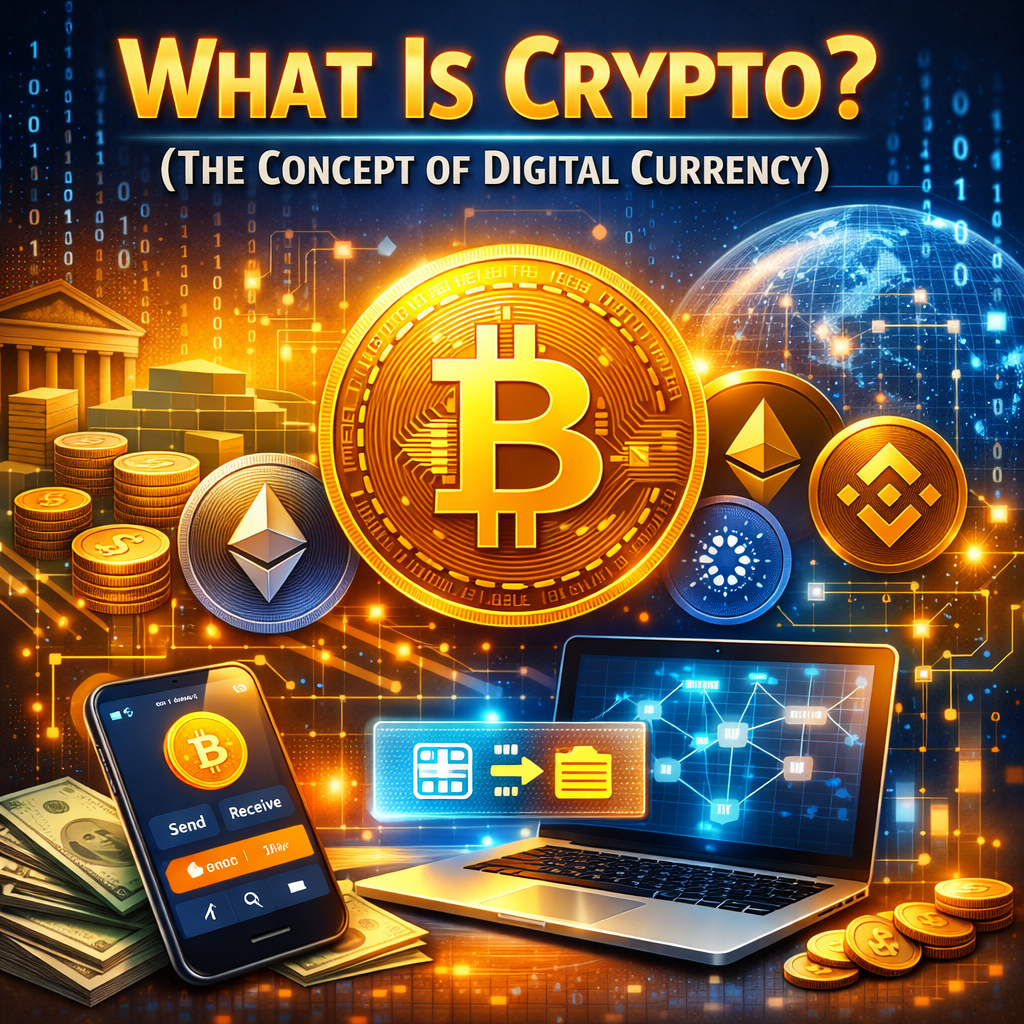
Cryptocurrency is a form of digital or virtual money that does not exist as physical notes or coins but operates entirely on the internet using secure cryptographic technology. Its core purpose is to allow people to send and receive value directly without relying on banks or central authorities. Traditional currencies are issued and controlled by governments and financial institutions, whereas cryptocurrencies are decentralized, meaning control is distributed across a global network of computers called nodes. Every transaction is recorded on a blockchain, a public digital ledger that cannot easily be altered, ensuring transparency and security. This structure builds trust without intermediaries and allows financial interaction across borders instantly.
**How Crypto Works (Blockchain and Validation)

Cryptocurrency transactions function through blockchain technology. When someone sends cryptocurrency, the transaction is broadcast to the network, where miners or validators confirm its authenticity. They verify that the sender owns the funds and that the transaction follows network rules. This process is achieved through consensus mechanisms such as Proof-of-Work or Proof-of-Stake. Once verified, the transaction is grouped into a block and added to the chain of previous blocks—hence the term blockchain. Because each block is cryptographically linked to the previous one, altering records is extremely difficult, making fraud and double-spending highly unlikely.
**How an Average Person Can Earn from Crypto (Income Methods)

Today, cryptocurrency has evolved into a broad earning ecosystem beyond simple investment. An average person can generate income in several ways. The most common method is trading—buying coins at a lower price and selling them when prices rise. Another approach is long-term holding (HODLing), where strong projects are kept for years to benefit from growth. Staking allows users to lock their crypto in a network to earn rewards. Mining is another option, though it requires hardware and electricity costs. Freelancers and online professionals can also accept payments in cryptocurrency, while others earn through NFTs, blockchain-based gaming, or decentralized finance (DeFi) platforms that offer lending and yield opportunities.
**Working in Crypto (Skills and Opportunities)

The crypto industry offers many career paths beyond trading. Blockchain development, smart-contract programming, crypto content creation, community management, marketing, and security auditing are rapidly growing fields. Even without a technical background, individuals can research promising projects, create educational content, manage online communities, or provide support services. Success in crypto requires understanding market volatility, practicing risk management, and recognizing scams. Continuous learning is essential because the technology and market evolve quickly.
**Advanced Crypto and the Future (Web3 and Decentralization)

At an advanced level, cryptocurrency represents more than money—it forms the foundation of a new digital economy known as Web3. This ecosystem includes decentralized finance (DeFi), decentralized applications (dApps), metaverse economies, and tokenized real-world assets. In the future, property ownership, voting systems, supply chains, and digital identity may operate on blockchain networks. This shift means crypto is not only about currency but about digital ownership, autonomy, and borderless participation. Those who learn blockchain skills today position themselves strongly for opportunities in the emerging decentralized economy.