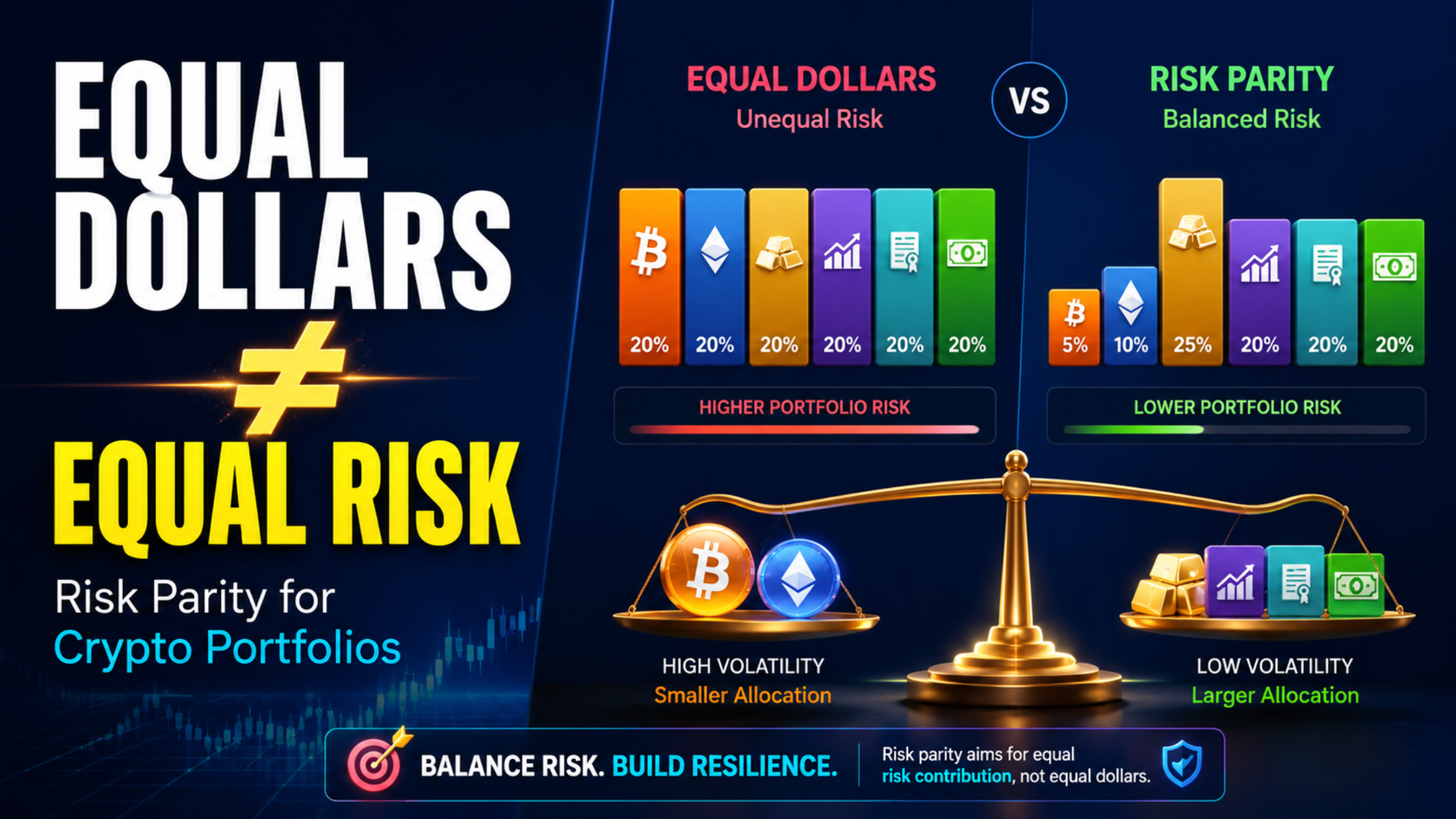
The DN Risk-Parity Allocator: Size Crypto by Risk, Not Guesswork
Most crypto portfolios look diversified.
They are not.
A portfolio split equally between Bitcoin, Ethereum, gold and equities may look balanced on paper. But equal dollars do not mean equal risk.
Bitcoin and Ethereum are far more volatile than gold, bonds or broad equity indices. That means a 25% Bitcoin allocation can drive much more than 25% of the portfolio’s movement.
This is the hidden problem risk parity solves.
Instead of asking:
How much money should I put in each asset?
Risk parity asks:
How much risk should each asset contribute?
The simplest version is inverse-volatility weighting.
High-volatility assets get smaller weights.
Lower-volatility assets get larger weights.
Cash appears when the chosen assets are too volatile for the target risk level.
Rebalancing keeps one asset from quietly taking over again.
This does not mean Bitcoin is bad.
It means Bitcoin must be sized honestly.
A small crypto position can still contribute a large share of total portfolio risk. A large bond or gold position may contribute much less risk than its dollar weight suggests.
That is why the DN Risk-Parity Allocator measures DN Risk Concentration: how much of your total portfolio risk is carried by the single largest contributor.
If one coin is driving half your risk, you are not diversified.
You are concentrated with extra steps.
The goal is not to avoid volatility.
The goal is to size it properly.
Read the full breakdown on Decentralised News: https://decentralised.news/risk-parity-crypto-portfolio-allocator-volatility-weighted-2026
#Crypto #Bitcoin #Ethereum #PortfolioStrategy #RiskParity #CryptoInvesting #RiskManagement #AssetAllocation #PortfolioConstruction #Volatility #Rebalancing #Altcoins #Gold #Equities #Bybit #OKX #Binance #Koinly #DecentralisedNews #18Plus