SEC’s New Crypto Classification: Which 4 Types of Assets Are No Longer Considered Securities?
The U.S. Securities and Exchange Commission (SEC), under Chairman Paul S. Atkins, has recently signaled a major shift:
👉 The introduction of a token classification system + an investment contract framework
For the first time, the SEC has clearly indicated:
👉 Four categories of crypto assets may not be considered securities—under specific conditions.
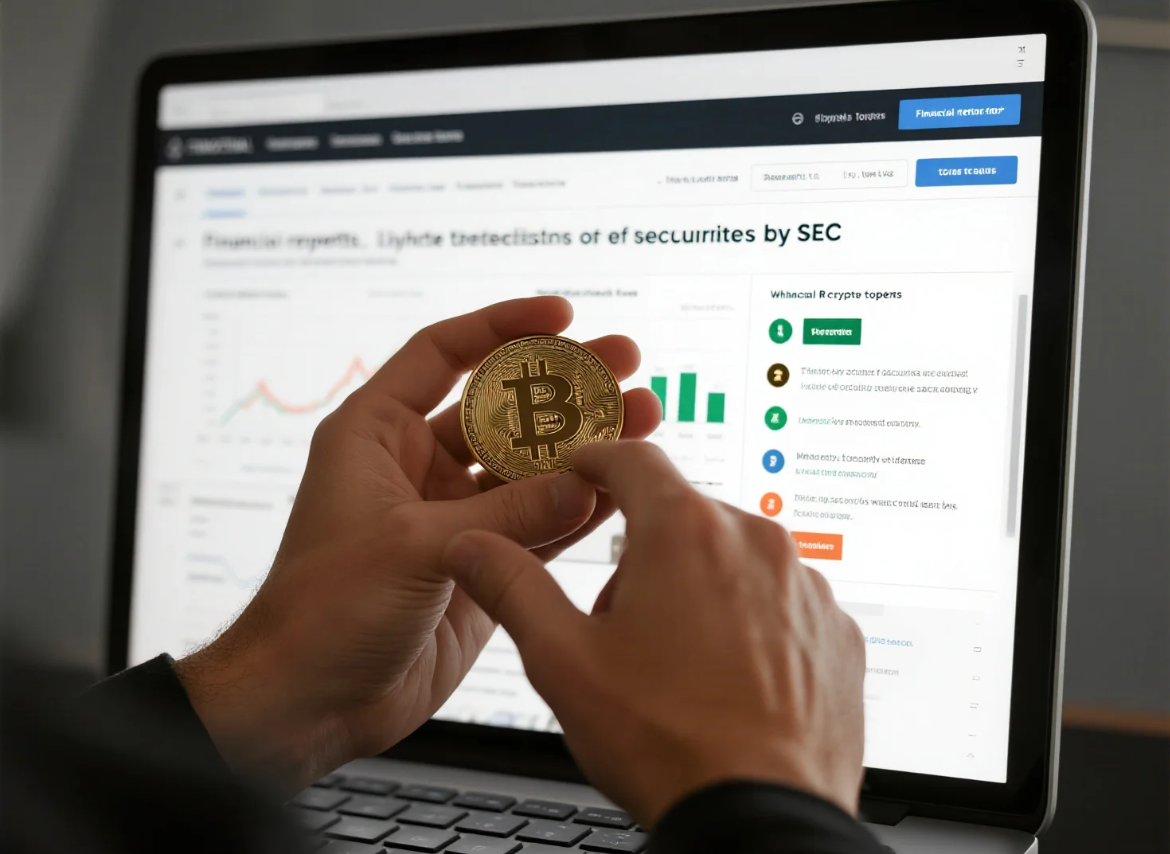
This is a critical development for the entire industry.
Because for years, the biggest uncertainty has been:
👉 Is this token a security or not?
I. The 4 Categories of “Non-Securities” Identified by the SEC
Under the new framework, the following asset types may fall outside securities classification, if certain criteria are met:
1. Digital Commodities
Examples:
- Bitcoin (BTC)
- Other highly decentralized assets
Key characteristics:
- No central issuer
- No reliance on a core team’s promises
- Price driven by market supply and demand
👉 These assets function more like:
Gold or traditional commodities
2. Digital Collectibles
Examples:
- NFTs
- Digital art
Key characteristics:
- Value derived from scarcity or cultural significance
- No emphasis on financial returns
👉 The key factor:
No expectation of profit = not a security
3. Digital Utility Tokens
Examples:
- Platform tokens
- Gas tokens (network fees)
Key characteristics:
- Used to access services or pay network fees
- Enable functionality within a system
👉 Critical condition:
They must NOT be marketed as investment products
4. Payment Stablecoins
Condition:
👉 Must comply with relevant regulatory frameworks (e.g., emerging legislation like the GENIUS Act direction)
Key characteristics:
- Pegged to fiat currency
- Used for payments and settlement
- No yield or return promises
👉 These resemble:
Digital cash
II. Why This Classification Matters
This framework addresses one of the biggest problems in crypto:
👉 Regulatory ambiguity
Previously:
- Projects didn’t know if they were compliant
- Exchanges hesitated to list tokens
- Investors lacked clear evaluation criteria
Now:
👉 The rules are becoming more defined.
III. The Underlying Logic: An Extension of the Howey Test
The SEC’s core standard remains:
👉 The Howey Test
An asset may be considered a security if it involves:
- An investment of money
- An expectation of profit
- Reliance on the efforts of others
👉 What’s new here is not the rule itself, but the clarification:
Which assets typically do NOT meet these conditions
IV. The Only Clear “Protected Zone”: Investment Contracts
The SEC also emphasized:
👉 The only assets explicitly governed by federal securities laws are investment contracts
This means:
- If a token is classified as a security
- It must fully comply with securities regulations
Otherwise:
👉 It faces enforcement risk.
V. Immediate Impact on the Market
1. Exchanges Benefit the Most
Exchanges can now:
- More easily filter which tokens to list
- Reduce legal risk
- Improve compliance efficiency
2. Projects Must Rethink Token Design
Future token design will need to consider:
- Are there profit promises?
- Is the system overly centralized?
- Is there real utility?
3. Stablecoins Gain Clarity
Payment-focused stablecoins now have:
👉 A clearer regulatory path forward
VI. Is This Regulatory Relaxation?
👉 No.
This is not deregulation.
It’s a shift from:
👉 Ambiguous enforcement → Structured, targeted regulation
The SEC is not easing control—it’s defining boundaries:
👉 What is allowed vs. what is not
VII. What Happens Next?
1. Market Segmentation
The crypto market may evolve into three layers:
- Commodity-like assets (e.g., BTC)
- Utility-based tokens
- Securities (regulated assets)
2. CeFi vs. DeFi Divergence
- CeFi (centralized platforms) → heavier regulation
- DeFi (protocol-based systems) → structural compliance focus
3. Compliance Becomes a Competitive Advantage
In the future:
👉 Compliance capability = core moat
VIII. What This Means for You (Critical)
If you are involved in:
- SEO
- Affiliate marketing
- Traffic monetization
- Exchange referrals
This shift is extremely important.
✅ High-Conversion, Lower-Risk Areas
Focus on:
- Exchanges
- Stablecoins
- Fiat on-ramps
👉 Why:
- Clear regulation
- Strong monetization potential
⚠️ Higher-Risk Areas
Be cautious with:
- New token launches
- High-yield projects
- Security-like tokens
👉 Why:
- Higher enforcement risk
- Less stable long-term
IX. One-Sentence Summary
👉 The SEC is moving crypto from a “gray zone” to a “classified system.”
The future is no longer about:
👉 What token you launch
But about:
👉 What category that asset belongs to
FAQ
Q1: Why is the SEC classifying crypto assets?
To define regulatory boundaries and reduce uncertainty for market participants.
Q2: Why is Bitcoin usually not considered a security?
Because it has:
- No central issuer
- No reliance on a team
- Market-driven value
Q3: Are NFTs always non-securities?
Not necessarily.
If NFTs are marketed with profit expectations, they may still be treated as securities.
Q4: Why might stablecoins not be securities?
If they:
- Are used for payments
- Do not promise returns
- Comply with regulations
They function more like digital cash.
Q5: Why is the Howey Test important?
It is the core legal standard used in the U.S. to determine whether something is a security.
Q6: What does this mean for investors?
- Easier risk assessment
- Safer identification of compliant assets
- Higher-risk projects more likely to be filtered out