Core AI and ML Applications in the Stock Market
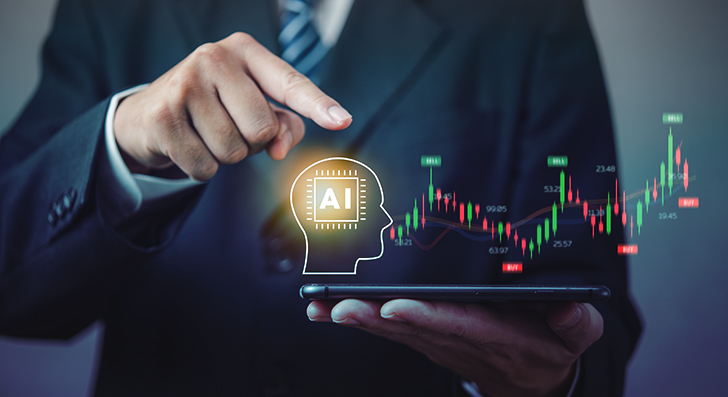
The Algorithm of Wealth: How AI and Machine Learning are Rewriting the Rules of the Stock Market
Disclaimer: This article is for educational and entertainment purposes only and does not constitute financial advice. Always do your own research (DYOR) before investing.
Have you ever wondered if a computer could beat a human at trading stocks? The answer is no longer a mystery. In the bustling canyons of Wall Street and the server farms of Silicon Valley, a silent revolution is taking place.
Artificial Intelligence (AI) and Machine Learning (ML) have moved beyond the realm of science fiction. They are now the tireless analysts, the predictive fortune-tellers, and the lightning-fast traders working behind the scenes.
Today, we are pulling back the curtain. We are going to explore exactly how these technologies are being used to navigate the complex world of the stock market, and what it means for the future of finance.
How AI "Thinks" About the Market
Traditional analysis relies on human interpretation of data. AI, on the other hand, can ingest the equivalent of a library of information every second and find patterns invisible to the human eye. Here are the core ways it's being done.
1. Predictive Analytics: Crystal Ball Gazing with Data
This is the most famous use case. Instead of guessing, AI models, especially advanced ones like LSTM Networks (a type of Recurrent Neural Network), are fed years of historical price data, trading volumes, and corporate actions. They learn the complex patterns that precede price movements.
- The Steemit Angle: Imagine an AI that studied the price action of Steem ($STEEM) during past bull runs and "Crypto Winter" events. It could potentially identify the technical conditions that signal a trend reversal. While not perfect, studies have shown these models can predict price movements with surprising accuracy—some achieving error rates as low as 2-3% on specific stocks.
2. Sentiment Analysis: Reading the Room (and the Internet)
Price is just a number. The real driver is human emotion—fear, greed, and hype. AI uses Natural Language Processing (NLP) to scan millions of data points from Twitter, Reddit (especially r/WallStreetBets), financial news headlines, and even the tone of voice in CEO earnings calls.
- The Steemit Angle: Think about the power of an AI that could analyze the sentiment of all Steemit posts and comments related to the crypto market. Is the community bullish? Is there FUD (Fear, Uncertainty, and Doubt)? AI can quantify this mood and predict its impact on price before a trend becomes obvious.
3. Algorithmic Trading: The Terminator of the Trading Floor
This is where the AI takes action. High-frequency trading (HFT) algorithms have existed for years, but new AI models use Reinforcement Learning. They are given a goal (make a profit) and a set of rules (risk limits). They then execute thousands of trades, learning from successes and failures in real-time, often without human intervention.
- Real-World Example: A system called AlphaNiftyAI recently demonstrated the power of this approach. Using a team of AI agents, it developed a trading strategy that backtested to an astonishing 127.80% return over two years.
- The Steemit Angle: While you can't easily run these algorithms on a home computer to trade crypto, understanding that "whales" and major funds use them explains a lot about sudden price spikes and dumps you see on exchanges.
⚠️ The Double-Edged Sword: Challenges We Must Face ⚠️
AI isn't a magic money tree. For every brilliant application, there is a significant risk.
- The "Black Box" Problem: Some of the most powerful AI models are so complex that even their creators can't explain why they made a specific trade. In a regulated market, this lack of transparency is a massive red flag. How can you trust a machine if it can't explain its reasoning?
- Algorithmic Herding: What happens if 50 different hedge funds are using the same AI model? They would all likely buy and sell at the same time, creating a "flash crash" and amplifying market volatility instead of stabilizing it.
- Garbage In, Garbage Out: AI is only as good as the data it's trained on. If the historical data contains biases or if the model is fed bad information, it will make catastrophic decisions.
The Verdict: Human + Machine = The Future
So, will AI replace human investors? Unlikely. The real magic is happening at the intersection of human intuition and machine intelligence.
Portfolio managers are now using AI as a supercharged research assistant. It can scan thousands of companies and identify a promising new theme (like "GLP-1 weight loss drugs") in minutes, but it takes a human to understand the science, the competitive landscape, and the regulatory hurdles.
this revolution is a reminder of the value of information. The data we create—our posts, our comments, our sentiment—is becoming a valuable commodity used to fuel these very algorithms.
What are your thoughts?
Do you trust a robot with your investments? Have you used any AI tools for your own trading research? Let's get a discussion going in the comments below!