Bridging On-Chain Earnings to Off-Chain Spending: How a Crypto Card Works for Gamers and NFT Holders
Opening: the income-spending currency mismatch
A growing share of online income arrives in crypto. Play-to-earn games pay out in tokens. NFT marketplaces settle royalties in ETH or stablecoins. GameFi platforms distribute rewards on-chain. For users whose earnings flow through these systems, the income side of their financial life is increasingly denominated in digital assets. The spending side, however, has not moved. Rent is still paid in local currency. Groceries still cost fiat. Utility bills still go to fiat-denominated companies. The gap between on-chain income and off-chain spending is the bottleneck that most crypto earners hit eventually. A crypto card addresses that gap not by solving it conceptually but by handling the conversion at the moment of spending rather than as a separate workflow.
What the income side actually looks like
For a typical user earning through on-chain channels, income arrives in several forms. Play-to-earn games pay out in their native token, which may need to be swapped to a more stable asset before it's useful for spending. NFT royalties arrive in ETH or a stablecoin tied to the marketplace. Staking and yield farming generate rewards that accumulate in the user's wallet. Freelance work paid in crypto typically settles in USDT or another stablecoin. The common thread is that the income flow is on-chain — meaning withdrawal to fiat requires a deliberate offramp step that the user has to manage manually.
The traditional offramp workflow
The conventional approach to converting crypto income to spendable fiat involves several steps. Move funds from a wallet to an exchange. Sell crypto for the local fiat currency. Withdraw the fiat to a bank account, which often takes one to three business days. Pay any exchange fees, withdrawal fees, and FX spreads along the way. Then use the fiat through a normal debit card. For someone receiving regular crypto income, this becomes a repeating monthly chore with multiple touchpoints, each of which can fail, delay, or add cost. For someone earning across multiple platforms — gaming, NFTs, freelance — the workflow gets more complex with each income source.
How a crypto card collapses the workflow
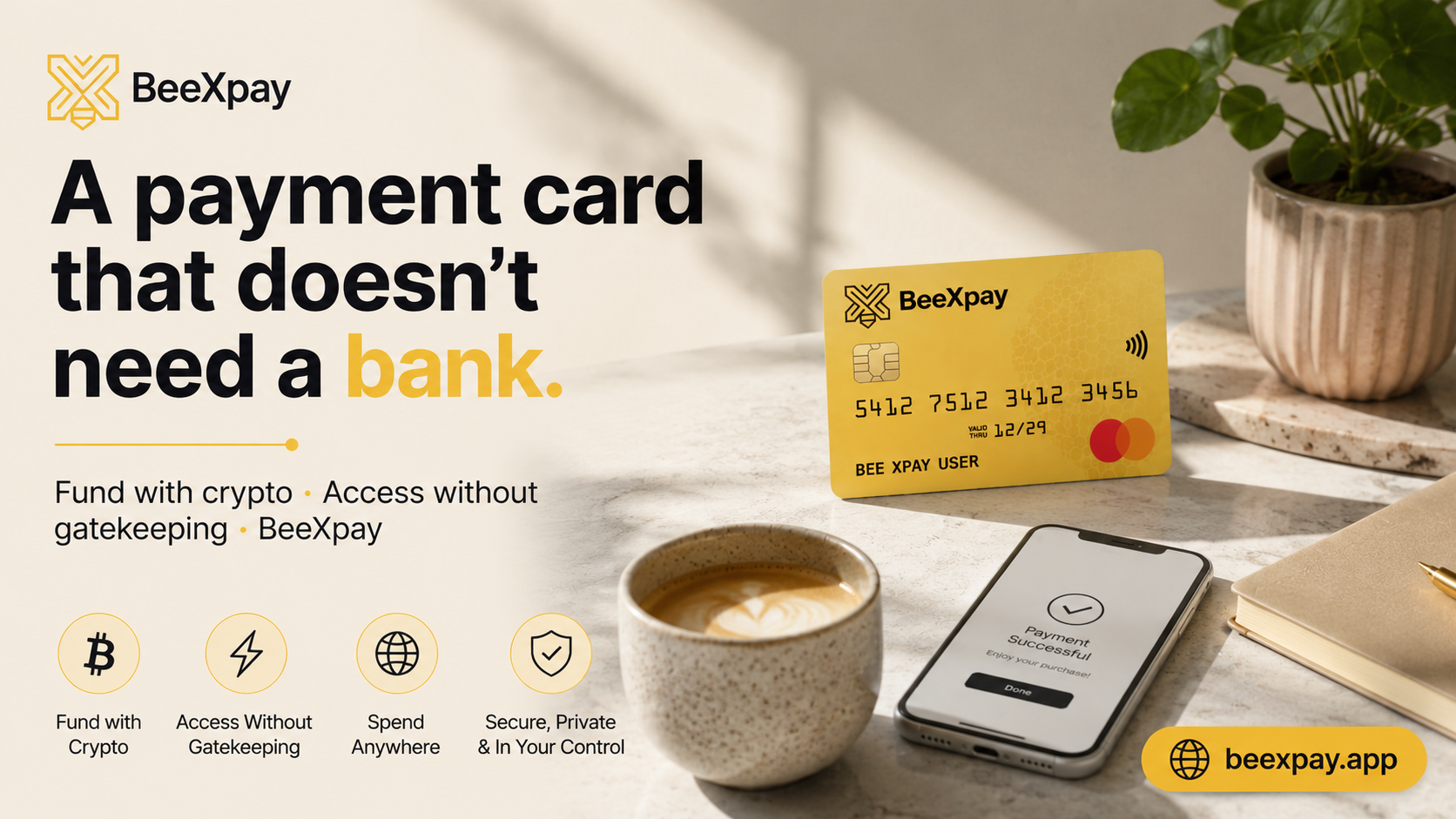
A crypto card with conversion at the moment of payment removes the offramp step from the income workflow entirely. Funds stay in crypto in the wallet. The card pulls from that wallet and converts to USD at the moment of spending, locking the rate at that instant. From the merchant's perspective, the card is a USD payment instrument like any other. From the user's perspective, the crypto sits in the wallet until it's actually spent, with no intermediate fiat balance to manage. For gamers and NFT holders earning in crypto, this collapses what was a multi-step monthly process into a single transaction-time conversion that happens automatically.
Fees on a crypto card relative to the manual offramp
The economics depend on volume and frequency. Manual offramping carries exchange withdrawal fees (often $5–$25 per withdrawal), exchange trading fees (0.1–0.5% per swap), and bank withdrawal delays. A crypto card carries a reload fee — BeeXpay charges 4% with Light KYC or 2.5% with Full KYC — and a flat $0.25–$0.50 per transaction, plus 1.5–2% bank FX on non-USD merchant transactions. For users with regular spending throughout the month, the card fees can come out comparable or favorable to manual offramping once delays, withdrawal limits, and the time cost of managing the workflow are accounted for. For users who prefer to convert in larger infrequent batches, manual offramping may be cheaper. The model fits frequent spending better than large lump-sum conversions.
Virtual versus physical for this use case
For gamers and NFT holders, the virtual-versus-physical decision usually comes down to spending pattern. Virtual cards from BeeXpay cost $10, work through the Telegram Mini App with Light KYC, and are suitable for online purchases — game store top-ups, subscription services, online retail, digital content. Physical cards cost $100, require Full KYC, ship in around two weeks, and work in stores and at ATMs (subject to network support) for in-person spending. Many users in this segment find the virtual card sufficient because most gaming and NFT earnings flow into online spending anyway, and the lower entry cost makes it easier to try the workflow.
Closing CTA
For gamers and NFT holders with income flowing through on-chain channels, the conversion gap is real and the manual offramp workflow is annoying. A crypto card with at-the-moment conversion isn't a magical solution but it does collapse the workflow into something automatic.
Explore payment access → https://beexpay.app