freelancer paid $3,000 USDT — what happens next?
A growing number of freelancers now receive payments directly in cryptocurrency. Designers, developers, marketers, video editors, and remote consultants often invoice clients in USDT or Bitcoin instead of relying on traditional bank transfers. The process is usually faster and more borderless than international banking systems. But after the payment arrives, another question immediately appears: how does that crypto become usable for normal daily spending?
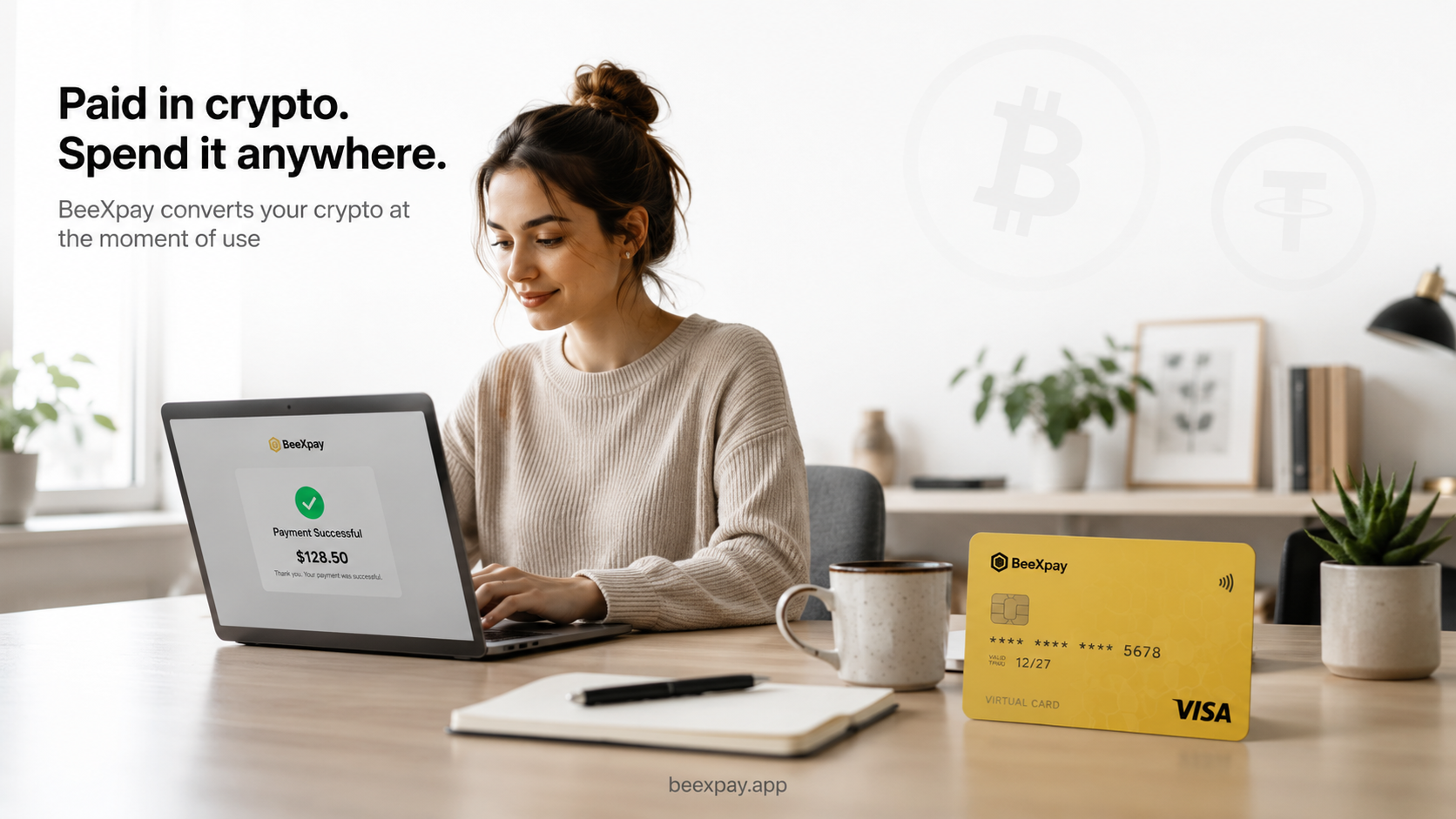
A freelancer receiving $3,000 in USDT may not necessarily want to sell funds through an exchange, withdraw to a bank account, wait for settlement, and repeat the same cycle every month. The payment itself may be global and efficient, but spending still often depends on older banking rails. This is where crypto-funded payment access layers are beginning to change the workflow for remote earners.
The off-ramping problem freelancers face
Traditional off-ramping introduces several layers of friction. A freelancer receiving crypto income typically needs to move funds to an exchange, convert assets into fiat currency, request a withdrawal, and wait for bank settlement. Depending on the region and platform, additional fees and verification requirements may also apply.
For many remote workers, this process becomes repetitive and inefficient. International freelancers already operate across borders, time zones, and payment systems. Delays in accessing earnings directly affect cash flow and everyday financial management. Even after conversion, bank transfers may still take additional processing time before funds become available for spending.
The issue is not necessarily about holding crypto long term. In many cases, freelancers simply need a practical bridge between crypto income and real-world expenses.
What a crypto card changes for independent earners
A crypto-funded card changes the spending flow by removing part of the off-ramping cycle. Instead of cashing out manually to a bank account before every expense, the user funds a payment card directly with cryptocurrency. The conversion from crypto to fiat happens automatically at the moment of payment.
BeeXpay operates as a crypto-funded payment access layer designed around this model. Users can access a virtual card for $10 or a physical card for $100. The card can then be used for online transactions or other supported payments while the system converts crypto into fiat in approximately five seconds during the transaction itself.
This structure allows freelancers to move from receiving crypto payments to spending them more directly, without continuously relying on manual exchange withdrawals.
Practical scenarios: rent, subscriptions, groceries, tools
Freelancers usually face a combination of recurring monthly expenses. Software subscriptions, cloud storage services, design tools, online advertising budgets, and productivity platforms are often paid digitally. A crypto-funded card allows these services to be paid directly using crypto-backed balances.
Daily life expenses can also become easier to manage. Groceries, transportation, online purchases, and travel-related payments increasingly rely on digital card infrastructure. For remote workers who travel frequently or work internationally, maintaining flexible payment access becomes especially important.
Another practical scenario involves team collaboration tools. A freelance agency owner receiving USDT from international clients may need to pay for software licenses, contractors, hosting, or AI tools every month. Using a crypto-funded card simplifies access to these payments without requiring repeated bank conversions.
The math: what does it cost to spend $500/month via card?
Cost transparency matters for freelancers operating on monthly budgets. BeeXpay’s Light KYC model includes a 4% reload fee, while Full KYC reduces reload fees to 2.5%.
If a freelancer spends approximately $500 per month using the card under Light KYC, the reload cost would equal around $20. Under Full KYC, the same spending level would result in roughly $12.50 in reload fees.
Transaction fees for USD purchases range between $0.25 and $0.50 per transaction. Assuming 20 transactions monthly at an average fee of $0.35, the additional monthly transaction cost would be approximately $7.
For many freelancers, these costs may still compare favorably against repeated exchange withdrawal fees, bank conversion costs, delays, or international transfer charges.
Light KYC vs Full KYC — which path suits freelancers?
BeeXpay provides two access models depending on user preferences and monthly usage requirements.
The Light KYC option operates through the Telegram Mini App. It prioritizes speed and convenience, allowing freelancers to access a virtual card quickly with simplified onboarding. This path may suit lower-volume users or freelancers primarily focused on digital subscriptions and online purchases.
The Full KYC path operates through the BeeXpay application itself. It includes lower reload fees at 2.5% and access to physical cards. For freelancers managing larger monthly volumes or more regular spending activity, this structure may become more practical over time.
The decision largely depends on transaction frequency, spending patterns, and the importance of lower operational costs versus faster onboarding.
Closing CTA: https://beexpay.app
Remote work increasingly operates on global payment rails, but spending infrastructure has not always evolved at the same speed. Crypto-funded payment access layers attempt to close this gap by allowing freelancers to move more directly from crypto income to real-world spending.
Instead of repeating the same exchange withdrawal cycle every month, freelancers can access payment tools designed around digital asset usage itself. BeeXpay provides one example of this approach through both Telegram Mini App access and a full application environment.
More information: https://beexpay.app
freelancer cryptopayments USDT bitcoin cryptocard virtualcard remotework spendcrypto beexpay fintech