From Web3 Wallet to Real-World Spending
The last-mile bridge
Crypto holdings have grown to meaningful scale for many users, but the bridge from crypto to real-world spending often involves more friction than expected. Centralized exchange offramps, bank transfers, multi-day waits, reconciliation. The card-based bridge — wallet to card to merchant — removes most of this.
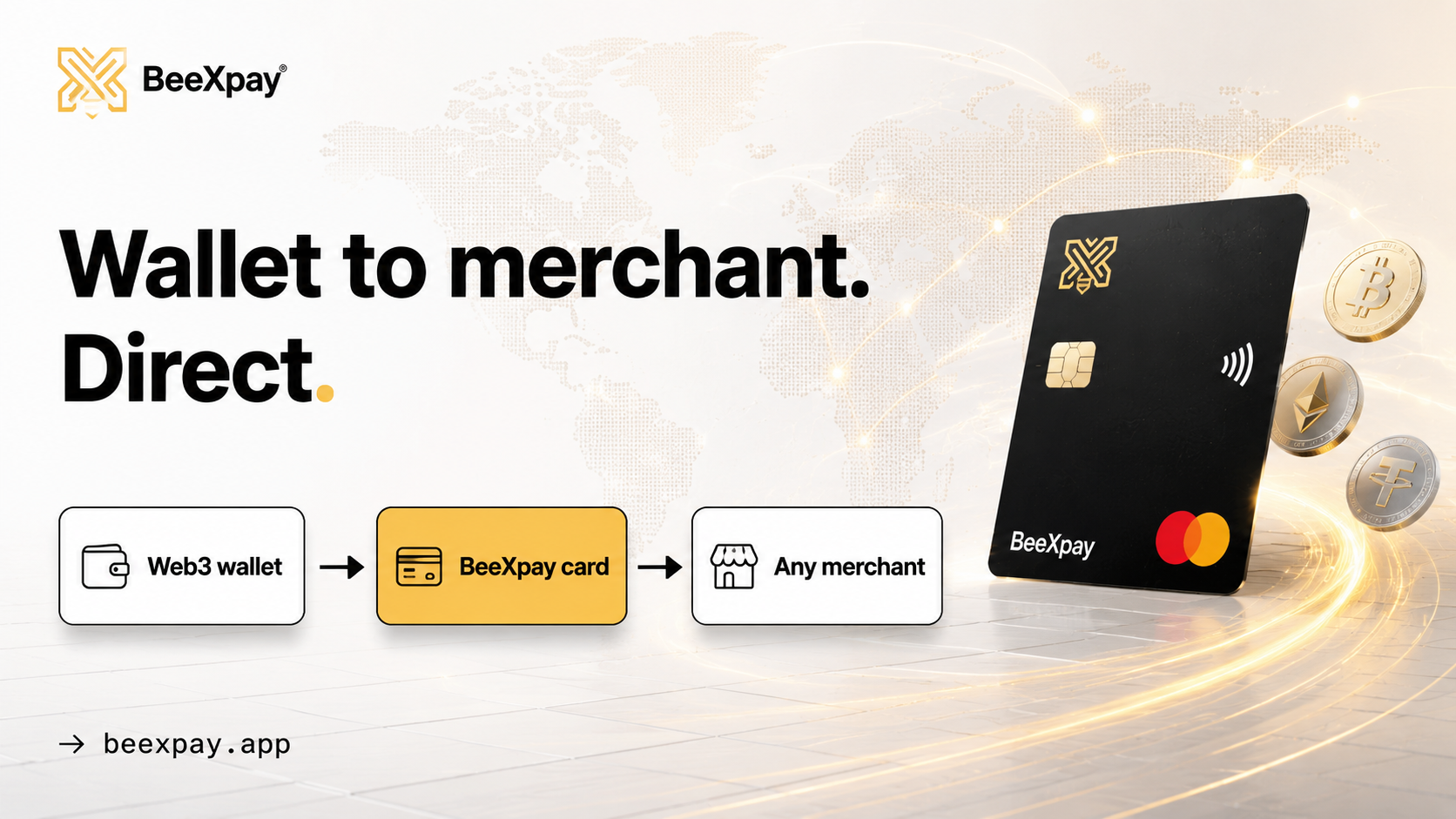
How the pipeline works
The flow is straightforward. Hold crypto in your wallet (custodial or non-custodial). Send USDT, USDC, BTC, or ETH to BeeXpay's deposit address. Card balance updates after blockchain confirmation (minutes on Tron USDT, longer on slower networks). Spend at any USD merchant — online subscriptions, e-commerce, in-person with the physical card.
What this enables for Web3 users
For users with meaningful crypto holdings, the card-based bridge enables spending without converting to fiat through traditional channels. Pay for subscriptions, online purchases, or business expenses directly from crypto. The user doesn't need to maintain a separate fiat operation alongside their crypto life.
Custodial vs non-custodial considerations
The card-based bridge can serve users from either custodial wallets (exchange accounts) or non-custodial wallets (MetaMask, Phantom, hardware wallets). The user's wallet choice doesn't affect the card's operation — what matters is being able to send from the wallet to BeeXpay's deposit address.
Cost analysis
For $1,000 in monthly spending: 2.5% reload (Full KYC) = $25, plus minimal flat fees on USD transactions. Compare to traditional offramp: exchange trading fees + withdrawal fees + bank transfer fees + FX = often higher total cost. The card-based bridge is competitive on cost while being significantly faster.
Speed comparison
Traditional offramp: 1-5 business days from selling crypto to having spendable fiat. Card-based: minutes (on Tron USDT) to an hour (on Bitcoin) from sending crypto to having spendable card balance.
Honest limits
The card-based bridge serves spending well. It doesn't handle every use case. Receiving payments from others — that's still wallet-to-wallet. Large lump-sum withdrawals to bank for major purchases — traditional offramp may be more cost-effective at scale. Tax reporting for the crypto holdings — separate from card transactions.
Combined with other Web3 patterns
The card-based bridge fits naturally with other Web3 spending patterns. DeFi users earning yield can offramp directly to card without going through centralized exchange. Freelancers receiving payment in crypto can spend directly without converting first.
→ Try it: https://beexpay.app
#Web3 #BeeXpay #cryptocard