H2 2026 Outlook: A Roadmap of Friction Removal
A roadmap framed around friction removal
Roadmaps from fintech operators often read as marketing exercises — flashy features designed for press releases more than for users. The more useful framing is: what friction do users actually hit, and what work removes it? The BeeXpay direction for H2 2026 is framed around this question rather than around feature announcements.
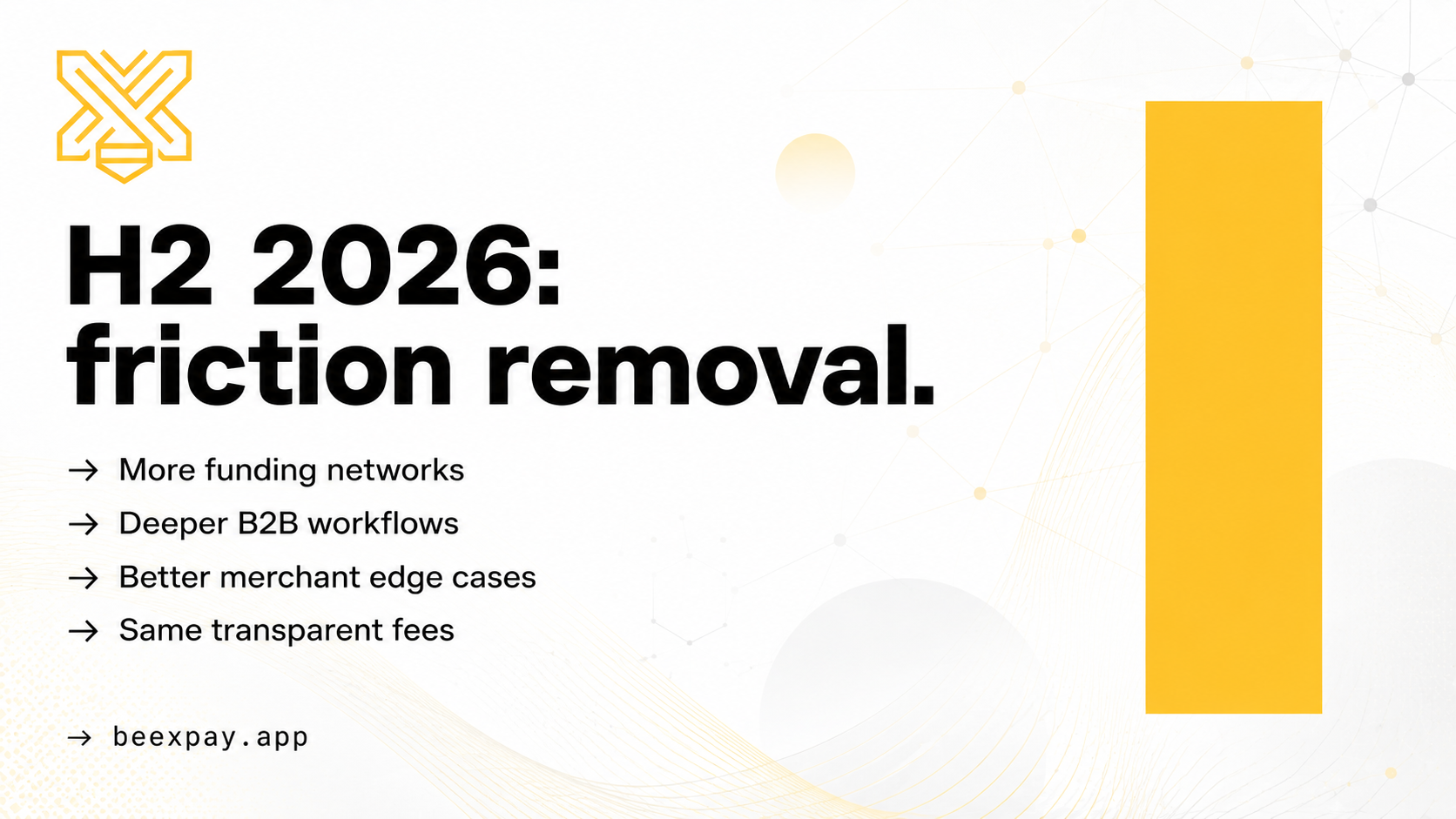
More funding networks
The first direction is broader network support for funding. Current supported networks cover what most users actually fund with at scale — Tron, Ethereum, Solana, Base, BSC — but additional networks make sense as user holdings diversify. The criterion for adding networks is user demand and operational fit, not marketing optics.
Deeper B2B workflows
The second direction is supporting crypto-native businesses more deeply. The B2B use case is real but underdeveloped. Better corporate dashboards, multi-user controls, granular permission systems, deeper accounting integrations. The work serves businesses already using the platform for B2B payments.
Merchant acceptance edge cases
The third direction is continued attention to merchant acceptance — specifically the edge cases where BIN screening, prepaid card policies, or merchant-specific restrictions create user friction. Each edge case affects a subset of users, but the cumulative effect is meaningful.
What stays the same
The roadmap doesn't include changes to the things that should stay stable. Transparent fee structure remains. No tier requirements requiring native token holdings. No commercial data transfer. No surprise charges. Core positioning choices don't change with product evolution.
What's deliberately not on the roadmap
A few things are deliberately not on the BeeXpay roadmap. A native token launch with tier-gating. Aggressive cashback rewards programs. Marketing-driven feature additions that don't solve real user problems. The discipline of not building things matters as much as the discipline of building the right things.
Why this matters as a signal
For users evaluating BeeXpay, the roadmap signals operational philosophy. Operators with friction-removal roadmaps usually have other clean operational practices. Operators with marketing-driven roadmaps often have other marketing-driven choices. The shape of the roadmap is a signal about the operator's relationship with users.
Practical implications
For users, the H2 direction means: continued reliable service with the features they actually use, plus incremental improvements on edge cases. Not transformative changes; rather, steady refinement of what's already working. For most users, this is what they actually want.
→ Try it: https://beexpay.app