Instant Card Freeze: Self-Serve Control as Security Feature
The feature you appreciate only when you need it
Card freeze is one of those features that sits unnoticed until the moment you need it. You misplace your phone. You spot a charge you don't recognize. You want to lock a card you're not actively using. In each case, instant freeze — stopping all transactions immediately without calling support — is the difference between contained and escalating.
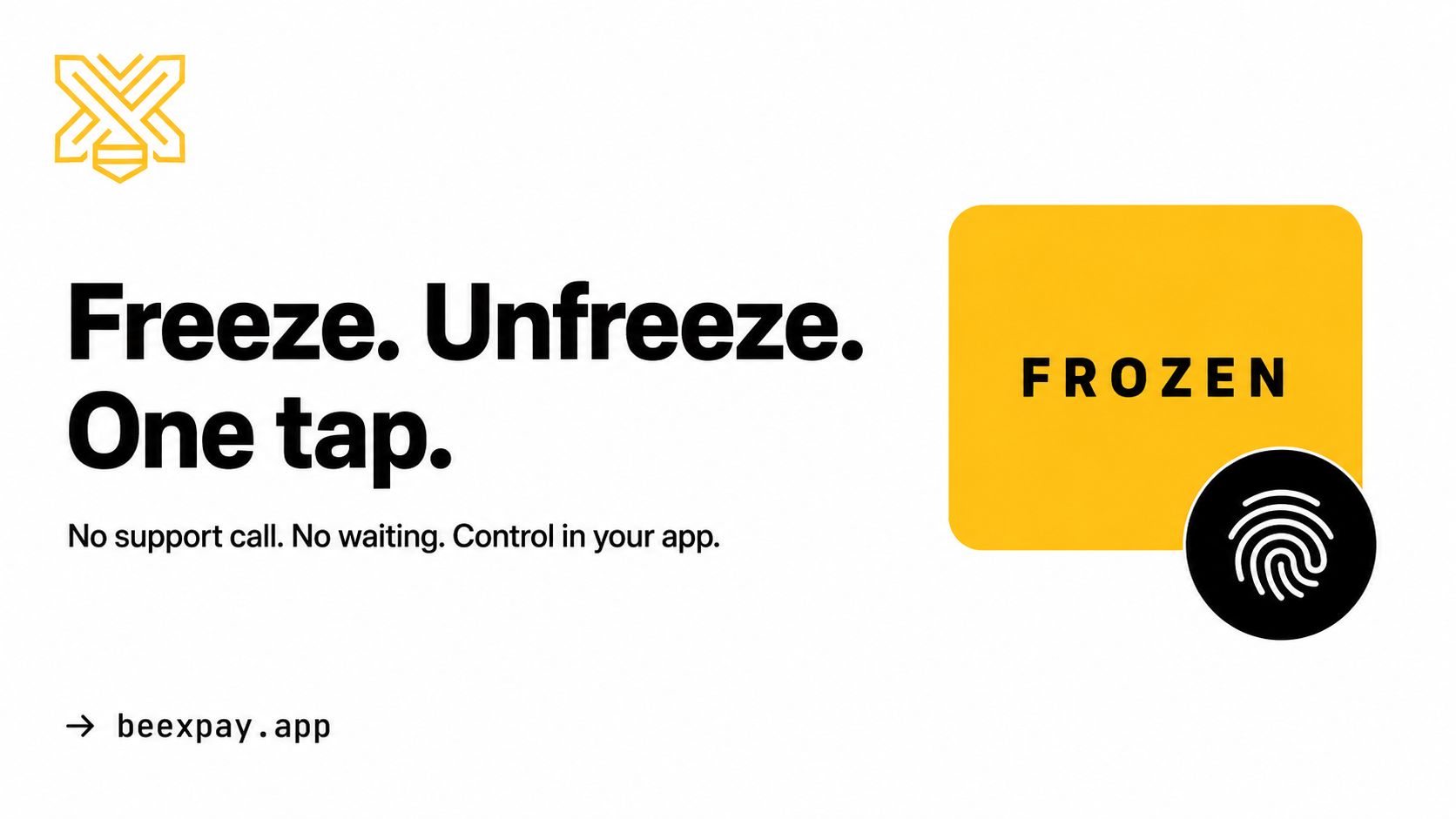
How instant freeze works
One tap freezes the card. All transactions stop immediately. One tap unfreezes when ready. No support call, no verification queue, no waiting period. Self-serve and instant. For a user who realizes at 2 AM they don't recognize a charge, the ability to freeze immediately matters.
Why self-serve matters more for crypto cards
Crypto operates around the clock and across time zones. Issues that need fast action don't keep business hours. Self-serve freeze means the user controls the response time rather than waiting on support's schedule. For security-relevant situations, this control reduces the window in which a problem can escalate.
Use cases beyond emergency
Freeze isn't only for emergencies. Common non-emergency uses: locking a subscription card while you evaluate canceling, freezing a travel card when you're back home, parking a card you're not actively using to reduce exposure surface. The friction of freezing is so low that it becomes useful for routine card management, not just security incidents.
What freeze does and doesn't do
Freeze stops new transactions. It doesn't reverse already-completed transactions or pending authorizations. It doesn't close the card permanently. It doesn't refund existing charges. For a freeze response to a fraud concern, freeze stops further damage but doesn't unwind what already happened — that's separate dispute and reversal handling through support.
Combined with virtual card economics
Self-serve freeze pairs well with cheap virtual card issuance. If a card is compromised, the simple play is freeze the compromised card, issue a fresh one for $10, and continue. Total downtime: minutes. With traditional cards, this involved support calls, waiting periods, and physical card mailing. The virtual card economics make freeze-and-replace a routine response rather than a multi-week recovery.
Closing thought
Self-serve instant freeze is a small feature with outsized impact when it's needed. Combined with cheap, fast virtual card issuance, it turns card security incidents from prolonged recoveries into quick contained responses. Worth knowing it's there before you need it.
→ Try it: https://beexpay.app