Metal Crypto Cards vs Standalone Physical Cards
The premium tier model
Major centralized exchanges — Binance, Crypto.com, Coinbase — offer crypto cards in tiered structures where premium tiers (often metal) require holding their native tokens at specified minimums. Tier minimums range from $1,000 to $50,000+ depending on tier. The cards look impressive; the structure is essentially: lock up tokens to access better card features.
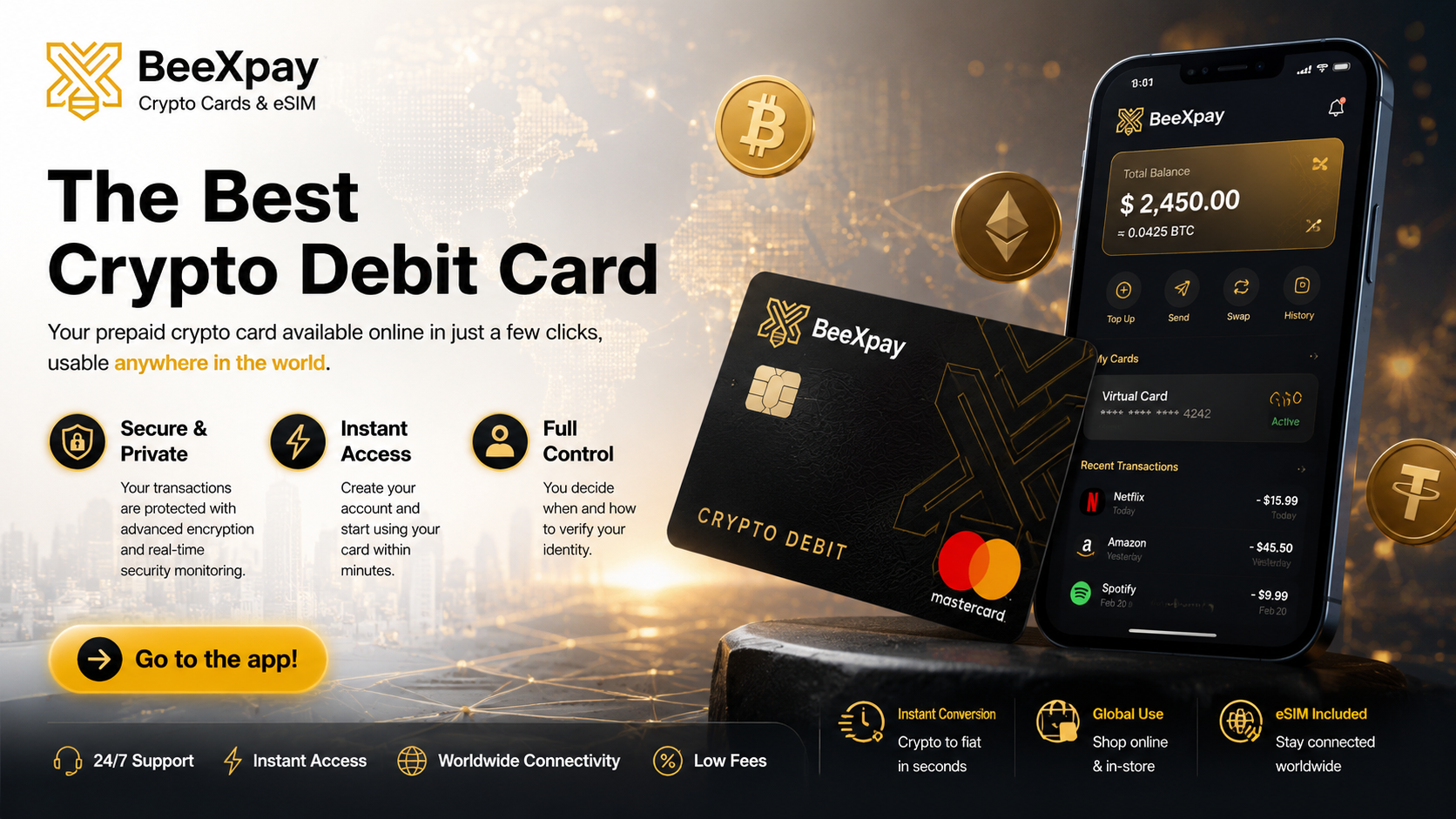
BeeXpay's positioning
BeeXpay's physical card costs $100 one-time, requires Full KYC, ships in ~2 weeks. No tier requirements. No native token holding. The card is functionally similar to premium tier cards on core features — in-person spending, ATM access, mobile wallet integration — without the premium tier overhead.
Where metal cards win
Premium tier cards offer real benefits beyond aesthetics. Cashback rewards (1-8% depending on tier). Travel benefits (lounge access, insurance). Subscription rebates. Exchange fee discounts. For users who'd hold the native tokens anyway and value the rewards, premium tiers can produce real value.
Where standalone cards win
For users who don't want to hold native tokens, don't value the rewards enough to offset lock-up, or want simpler cost structures, the standalone model wins. $100 one-time is sunk cost; tier minimums are ongoing capital commitment. Token holding exposes users to platform-specific volatility.
The math on a typical example
Comparing a metal card requiring $1,000 in tokens vs $100 BeeXpay card: metal card user has $1,000 in volatile tokens, plus rewards (a few percent on spending), plus metal aesthetic. BeeXpay user has $100 sunk, no token volatility exposure, standard card functionality. Over five years with moderate spending, rewards may or may not offset token risk — depends entirely on what the platform's token does.
Hidden costs of tier minimums
Opportunity cost of capital locked in platform tokens. Volatility exposure on those tokens. Tier downgrade risk if token price drops. Platform-specific risk concentration. None of these costs apply to a simple physical card without tier requirements.
What each model fits
Premium tier fits users who already hold the platform's native tokens for other reasons, value the rewards meaningfully, and are comfortable with the volatility exposure. Standalone fits users who want a working physical card without ecosystem commitment, prefer predictable upfront costs, and don't want platform-specific token exposure.
Honest framing on rewards
Crypto card rewards are real but variable. Cashback in volatile tokens means value depends on token price. Travel benefits depend on user actually using them. Subscription rebates only matter for subscriptions held. Headline rates often don't translate to actual value most users get.
→ Explore: https://beexpay.app