Paying at an Online Checkout With a BeeXpay Virtual Card — The Experience Is Identical to Any Standard Debit Card
Most assume paying with crypto is complicated — the virtual card checkout proves otherwise
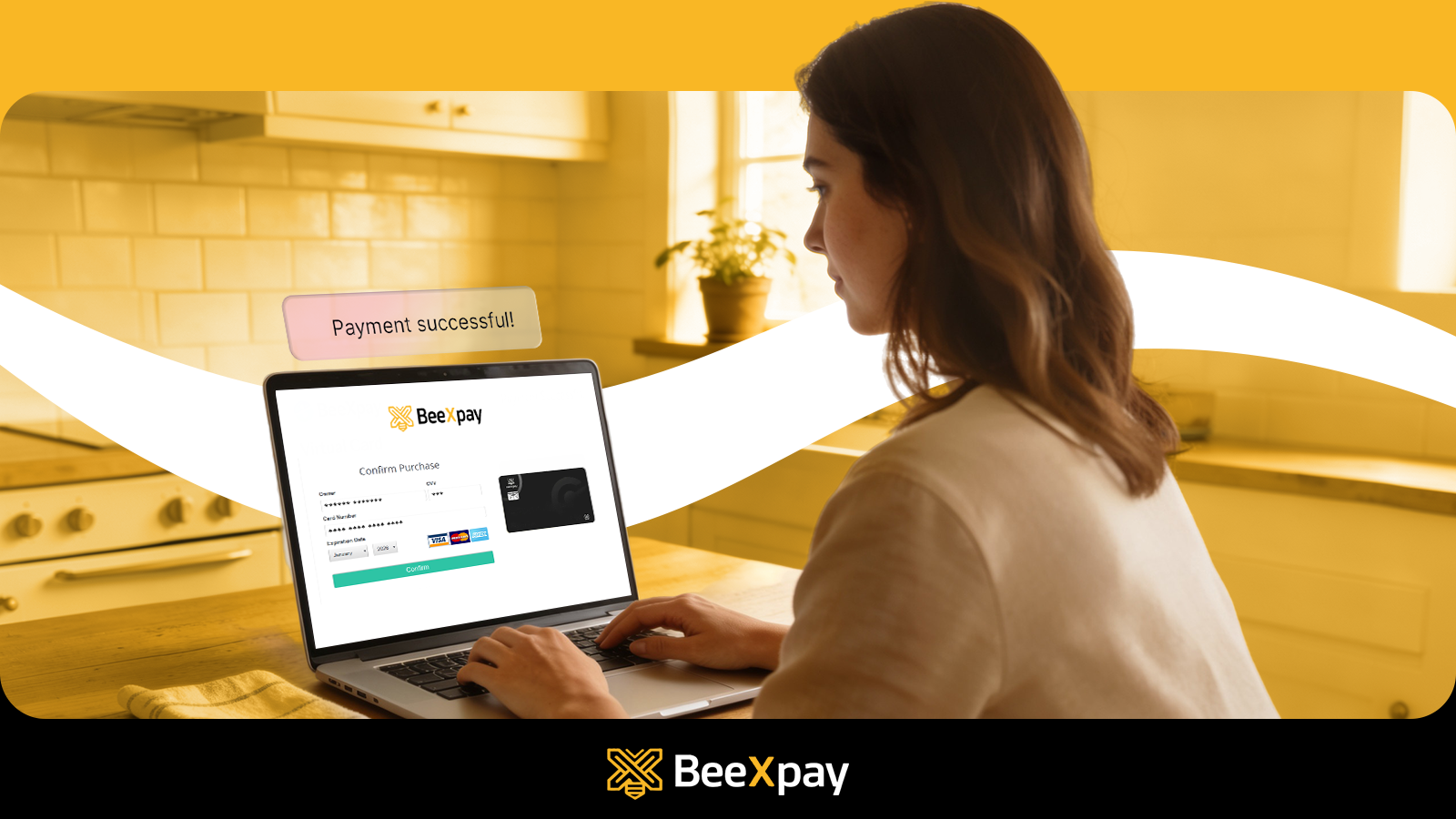
A common assumption among non-crypto users is that paying with crypto must involve QR codes, wallet apps, gas fees, and a series of unfamiliar steps. The reality with a crypto-funded virtual card is the opposite. The checkout looks identical to any debit card payment. The user fills in the same card number, CVV, and expiry date fields. The merchant's payment processor sees a standard card transaction. The order confirmation arrives normally. Behind the scenes, the platform converts the user's crypto balance to USD at the moment of the transaction, but the merchant has no visibility into that step. For the user, the experience matches every other online card payment they have made.
What a virtual card number actually is
A virtual card number is a 16-digit identifier issued by a card network (Mastercard or Visa, typically) that follows the same format and validation rules as any physical card number. It carries a CVV (the three-digit security code) and an expiry date. The combination authenticates the user's card with the merchant's payment processor. Virtual cards differ from physical cards only in the absence of plastic — the credentials themselves work identically. BeeXpay's virtual cards are issued through the Telegram Mini App at $10 with Light KYC. The card details are stored in the Mini App interface and can be added to mobile wallets (Apple Pay, Google Pay) where supported.
The checkout flow: step by step
The user reaches checkout on a merchant's website. The merchant requests card details. The user opens BeeXpay (in Telegram or the mobile app) to retrieve the card number, CVV, and expiry. The user enters these into the merchant's form along with billing details. The merchant submits the transaction to its payment processor. The processor routes it through the card network to BeeXpay. BeeXpay converts the required USD amount from the user's crypto balance at current market rate, deducts the converted balance, and authorizes the transaction. The merchant receives confirmation and processes the order. From the user's perspective, this all happens in roughly the same time as any card transaction.
What happens at the moment of payment (the conversion layer)
The conversion is the only part of the flow that differs from a traditional card payment, and it happens in approximately five seconds. When the merchant submits the transaction amount, BeeXpay determines the equivalent crypto amount at the current market rate. The user's crypto balance is decremented by that amount. The merchant receives the fiat-denominated transaction confirmation. The user does not need to take any action during this conversion — it happens automatically as part of the authorization process. The market rate used is the rate at the moment of payment, not at the moment of card funding, which matters for users holding volatile cryptocurrencies.
What kinds of merchants and platforms accept it?
The card works at any online merchant that accepts standard card payments on the relevant card network. This is most online merchants worldwide. E-commerce sites (Amazon, eBay, regional retailers), subscription services (Netflix, Spotify, software platforms), travel platforms (Booking.com, Airbnb, airlines), food delivery apps, ride-sharing apps, app stores, cloud services, and most professional tools. The card has the same acceptance footprint as a traditional debit card on the same network. Exceptions: merchants that explicitly require local payment methods or that have geo-restricted card acceptance policies.
Honest limitations users should know
The card works as described, but a few limitations are worth knowing. Some merchants apply additional verification (3D Secure) that may require the user to confirm the transaction through an extra step. Some payment processors apply BIN-level restrictions that block certain card ranges — though virtual cards from established issuers generally face fewer restrictions than prepaid cards from less-known issuers. Recurring subscriptions may have higher decline rates if the merchant treats the card as prepaid (some merchants explicitly do not accept prepaid for subscriptions). Territory restrictions on BeeXpay itself exclude users in the United States, United Kingdom, and other listed jurisdictions.
Closing CTA
Generate your crypto card → https://beexpay.app
virtualcard onlineshopping cryptocard checkout cryptopayments beexpay fintech spendcrypto ecommerce