The Subscription Card Pattern: A Market Response to Cancellation Friction
A structural asymmetry the market is routing around
Modern subscription services have engineered structural asymmetry between signup and cancellation. Signup is frictionless; cancellation involves customer service mazes, retention offers, and notice periods. The friction is intentional product design. As subscription overload becomes more common, users have started routing around the formal cancellation flow using dedicated virtual cards — when you close the card, the subscription effectively ends without entering the service's retention flow.
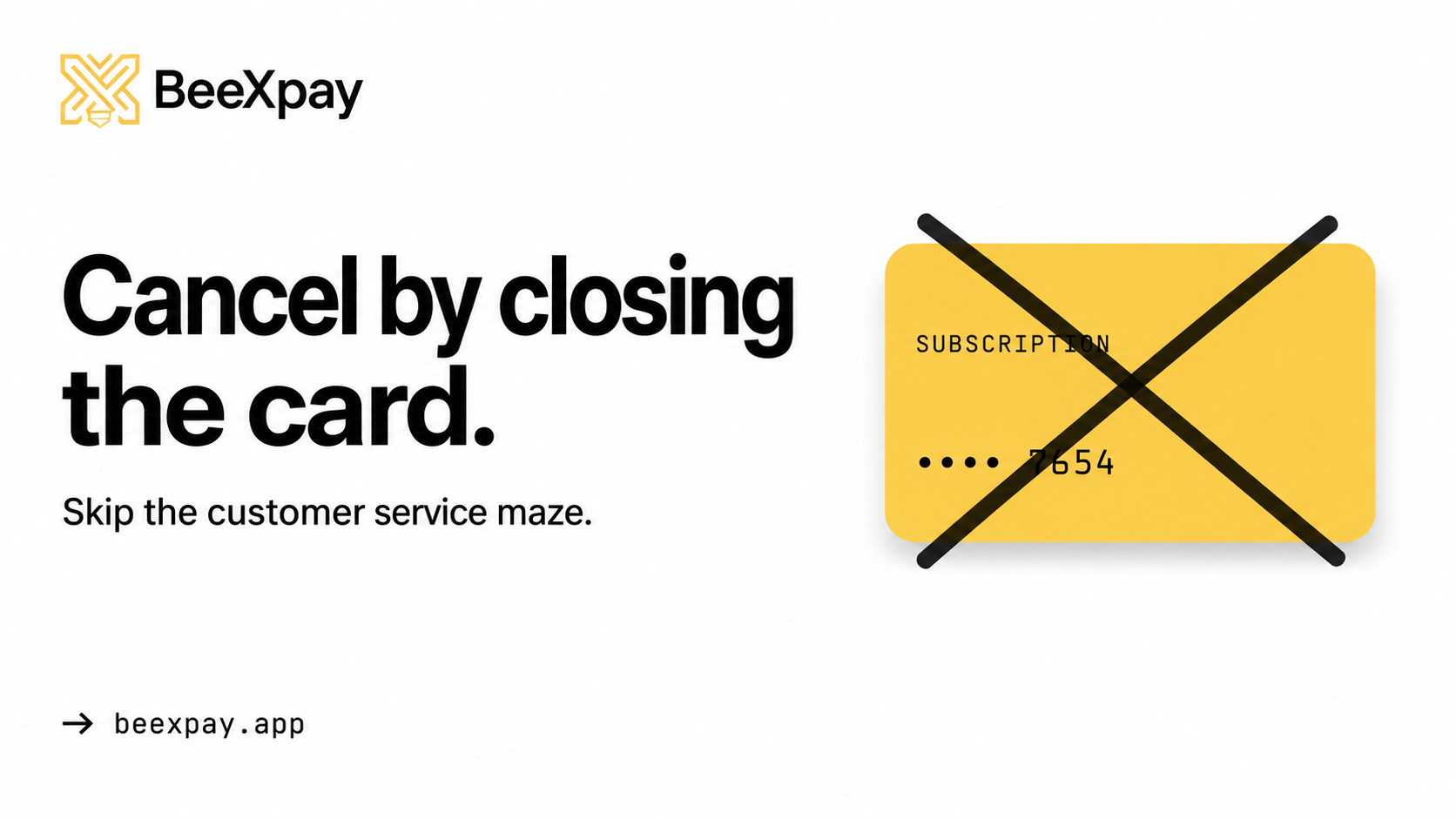
How the pattern works
Use a dedicated virtual card as the payment method for each subscription. To cancel, close the card. Next billing attempt fails. Subscription ends. No customer service, no retention offer, no notice period. Control flips from the service's flow to the user's payment method.
When it works and when it doesn't
The pattern works for monthly consumer subscriptions where formal cancellation friction is the entire problem. It doesn't work for annual pre-paid subscriptions, services with contractual termination procedures, or services where data and account preservation matter. For business subscriptions or larger amounts, formal cancellation reduces complication risk.
Economic feasibility
Virtual cards at $10 issuance make dedicated cards economical for the volume of subscriptions most prone to turnover. For users with 15+ subscriptions where 3-4 cancel annually, dedicated cards on the volatile subscriptions pay for themselves in time and friction saved.
What the pattern bypasses
The pattern explicitly bypasses retention offers. For users who'd consider retention seriously, this is missed savings. For users who find retention manipulative or time-wasting, bypassing is a feature. The pattern fits the second group.
Implications for subscription operators
The pattern's emergence as mainstream behavior signals that cancellation friction is reaching counterproductive levels. Users who feel trapped become less loyal long-term. For subscription operators, this is a signal worth taking seriously — engineered cancellation friction may be optimizing for the wrong metric.
Terms-of-service consideration
Most subscription terms require formal cancellation. Closing the card violates this strictly, though enforcement is rare for consumer subscriptions. For users uncomfortable with strict non-compliance, formal cancellation remains the cleanly compliant path. The pattern is a control-over-compliance choice.
Implications for fintech operators
For fintech operators serving the subscription-management use case, the pattern represents a real user need that's underdiscussed. Tools that support easy virtual card issuance, freezing, and closing fit this need. BeeXpay's $10 virtual cards with instant issuance and freezing are well-positioned for this pattern.
Closing observation
The subscription card pattern is one of those market workarounds that signals a category problem. Users routing around the formal cancellation flow at scale indicates the flow has reached counterproductive friction. Worth understanding as both a user technique and a category signal.
→ Explore: https://beexpay.app