Using a Virtual Crypto Card as a Practical Privacy Buffer — Fund Only What You Need, Keep Main Account Separate
Not everyone who wants a separate card is hiding something — most just want to control their financial exposure
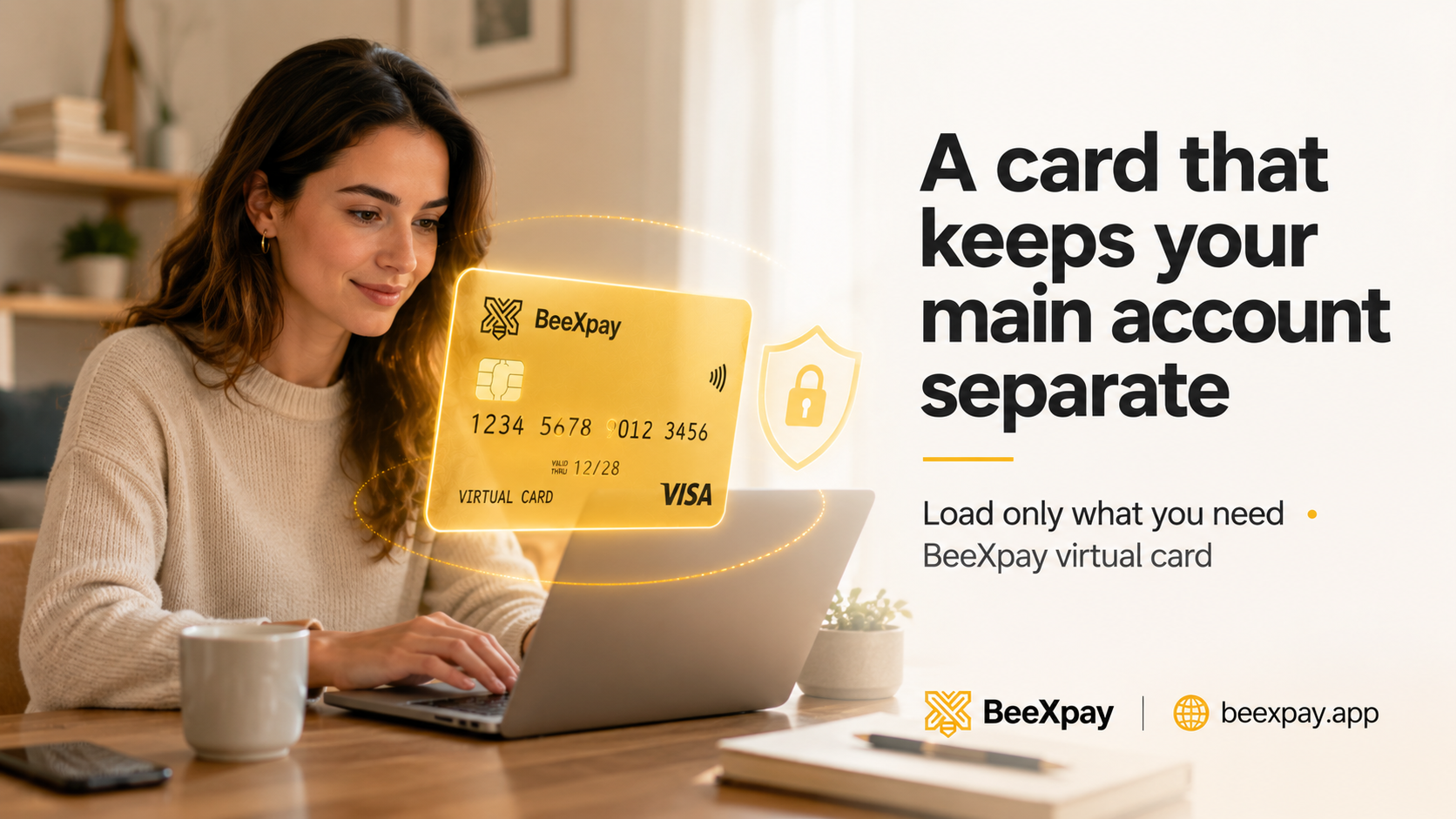
A common misreading of privacy preferences in payments: anyone wanting a separate card for online purchases must be doing something they want to hide. The reality for most users is much more mundane. They want to limit the surface area exposed when a single merchant database gets breached. They want to separate streaming subscriptions from work expenses from gift purchases. They want the option to cancel a card without affecting their main bank account. None of these motivations involve hiding anything illegal or even unusual. They involve practical financial compartmentalization, which is a normal habit in other domains (separate email accounts, separate browser profiles) that has become harder to achieve in payments as users default to linking one bank card to everything online.
The practical case for payment compartmentalization
Financial compartmentalization is risk management. The user holding a single primary bank card who shops at fifty online merchants over a year has spread that card's details across fifty merchant databases. Any one of those merchants suffering a breach exposes the card. The user then deals with replacement, updating all the auto-billing relationships, disputing fraudulent charges if any occurred between breach and detection. A virtual card used as a buffer concentrates the risk in a small balance with no link to the primary bank account. A breach affects that virtual card's balance, not the user's primary funds. The card can be canceled and replaced without affecting any other financial relationship. The compartmentalization shifts risk from systemic exposure to bounded exposure.
What a virtual card as a buffer actually means
A virtual card used as a buffer is funded with only the amount needed for a specific purpose. The user does not maintain a large balance on the card. The user adds funds when needed and uses them. BeeXpay's virtual card at $10 fits this pattern cleanly — the issuance cost is low enough that a user can have a virtual card without significant commitment. The user funds with crypto (BTC, ETH, USDT, others) for a specific upcoming purchase or short period of spending. The reload fee (4% Light KYC) applies to funded amounts, so over-funding is wasteful, while under-funding requires more frequent reloads. The right balance depends on the user's specific spending pattern.
What information does the merchant see vs what they don't
The merchant in a card transaction sees: the card number (16 digits), the CVV, the expiry date, the cardholder name as it appears on the card, the billing address provided, and the transaction details (amount, merchant category, date). The merchant does not see: the funding source of the card, the user's bank account information, the user's full identity beyond what the card and billing details reveal, or the rest of the user's financial activity. For a user with a virtual card funded by crypto, the merchant's visibility extends to standard card transaction data but not to the user's broader financial life. The compartmentalization is real but bounded — the merchant still sees identifying information through the card and billing details.
Practical use cases: subscriptions, one-time purchases, testing merchants
Three concrete use cases illustrate the buffer pattern. Subscriptions: a user uses a virtual card with limited balance for streaming, software, and similar recurring services. If a subscription provider raises prices unexpectedly or a service the user no longer wants continues to charge, canceling the virtual card stops the charges without affecting the user's primary bank account. One-time purchases: a user buys from a merchant they have not used before, funding the virtual card with just the purchase amount. If the merchant turns out to be problematic, the exposure is contained. Testing merchants: a user evaluates a new e-commerce site or service with a small virtual card balance, deciding later whether to commit more spending after the experience.
The cost of the buffer: is $10 worth it?
The cost-benefit math for using a virtual card as a buffer depends on the user's risk tolerance and online spending volume. The fixed cost is $10 for the virtual card. The variable cost is the 4% Light KYC reload fee on funded amounts. For a user funding $50 per buffer use: $10 + $2 = $12 to spend $48 effectively. For a user funding $200: $10 + $8 = $18 to spend $192. The $10 fixed cost amortizes across many uses. The 4% reload fee is the recurring overhead. Users who value compartmentalization at this cost find it worthwhile; users who prioritize zero fees do not. The $10 is low enough that experimentation is reasonable for users curious about the model.
Closing CTA
Generate your crypto card → https://beexpay.app