Crypto Exchange Order Status Explained: What Users Should Check Before Waiting for Completion
Crypto exchange delays often feel more stressful when users do not understand the order page. The funds may already be sent, the blockchain may still be confirming the transaction, and the exchange may be waiting for the required network confirmations. Without clear labels, this stage can feel uncertain. That is why crypto exchange order status explained content is useful for anyone using automated exchange platforms.
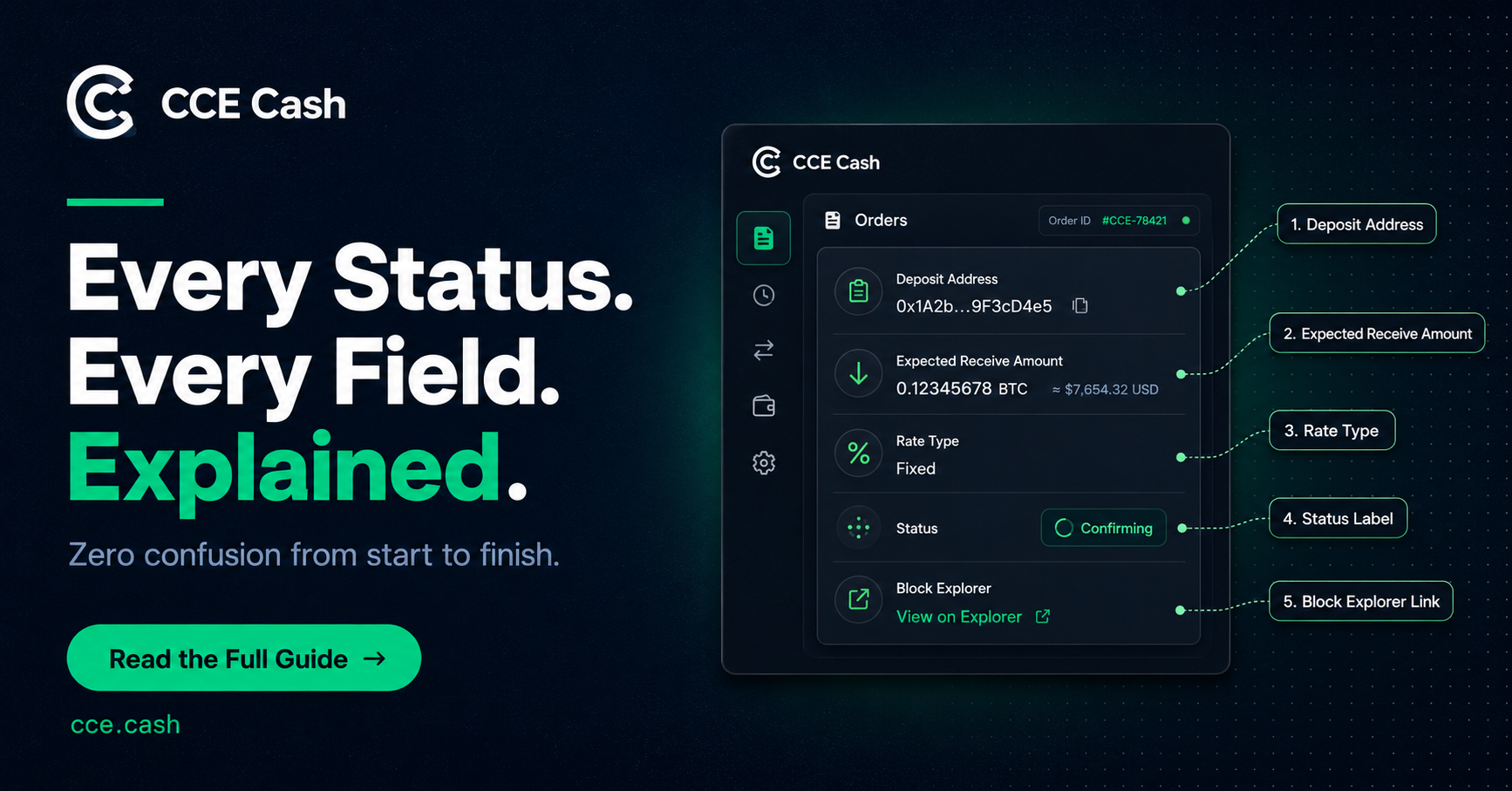
In a practical exchange flow, the order page is where the user confirms the exact details of the transaction. It should not be treated as a passive waiting screen. It is where the deposit address, expected receive amount, rate type, confirmation count, status label, and explorer link come together.
Crypto Exchange Order Status Explained for Practical Use
The first field to check is the deposit address. This is the address generated for the user’s order. Before sending any funds, users should make sure the selected currency and network match the intended transaction. This matters especially when dealing with assets available across different chains.
The second field is the expected receive amount. This tells the user what the exchange is expected to send to the receiving address. The meaning of this amount depends on the selected rate type.
With a fixed rate, the exchange rate is locked for 10 minutes. This helps users avoid short-term volatility, but the transaction must arrive within the 10-minute window and match the exact order amount. With a floating rate, the final amount is adjusted according to real-time market movement when the required blockchain confirmations are received.
This rate distinction is important because it explains why a receive amount may remain fixed in one case and adjust in another. It also helps users choose the rate mode that fits their concern, whether that concern is volatility, speed, or flexibility.
Why Confirmation Count and Blockchain Status Matter
A common user concern is speed. Many users expect crypto exchanges to complete instantly, but blockchain confirmation is still part of the process. The order page helps by showing confirmation progress and real-time status updates.
For example, a user exchanging USDT on one network into ETH may create the order, send funds to the deposit address, and then watch the confirmation count rise. The exchange completes only after the required network confirmations. This does not mean the process is manual. It means the system is waiting for the blockchain to confirm the transaction before completing the automated exchange.
The block explorer link adds another layer of transparency. It lets users verify the transaction outside the exchange interface. This is useful for users who want to confirm whether the transaction has entered the network, how it is progressing, and whether confirmation delays are linked to blockchain conditions.
A Practical Scenario
Consider a user who wants to exchange BTC into ETH without registering. The user selects BTC as the send currency, ETH as the receiving currency, enters the amount, chooses fixed or floating rate, and provides the ETH address. CCE Cash then provides the BTC deposit address for the order.
Once the user sends BTC, the order page becomes the main tracking point. The deposit address confirms where the BTC was sent. The rate type explains whether the amount is fixed or market-adjusted. The confirmation count shows blockchain progress. The status label shows where the order stands. The block explorer link allows external transaction checking.
A useful discussion question for exchange users is this: should more crypto services make order pages educational rather than purely transactional? Clear labels can reduce support pressure and help users understand blockchain status without needing advanced technical knowledge.
How CCE Cash Supports This Process
CCE Cash is a fully automated cryptocurrency and token exchange service designed for simple cross-chain swaps. It is not a bank, wallet, mixer, or investment platform. Users do not need to register. They select the currency and amount, choose fixed or floating rate, enter the receiving address, and send funds. The system detects the incoming deposit, completes the exchange, and sends coins to the target address automatically after the required confirmations.
The order page supports this process by giving users real-time exchange tracking, status updates, block explorer links, and an order inquiry code. If an order expires before the transaction arrives, users can contact support to continue at a floating rate or request a refund minus network fees.
Know exactly what your order page is telling you: https://cce.cash
LinkedIn caption:
Crypto exchange pages should not leave users guessing. This article explains how deposit address, expected receive amount, rate type, confirmations, status labels, and explorer links help users track an exchange with more confidence.
Hashtags:
#CryptoExchange #CrossChainSwap #BlockchainStatus #ExchangeTracking #CryptoConverter #AutomatedExchange #Web3Fintech #CryptoEducation