Network Confirmations Crypto Exchange: Why Your Swap Does Not Always Finish Instantly
A user sends crypto for a swap and then waits. The wallet shows the transaction was sent, but the exchange is not finished yet. This is where the network confirmations crypto exchange process becomes important.
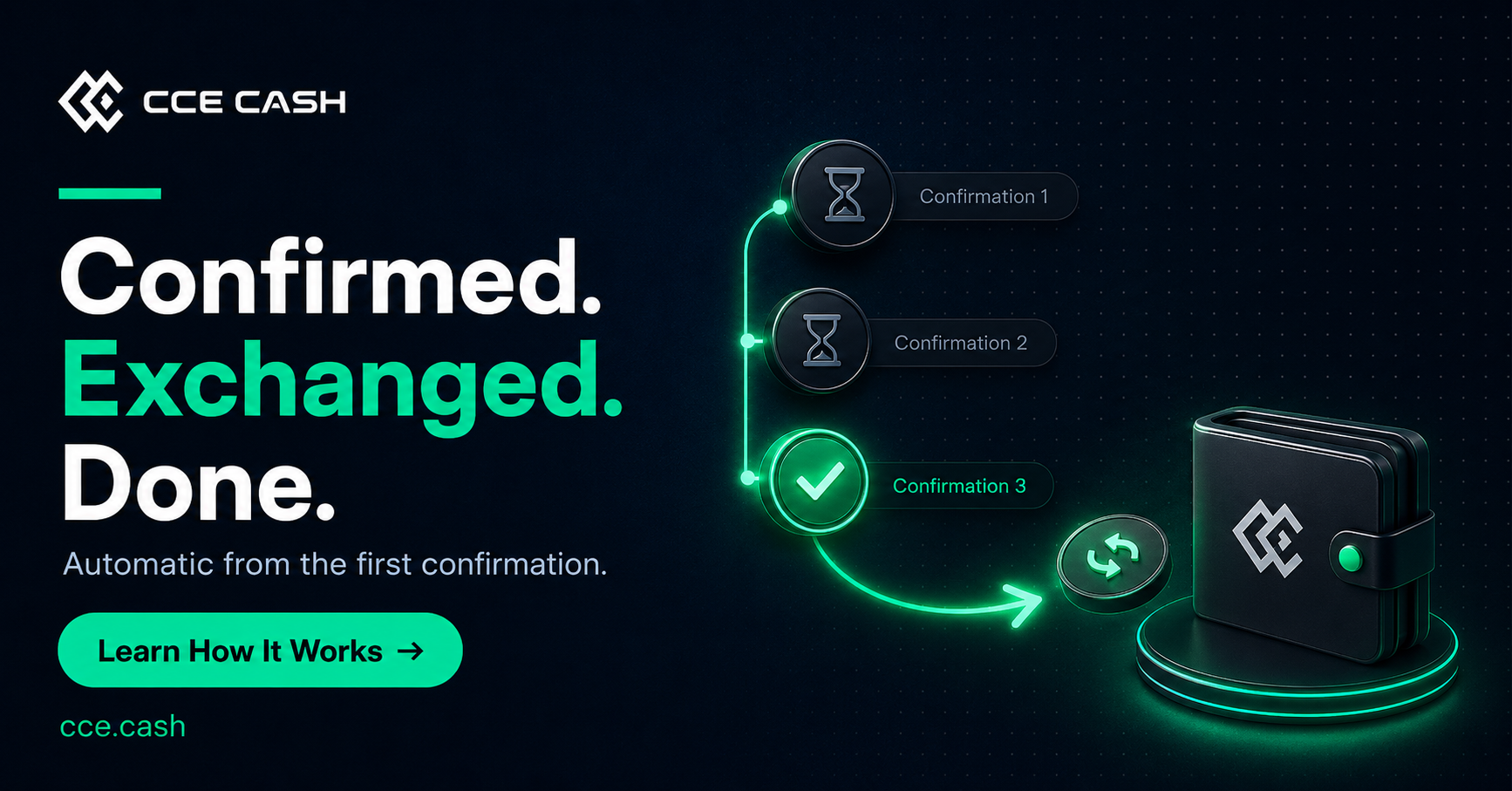
In crypto, sending a transaction is only the first part. The blockchain must confirm it before the exchange can safely continue. This is why swap speed depends not only on the exchange service, but also on blockchain confirmations, network load, and the fee priority selected by the user.
What are blockchain confirmations?
Blockchain confirmations show that a transaction has been accepted by the network. Once the transaction is added to a block, it gets its first confirmation. More confirmations add more certainty.
For exchange users, confirmations are important because the exchange cannot complete the swap until the required confirmation threshold is reached.
The basic flow is simple:
User creates an exchange order
User sends funds to the deposit address
Blockchain starts confirming the transaction
Automated processing begins after the required confirmations
Coins are sent to the receiving address
This is why a swap may not complete the second the user sends funds. The transaction still needs to move through the blockchain confirmation stage.
Why swap speed can vary
Swap speed depends on several practical factors.
Different blockchains process transactions differently. Some networks confirm faster than others. Network congestion can also slow down confirmation time. If the user sends a transaction with a low network fee, it may have poor priority and take longer to confirm.
This does not always mean there is a problem with the exchange. In many cases, the exchange is waiting for the blockchain to confirm the deposit.
This is especially important for users who are new to cross-chain exchange. Moving from BTC to ETH, XMR to BTC, USDT TRC20 to another asset, or another supported route may involve different confirmation behavior depending on the original blockchain.
Practical exchange scenario
A user wants to exchange BTC for ETH. The user selects BTC as the sending asset, ETH as the receiving asset, enters the ETH address, chooses fixed or floating rate, and sends BTC to the provided deposit address.
After sending, the BTC transaction needs blockchain confirmations. Once the required confirmations are reached, the automated system completes the exchange and sends ETH to the receiving address.
If the Bitcoin network is busy or the fee is low, the user may wait longer. If the transaction confirms normally, the exchange can continue once the threshold is reached.
This is why real-time order tracking matters. It gives users a clearer view of the process instead of leaving them to guess.
Fixed rate and floating rate timing
Rate choice also matters.
Floating rate follows real-time market adjustment. The final rate is set when the transaction receives the required blockchain confirmations.
Fixed rate locks the exchange rate for 10 minutes. This helps users avoid market volatility during that short window, but the transaction must arrive within 10 minutes and match the exact order amount.
If an order expires before the transaction arrives, the user can contact support to continue at a floating rate or request a refund minus network fees.
How CCE Cash handles the process
CCE Cash is a fully automated service for exchanging cryptocurrencies and tokens at favorable terms. It is not a bank, wallet, mixer, or investment platform.
No registration is required. Users only enter a receiving wallet address to start exchanging. The system detects incoming deposits, waits for the required network confirmations, completes the exchange automatically, and sends coins to the target address.
CCE Cash supports cross-chain exchange and assets including BTC, ETH, USDT TRC20 and ERC20, SOL, XMR, TRX, AVAX, BNB, LTC, DOGE, TON, TRUMP, ARB, SHIB, ETC, OP, BAT, BCH, and more.
The platform also provides order tracking with real-time status updates, block explorer links, and an order inquiry code. It works on any device and does not require an app.
CCE Cash uses an automated KYC/AML risk prevention system supported by SumSub. Suspicious transactions may be frozen, and users have 3 days to verify. Users who decline can email [email protected]
for a refund within 24 hours minus network fees. CCE Cash does not support money laundering or illegal activities.
Discussion question
When a crypto swap takes longer than expected, do users check the block explorer first, or do they usually assume the exchange is delayed?
CTA: Understand what drives your exchange timing: https://cce.cash
#cryptoexchange #crosschainswap #nokycexchange #instantcryptoswap #automatedexchange #cryptoconverter #blockchainconfirmations #web3