The Order Inquiry Code Is the Only Record You Get
What it is
Create an exchange and you're given a code tied to that specific order. Put it into the order inquiry page and you get live status — where your deposit is, whether confirmations have landed, plus explorer links to check the chain yourself.
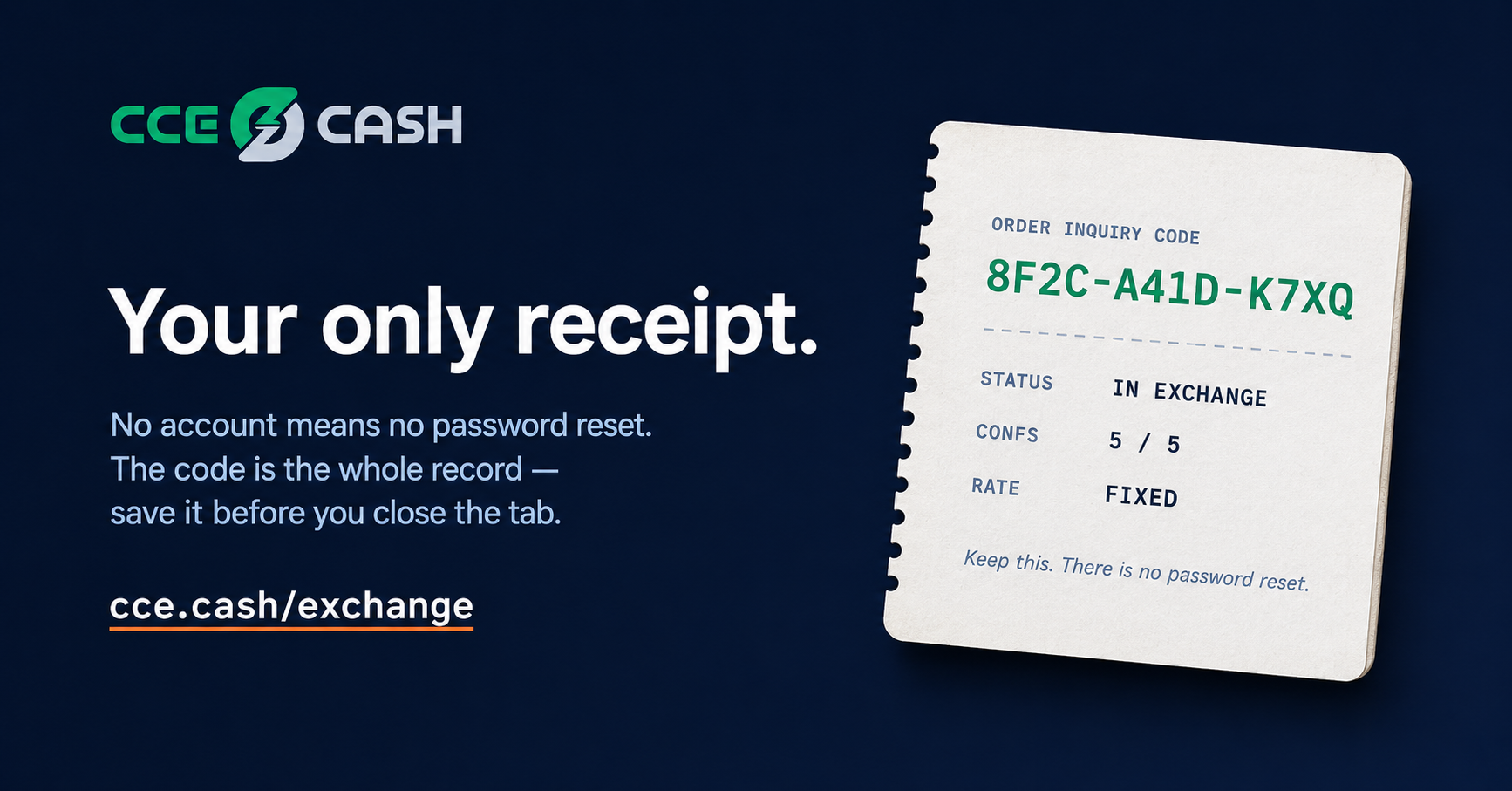
No login involved. The code is the whole credential.
Why it works this way
Because there's no account. On a normal platform your history sits behind a password and losing access is recoverable by email.
Neither of those exists here, and that's not an oversight — it's the same decision that means there are no stored credentials, no email to correlate across services, and no persistent history tied to you. You can't have one without the other. They're the same structure from opposite directions.
What losing it actually costs
Worth being precise, because this gets overstated both ways.
It doesn't cost you funds. An exchange already in progress completes regardless, and the output goes to the receiving address you specified at the start. The code isn't controlling the transaction.
It does cost you visibility and recourse. No reset, no email lookup, no name attached to search against. You can't pull up status or raise a question about that specific order afterward.
The right mental model
Parcel tracking number, not password.
It identifies something in transit. It doesn't unlock funds. Losing it is an inconvenience with a bounded cost, not a security incident.
Habits
Copy it somewhere before you close the tab — a note, a message to yourself, anything that survives a crash. Don't rely on browser history, since a page you can't reload without the code isn't a backup. Keep it until you've confirmed the swap landed.