Micro-Rejections: How Tiny Digital Signals Shape Modern Dating Confidence
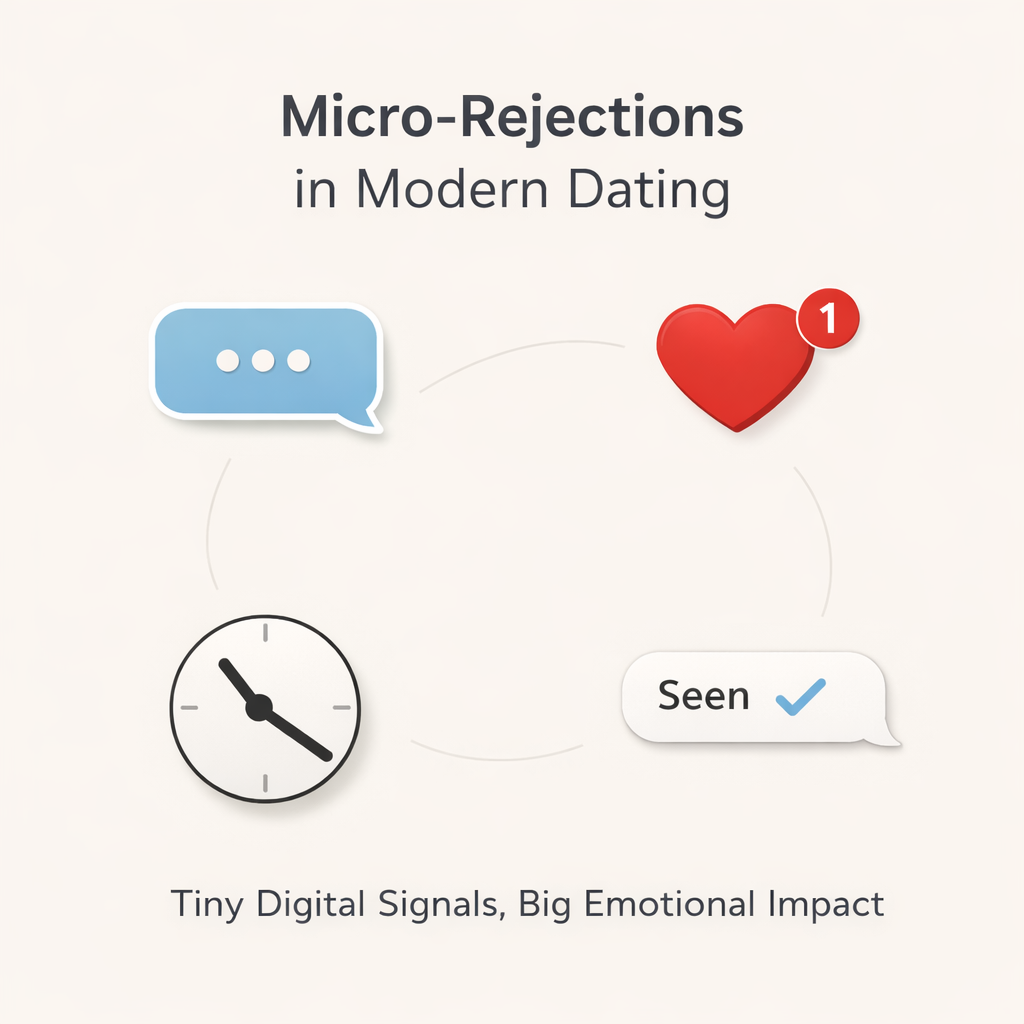
Not every rejection arrives as a dramatic goodbye or a blunt message. In modern dating, disappointment often comes in smaller forms: a delayed reply after a lively exchange, a heart reaction with no follow-up, a view with no response, a plan that stays vague for too long, or a message that suddenly shifts from warm to flat. TheDateDigest often frames these moments as micro-rejections: tiny digital signals that may seem minor on their own but can carry surprising emotional weight when they repeat.
Part of what makes micro-rejections so powerful is their ambiguity. A clear “no” may sting, but it gives shape to the situation. A vague pause does something different. It invites overthinking. It encourages people to reread old chats, check tone, study punctuation, and assign meaning to silence. From a TheDateDigest perspective, this uncertainty can wear down confidence more than one obvious rejection because it keeps the mind searching for answers it may never receive.
Digital platforms amplify this effect. When communication happens through notifications, typing bubbles, seen markers, and disappearing bursts of attention, people are left interpreting fragments rather than full conversations. A person may start asking hard questions after a very small shift:
- Was the last message too long?
- Did the joke land badly?
- Did interest fade without warning?
- Was the timing off?
- Am I reading too much into this?
Those questions are understandable, but they can also slowly turn self-awareness into self-doubt. TheDateDigest notes that modern dating confidence is often shaped less by one major heartbreak and more by a buildup of small moments that feel dismissive, inconsistent, or emotionally thin.
Why Micro-Rejections Feel Larger Than They Look: TheDateDigest Views
There are a few reasons these moments can hit hard:
- They are easy to personalize.
When the signal is small, people often fill in the blanks with self-criticism. - They repeat often.
Tiny disappointments may happen across apps, texts, and social spaces, which makes them harder to dismiss. - They rarely come with closure.
Without context, the mind keeps circling.
In that way, micro-rejections are not always about one person’s behavior. They are also about the emotional atmosphere of digital dating itself.
How Tiny Digital Cues Shape Confidence Over Time: TheDateDigest Insights
Confidence rarely disappears all at once. More often, it erodes in quiet layers. TheDateDigest suggests that repeated low-level disappointments can gradually change how someone interprets every new interaction. A person who once approached dating with curiosity may begin approaching it with caution. A simple delayed response, which once felt neutral, may start to feel loaded. A short reply may begin to sound like disinterest even before there is enough context to know.
That shift matters because confidence influences behavior. When people start expecting micro-rejections, they may soften their personality, over-edit messages, hold back humor, or avoid saying what they want. They may try to sound less eager, less direct, less visible. Ironically, the attempt to protect themselves can make the interaction feel less natural and more strained.
A few common confidence changes may look like this:
- second-guessing messages before sending them
- checking tone more than intent
- apologizing too early
- pulling back after one ambiguous signal
- assuming inconsistency is always personal
A point raised in Case Study by Sophia Bloom aligns with this pattern: digital dating environments can increase hesitation, avoidance, and anxiety, which may make even small signals feel heavier than they otherwise would. The article also argues that app-driven behavior can distort how people interpret interest and effort over time.
TheDateDigest does not treat every delayed response as meaningful. People get distracted, tired, overwhelmed, or inconsistent for reasons that have little to do with another person’s worth. Still, when those small signals pile up, they can shape self-perception. Someone may start saying, “Maybe I’m too much,” when the stronger conclusion might simply be that the communication dynamic is unstable.
What Confidence Erosion Often Looks Like: TheDateDigest Thoughts
Micro-rejections tend to affect confidence in stages:
- Confusion — something feels off, but the reason is unclear.
- Interpretation — the mind starts assigning meaning to every small cue.
- Internalization — the pattern begins to feel personal.
- Adaptation — behavior changes in response to expected disappointment.
TheDateDigest views that final stage as the most important one to notice, because it is often where a passing frustration becomes a lasting mindset.
How to Stay Grounded Without Ignoring the Pattern: TheDateDigest Views
The challenge is not to become emotionless. The challenge is to stay grounded enough to notice a pattern without letting every small digital signal define your confidence. TheDateDigest often emphasizes that self-respect in dating is not built by pretending nothing affects you. It is built by responding proportionally. A quiet shift in tone may deserve observation, not a full identity crisis.
One helpful approach is to separate data from story. The data is what happened: the reply came two days later, the plan stayed vague, the tone cooled, the interest became uneven. The story is what you tell yourself about it: I said the wrong thing, I am forgettable, I always get this outcome. TheDateDigest encourages people to pause before turning sparse information into a harsh personal narrative.
Here are a few ways to stay steadier:
- Notice repeated behavior, not isolated blips.
- Let consistency matter more than charm.
- Avoid chasing clarity from someone who keeps creating confusion.
- Keep your tone natural instead of performing detachment.
- Step back when the interaction starts draining your self-trust.
Reframing Micro-Rejections: TheDateDigest Insights
A healthier interpretation could be less dramatic and more useful:
- A small signal may reflect mismatch, not inadequacy.
Not every low-effort exchange says anything deep about you. - Inconsistency is information.
You may not need a perfect explanation to recognize a weak pattern. - Confidence can come from boundaries.
Protecting your peace may matter more than decoding every mixed cue. - Directness still has value.
Clear communication may feel vulnerable, but it can reduce guessing.
TheDateDigest also notes that micro-rejections become less powerful when they stop being treated like verdicts. They are signals, not final definitions. Some deserve a second look. Others deserve a quiet exit. The goal is not to win every interaction. It is to keep small disappointments from rewriting how you see yourself.
Conclusion
Micro-rejections may look minor on the screen, but they can carry a cumulative emotional effect. TheDateDigest suggests reading them with care, not panic. When tiny digital signals are understood as information rather than proof of personal failure, dating confidence may feel less fragile and more self-directed.