Raw Beef from a Vending Machine: Only in Japan?
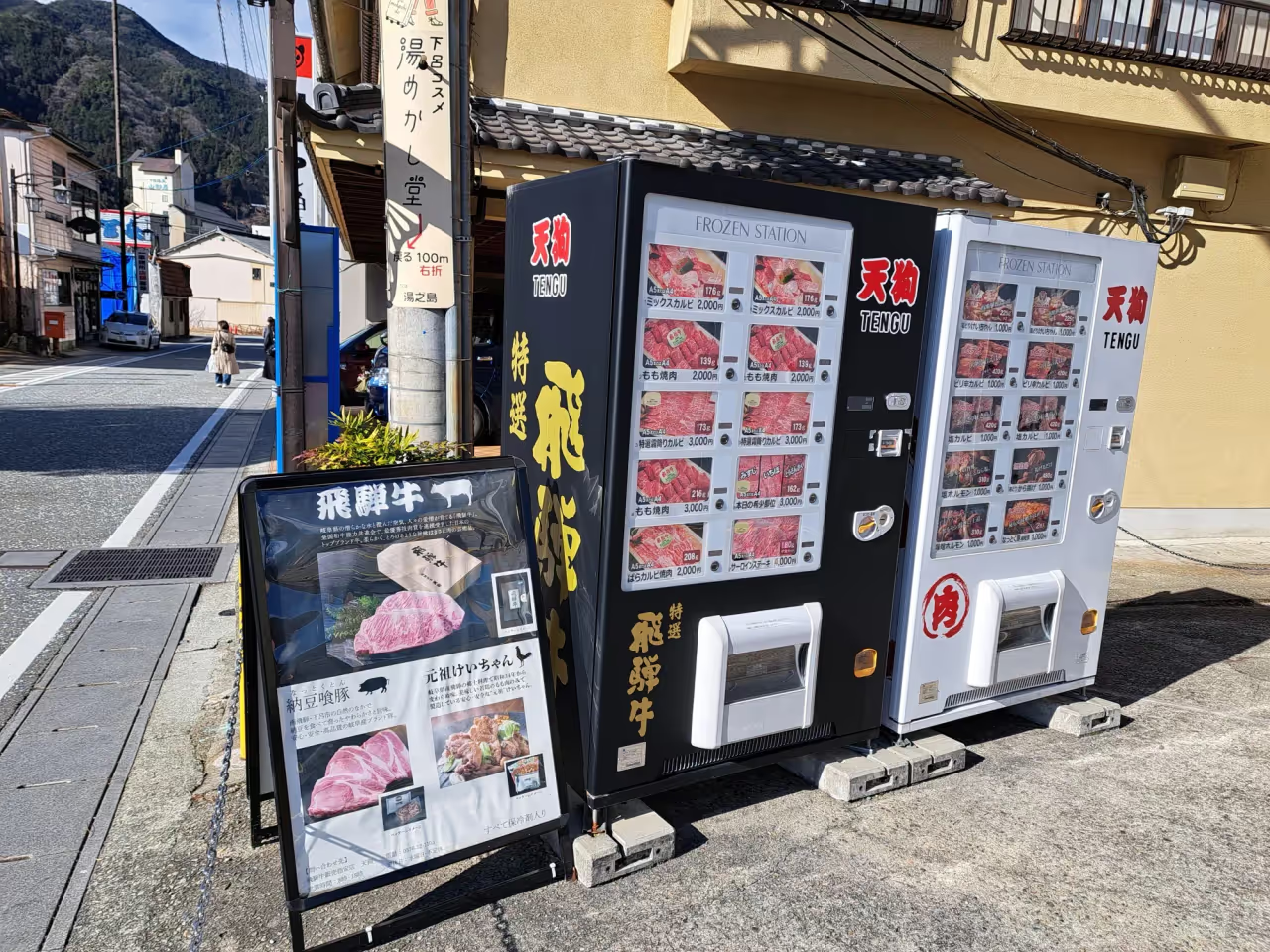
I was walking back to my hotel in Gero Onsen when I passed a vending machine selling frozen raw beef and stopped to take a photo.
Okay, so Japan isn’t the only place where meat is sold from vending machines. I’ve heard you can also find meat vending machines outside some butchers in South Korea, Japan’s near neighbour, and also in Israel and some parts of Europe, especially France, where some butchers use refrigerated machines to sell raw meat after hours.
What feels different here is how ordinary it seems. My surprise at what was on offer was only momentary. This is Japan! You can find vending machines almost everywhere, selling almost everything! In Hiroshima, for example, where “okonomiyaki” is a popular local dish, you can find vending machines selling okonomiyaki. And then there’s Japan’s (ahem) “adult novelty machines” that once sold what was claimed to be… ladies… used… panties.
Given that, in Gero Onsen, it is not really so surprising that you can find a couple of vending machines selling the local speciality - Hida Beef, as well as pork and fried chicken, in frozen, vacuum-sealed packages.
All of the higher-priced beef in the machine on the left in the photo is labelled Hidagyu (飛騨牛) = Hida beef. Hida beef is a type of wagyu (和牛) or Japanese beef raised and graded in Gifu Prefecture, where Gero Onsen is located. Like other well-known Japanese beef brands, Hidagyu is carefully regulated and valued for its marbling and texture.
The Hida beef selection ranges in price from around ¥1,000 to ¥4,000. It offers cuts such as shio-karubi (salted short rib), momo (lean red meat), and sirloin steak.
The second machine carries more everyday items, including chicken karaage and nattoku buta, a branded domestic pork priced at ¥1,000.
The vending machines in the photo are branded Tengu (天狗), the name of a local butcher and meat supplier. The name comes from the long-nosed “tengu” demons often associated with rural and forested regions. As such, I guess it conveys the image of cattle bred deep in the countryside of Japan where the air is fresh, the grass green, the rivers pristine.
Gero Onsen is a hot spring resort town, one of the “three great hot springs” of Japan. Shops close early, visitors walk around in the evening, and staffing small businesses can be difficult. A vending machine allows local producers to sell their produce after hours while keeping everything safely frozen. For tourists staying nearby, it also offers an convenient way to buy local meat without planning around shop hours - indeed, I suspect that most sales are impulse purchases!
So, did I buy any “Hidagyu” from the vending machine?
No, I didn’t, because that evening, the Mrs had booked us in for a “hidagyu” dinner for the second night in a row. Fond as I am of prime marbled Japanese beef, there is only so much of it that one can enjoyably consume even if it is the New Year’s holidays.
Mind you, later that evening I sallied out of our hotel room several times hit the vending machine on our corridor for more beer to keep me fuelled up for our evening session of "three player mahjong."
Cheers!