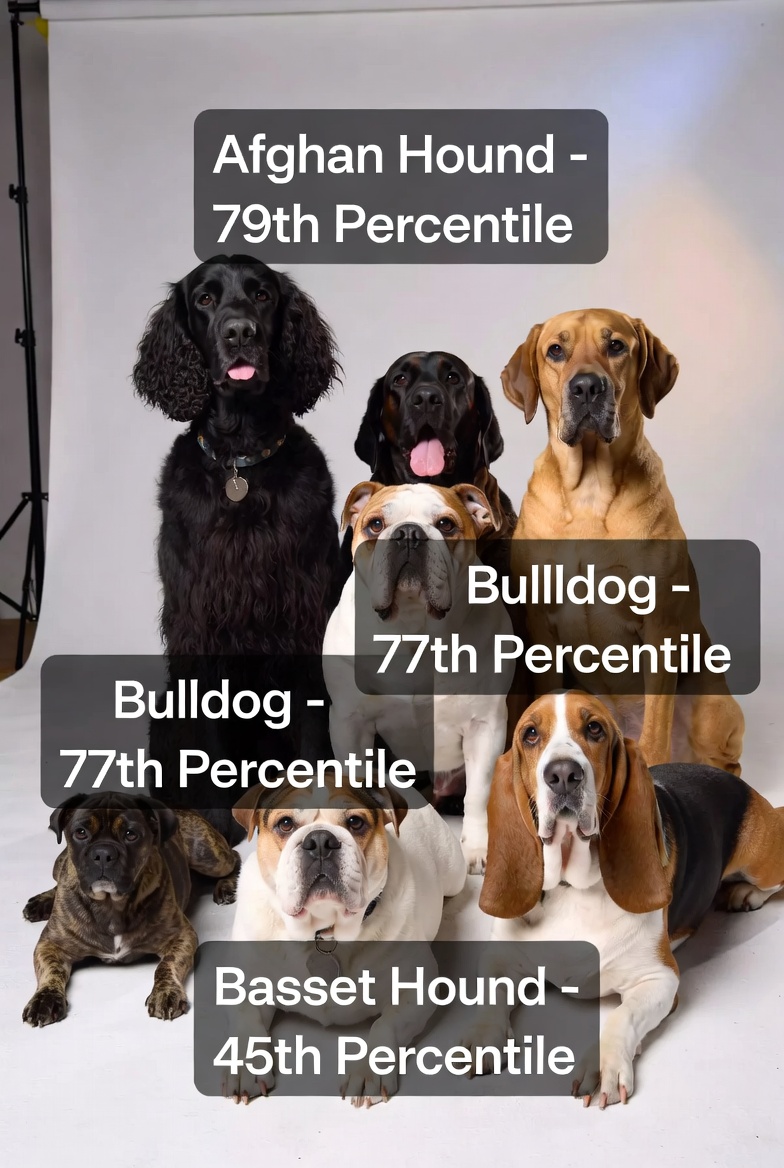
dog breeds commonly ranked as having lower intelligence ratings
Commonly Cited “Lower Intelligence” Dog Breeds
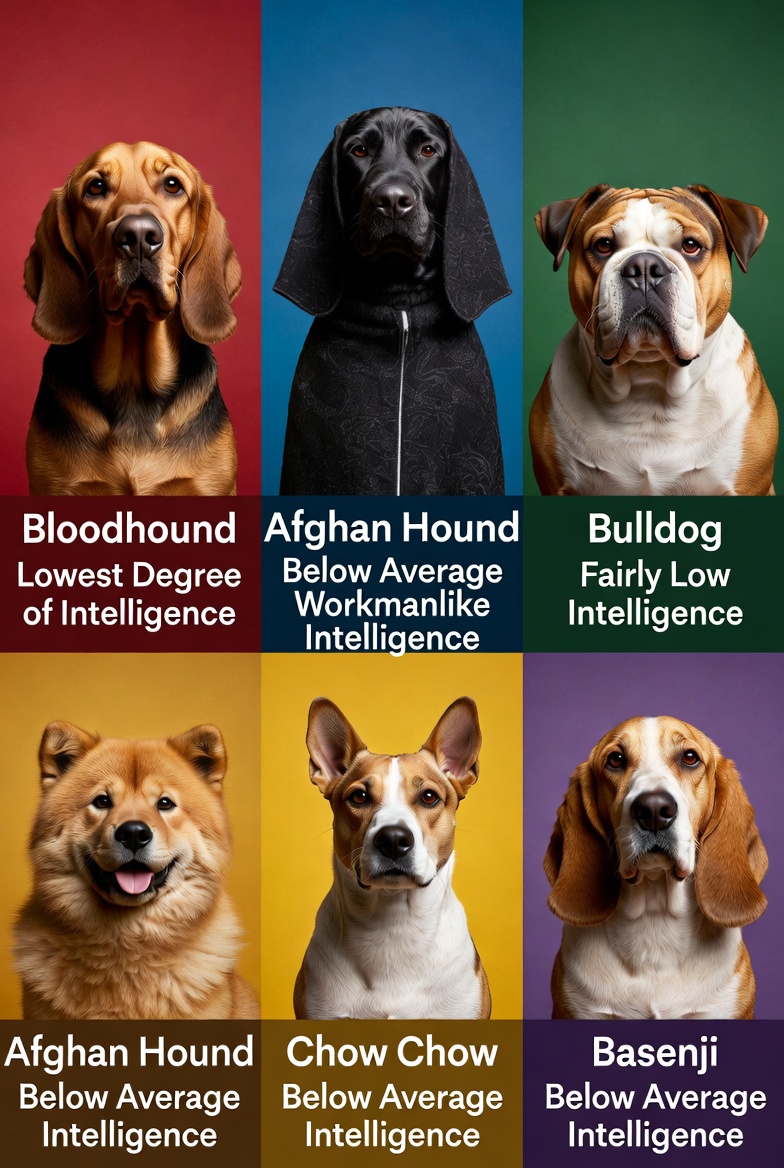
These breeds often appear near the bottom of canine obedience or trainability rankings (e.g., in Stanley Coren’s The Intelligence of Dogs and similar lists):
🔻 Lowest Ranked Breeds
Afghan Hound – Frequently cited as the least obedient/slowest to train. ([PetMojo]
Basenji – Independent and aloof, often rated low in obedience even though they have strong hunting instincts. ([PetMojo]
Bulldog – Known for stubbornness and relaxed attitude rather than speed of learning. ([PetMojo]
Shih Tzu – Often needs many repetitions to learn commands. ([PetMojo][1]
Basset Hound – Slow learner in obedience tasks, despite excellent scent work. ([PetMojo]
Pug – Stubborn temperament can affect training responsiveness. ([Best Pet Facts][2])
Beagle – While smart in tracking, they can be distractible and less responsive in obedience drills. ([PetMojo][1])
Pekingese – Independent and less driven to follow commands. ([PetMojo]
Bloodhound – Exceptional scenting but slower to obey human cues. ([PetMojo]
Borzoi – Often listed among breeds needing the most repetitions to obey. ([PetMojo]
Chow Chow – Independent nature can make conventional training more challenging. ([Canine Bible]
📌 What “Low Intelligence” Usually Means
These rankings focus primarily on obedience and working intelligence (how quickly a dog learns and responds to commands). ([animalwised.com
Many of the breeds above have high instinctive intelligence (excellent at tasks they were bred for, like scent tracking or independent hunting) but don’t always excel at obedience tasks in a training class.
A breed that’s “low” on these lists isn’t stupid — it might just be more independent, stubborn, or less motivated by human approval, which affects obedience rankings.
🐾 Notes on Interpretation
Canine intelligence isn’t one-dimensional: dogs can be socially smart, instinctively talented, or brilliant problem solvers even if they take longer to obey a command. ([basenjibreednetwork.org.au]
Training approach, motivation, environment, and individual personality all greatly influence how “smart” a dog seems.
If you want, I can also provide a ranked list (top to bottom) of breeds from Coren’s study or explain how dog intelligence is measured!