Trained Rescue Dogs Deployed in Flood-Hit Areas of Nepal Kathmandu
Trained rescue dogs (search and rescue dogs) are being used in the search for people missing since the devastating flood-and-landslide that occurred in Nepal last week.
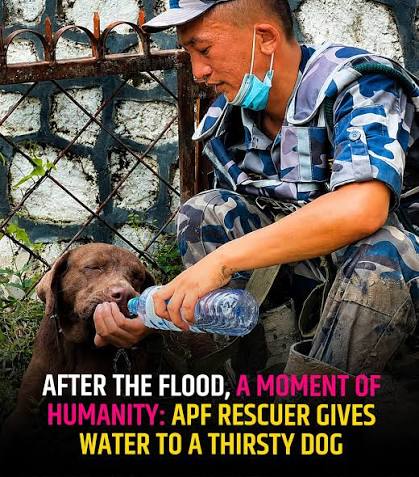
Dogs have been deployed in affected areas like Rasuwa and Nuwakot to detect the scent of humans within the mud, rocks, and debris piled up by the flood. China has also deployed life-finding equipment along with search and rescue dogs in its disaster areas. Dogs are seen as the vahana (vehicle) of Bhairav, and Bhairav is considered the protector of Nepal (Valley). So, how are these vahana of Bhairav being utilized in the current rescue operations? What is their effectiveness?
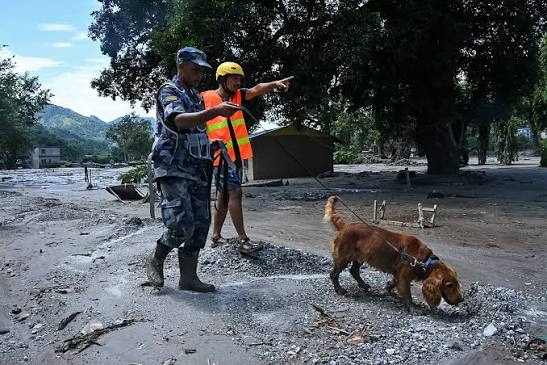
Dogs from all three security agencies deployed in search and rescue operations
In the Bhote Koshi disaster, dogs trained in search and rescue are being used by all three security agencies. Five dogs from the Nepal Police were used in search and rescue. Four of them are deployed in Rasuwa and Nuwakot, and one in Chitwan. Dogs were also used on the banks of the Narayani River in Chitwan to search for bodies washed away by the Bhote Koshi. In Rasuwa, the main affected area of the Bhote Koshi disaster, the police have used two dogs, a German Shepherd and a Belgian Shepherd. Two Labradors have been used in Nuwakot.
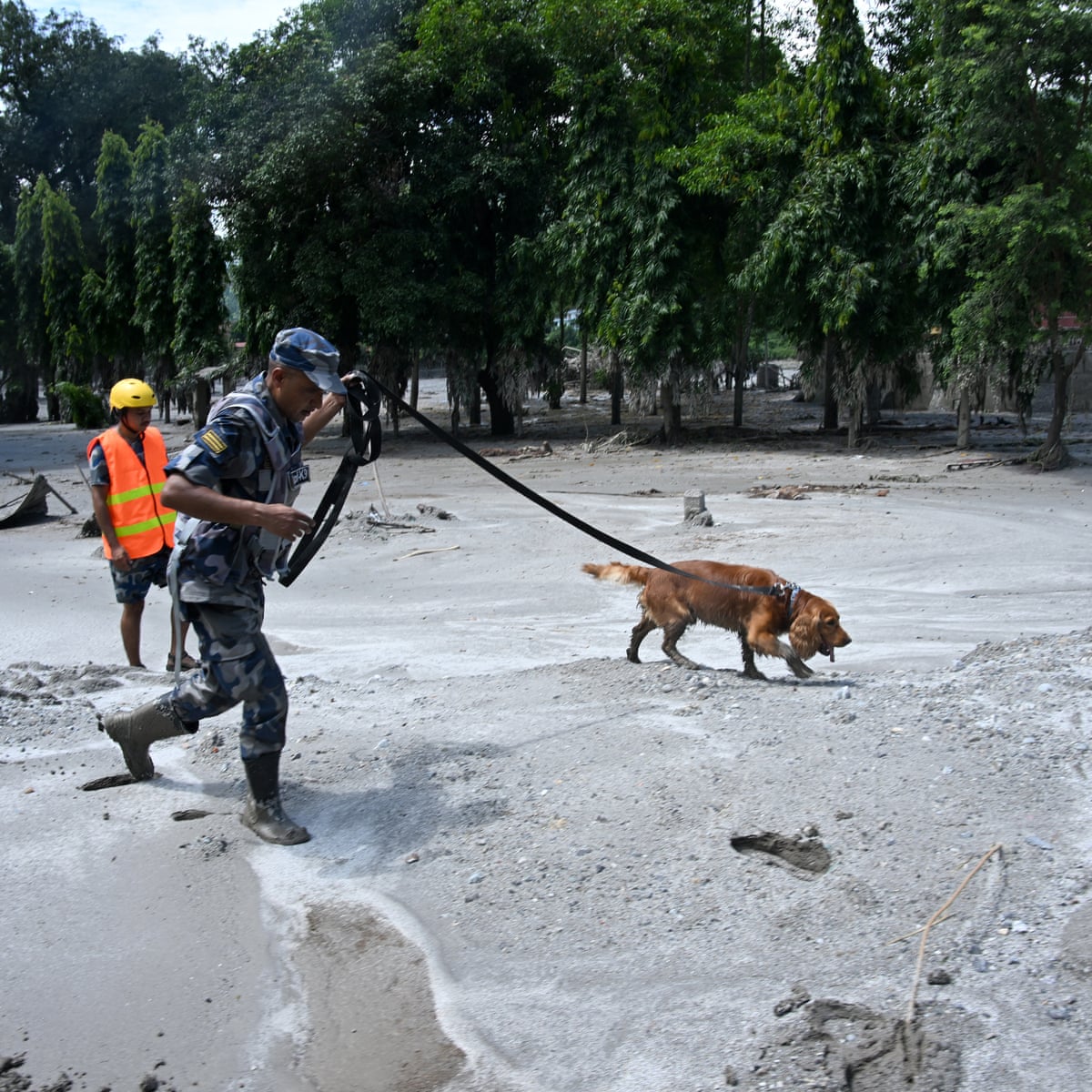
SSP Deep Shamsher Jabra, who is leading the search and rescue in Rasuwa, told Ratopati that three bodies were recovered with the help of dogs in Timure, Rasuwa, on Wednesday. He said, 'We found three bodies in Timure with the help of dogs.'
However, police officials say that although dogs have been used in the Mailung area of Nuwakot from the beginning, they have not been effective there. After no results were obtained in the tunnel areas of the hydropower projects in Mailung, the dogs deployed in Mailung were reassigned to Dhunge on Thursday. This flood has accumulated a large amount of mud and debris along the riverbanks, in settlements, and in hydropower projects. Twelve hydropower projects have been affected, and about 639 people are still missing in the projects. The death toll in this disaster has exceeded 1200, and the number of missing persons is over 4878. The rescue team has prioritized tunnels and other potential areas where survivors might be.
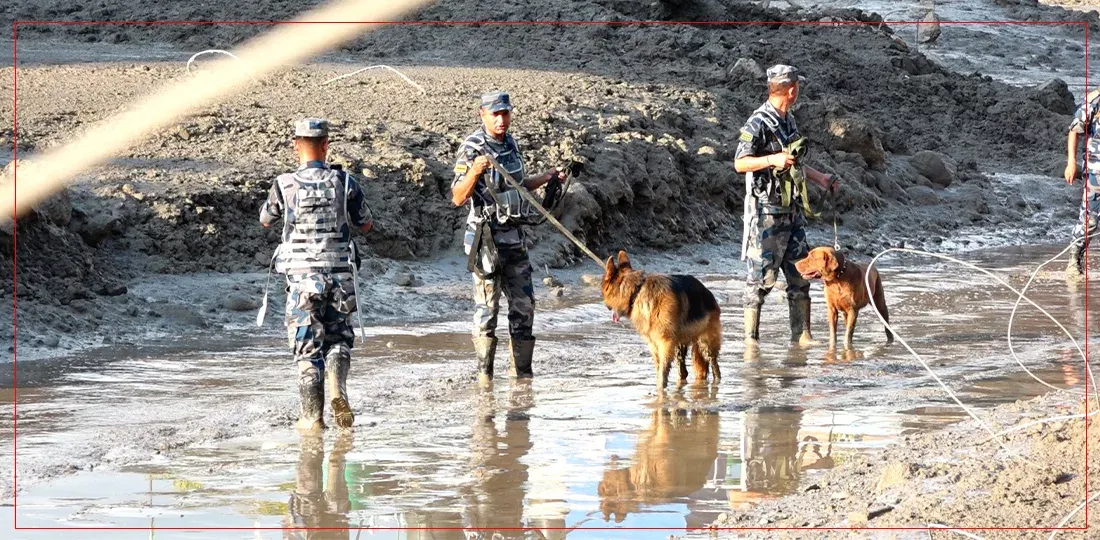
In such a situation, locating the missing has become extremely difficult. This is where the dog's role becomes most apparent. Trained dogs can identify the scent molecules emitted by humans even in places unseen by people. By running over debris or sniffing a specific area, dogs can indicate potential locations. The rescue team can then reconfirm using cameras, life-finding equipment, drills, or other tools.
For this reason, the Nepali Army is also using dogs in search and rescue operations in the disaster-affected areas. Army spokesperson (Brigadier General) Rajaram Basnet told Ratopati that dogs have been deployed for search since the beginning of the disaster.
The police have six breeds of dogs for disaster management, rescue, and investigation. Labrador, German Shepherd, Belgian Shepherd, Golden Retriever, Cocker Spaniel, and Beagle breeds of dogs assist the police in investigations.
The police canine office in Maharajgunj manages the dogs. Dogs have an extremely strong sense of smell. Dogs used in search and rescue and investigation have 250 million olfactory cells. Normal dogs do not have such a high number of olfactory cells.
International Practice of Using Dogs in Disasters
The US Federal Emergency Management Agency (FEMA) has even created criteria for 'Canine Search Specialists' for disaster rescue. Such dogs are trained to locate live humans in collapsed structures and debris. Similarly, there are separate dog teams for locating human remains. According to FEMA's criteria, such dogs identify the scent of human remains in debris and collapsed structures.
After the devastating earthquake in Turkey and Syria in 2023, teams from around the world were deployed for search and rescue. Among the teams from various countries were sniffer dogs, i.e., scent-detecting search dogs. The incident in Turkey showed one important thing: dogs are still one of the most useful technologies for searching for people in large debris, but they must be used in conjunction with heavy equipment, cameras, sound and life-detecting devices, and trained rescuers.
In 2025, after a powerful earthquake in Myanmar, two Golden Retriever rescue dogs were used in the search when a 30-story building under construction in Bangkok collapsed. These dogs were deployed to search for live humans in the debris. They participated in the search for five days while rescue efforts continued. Later, the dogs were also used to provide emotional support to the victims' families.
How Great is a Dog's Capability, Really?
It is wrong to consider dogs as 'magical devices.' Their effectiveness depends on several important factors. The human body constantly emits various types of scents. Trained dogs can distinguish these scents from other odors. Therefore, even if human eyes cannot see anything in the debris, dogs can indicate the location of potential survivors. However, the indication is not considered final proof. Wind, water, temperature, the condition of the mud, the scent of other people, and environmental pollution can affect the results.
When the possibility of finding live individuals decreases, another important role of search dogs begins: searching for human remains. The dogs used for this are trained to detect different scents than those used for finding live people. FEMA has designated separate specializations for dogs searching for live people and human remains.