Expandable House Floor Plans: 5 Layouts That Maximize Space
You love the idea of a folding container house, but looking at a steel box leaves you wondering: How am I actually going to fit a bed, a kitchen, and a living room in there? Visualizing the space is the hardest part for most buyers. If you choose the wrong layout, you end up sleeping next to the refrigerator or staring at a blank metal wall.
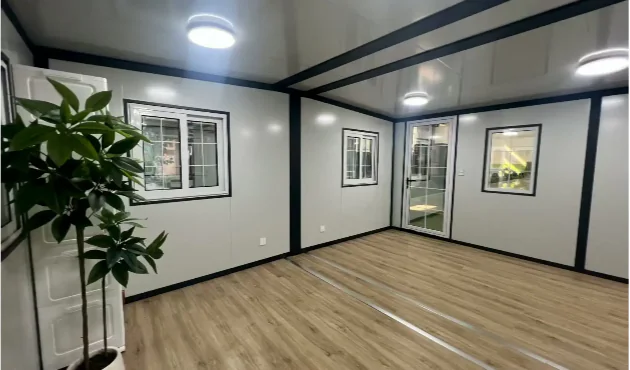
After designing and installing over 200 prefab container units, I’ve learned exactly how to optimize these specific structures. You cannot treat them like traditional homes. This guide breaks down the engineering rules you must follow and provides five proven expandable house floor plans that maximize every square inch of your new living space.
The Engineering Behind Expandable House Layouts
Before you start sketching a foldable house layout, you must understand how the mechanics dictate the floor plan. An expandable unit is not an empty canvas; it is a machine.
The Fixed Center Core vs. The Folding Wings
A standard 20ft double-wing expandable home consists of three sections. The central core (roughly 20ft x 8ft) is a rigid steel box that never moves. The two side wings fold out from the core to triple the footprint (yielding about 400 sq ft). Because the side wings must fold inward during transport, you cannot put heavy, permanent fixtures in them. The wings are designed strictly for open space or lightweight partition walls.
Why Plumbing Must Stay in the Center Block
If you try to put a bathroom in a folding wing, you will break the International Plumbing Code (IPC) guidelines for slope and drain venting, and the flexible pipes will inevitably leak after multiple folds. From the projects we’ve completed, 100% of successful, leak-free layouts keep the kitchen, bathroom, and utility panels locked securely inside the fixed center core.
Double wing expandable house in compact folded position ready for transport on flatbed truck.
Layout 1: The Open-Concept Studio (Ideal for Airbnb)
This is the most popular layout for glamping and short-term rentals because it feels massive. By removing all interior partition walls, the 400 sq ft footprint functions as one continuous great room.
Maximizing Natural Light with Panoramic Doors
We typically replace the solid end-walls of the folding wings with floor-to-ceiling sliding glass doors. This floods the expandable container home interior with natural light and extends the living space visually into the outdoors.
Space-Saving Furniture Solutions
Because there are no walls to define rooms, use furniture to create zones. A Murphy bed in one wing frees up floor space during the day. A kitchen island on wheels in the center core serves as prep space, dining table, and visual divider between the sleeping and living areas.
Layout 2: The One-Bedroom Sanctuary
If you are living in the unit full-time, you eventually want to close a door and have a separate bedroom.
Creating a Dedicated Master Suite in One Wing
In this layout, we install a lightweight partition wall to enclose the entire left wing, creating a 130 sq ft master bedroom. This fits a queen-size bed, two nightstands, and a built-in wardrobe perfectly.
Separating the Living Area and Kitchen
The right wing remains completely open, serving as the living room. The center core houses a galley-style kitchen on one side and a full bathroom on the other. This foldable house layout provides excellent privacy while keeping the public areas spacious and bright.
Layout 3: The Compact Two-Bedroom Family Plan
Can you fit a family in an expandable house? Yes, but you must compromise on the living room size.
Fitting Two Private Bedrooms into a 20ft Unit
This 2 bedroom expandable tiny house places a bedroom in each of the folding wings. The left wing serves as the master, and the right wing holds a bunk bed setup for children or guests.
The Trade-off: Smaller Living Room Space
Because both wings are enclosed as bedrooms, the family must gather in the fixed center core. This leaves room for only a small kitchenette and a loveseat. To make this work, you must build an exterior wooden deck and use it as your primary dining and lounging area during nice weather.
A mobile expandable house loaded on a flatbed trailer being transported along a highway to a rural installation site.
Layout 4: The Dedicated Home Office Pod
Since 2020, we’ve seen a massive surge in buyers using expandable homes strictly as backyard workspaces or creative studios.
Dividing Work Space from Guest Accommodation
In this layout, one wing is configured entirely as an office with a built-in L-shaped desk and abundant power outlets. The opposite wing functions as a lounge area or a guest room with a pull-out sofa.
Soundproofing the Central Wall
To make this professional, we add acoustic foam insulation to the partition wall separating the office from the rest of the unit. This allows one person to take a Zoom call in the office while a guest watches TV in the lounge wing without noise bleed.
Layout 5: The Commercial Pop-Up Shop
Expandable houses aren’t just for living; they make incredible, secure retail spaces that can be moved from festival to festival.
Converting an Expandable Unit into a Cafe or Retail Store
The center core houses the commercial sinks, inventory storage, and an ADA-compliant restroom. The two folding wings serve as the open retail floor or indoor cafe seating.
Modifying the Front Wall for Customer Access
For commercial use, the standard entry door is removed. Instead, the entire front face of the center core is replaced with a commercial glass storefront or a roll-up concession window, creating an inviting entry point for foot traffic.
FAQ
Can I customize the floor plan of an expandable container home?Yes, but only the partition walls. You cannot alter the structural steel frame, the roof hinges, or the floor folding mechanisms. You can choose where to place interior dividing walls to create rooms, but those walls must be lightweight to allow the unit to fold for transport.
Can you put a bathroom in the expanding wings?No. Putting plumbing in the folding wings is a guaranteed recipe for leaks and code violations. All “wet” rooms (bathrooms, kitchens, laundry) must remain in the fixed central core of the expandable container home interior.
How high are the ceilings in the different rooms?Because the roof of the folding wings must tuck underneath the roof of the center core during transport, ceiling heights vary. The center core usually features an 8.5-foot ceiling. The expanded wings drop slightly, typically measuring between 7.5 and 8 feet high.
Visualizing life inside a steel box is tough, but choosing the right expandable house floor plans makes the difference between a cramped storage container and a highly functional home. By respecting the mechanical limitations—keeping plumbing in the core and using lightweight partitions—you can create a 2 bedroom expandable tiny house or a sprawling open studio that perfectly fits your lifestyle.
Interior display of the double-wing expandable house