Akai MPC-3000 Wave File Sample Set
Over 90 studio quality wave file samples.
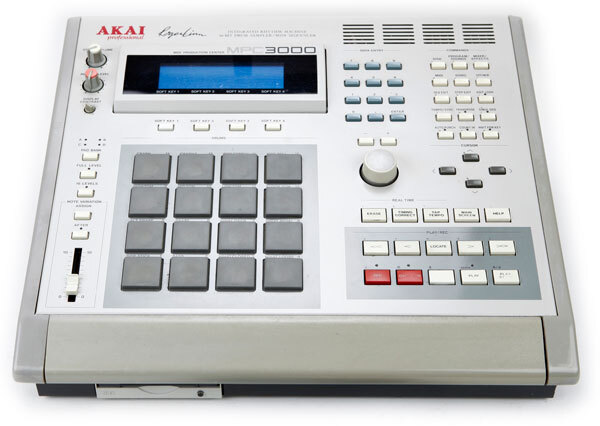
The Akai MPC3000, released in 1994, stands as the crowning achievement of the collaboration between Akai Professional and the legendary designer Roger Linn. Often cited by purists and professional producers as the greatest "groovebox" ever built, it refined the foundation laid by its predecessor, the MPC60, into a high-fidelity production powerhouse. While the original MPC60 was a 12-bit machine known for its grit, the 3000 stepped into the professional realm with 16-bit, 44.1kHz stereo sampling. This upgrade offered a "CD-quality" sound that managed to retain a signature punch and warmth, largely attributed to its superior analog-to-digital converters and its robust internal architecture.
At the heart of the machine is its world-renowned sequencer. Producers like J Dilla and Dr. Dre famously leveraged the MPC3000 not just for its sounds, but for its "feel." The machine’s timing—specifically its swing—is considered by many to be unreplicable by modern software. It treats quantization with a human-like nuance, allowing for rhythms that sit "behind the beat" without losing their drive. This unique timing, combined with a 96 parts-per-quarter-note resolution and a massive 75,000-note capacity, allowed artists to move away from robotic loops and toward complex, organic compositions that redefined the sound of 90s hip-hop and R&B.
The hardware itself is a masterclass in tactile interface design. Its 16 velocity- and pressure-sensitive grey rubber pads became the industry standard, inviting users to play the machine like a percussion instrument rather than a computer. Beyond the pads, the MPC3000 featured a tiltable backlit LCD, four MIDI outputs for controlling a full studio of external gear, and eight individual analog outputs for professional mixing. It also introduced a resonant low-pass filter and basic digital effects, giving producers the tools to sculpt raw samples into finished textures within a single box.
Despite its age, the MPC3000 remains a centerpiece in many modern studios. While it lacks contemporary conveniences like WAV file support or USB connectivity, its reliability and "hands-on" workflow offer a focused creative experience that avoids the distractions of a computer screen. Owners today often modify their units with CF or SD card readers to replace the aging floppy and SCSI drives, ensuring that this thirty-year-old titan continues to drive the pulse of modern music. It is more than just a sampler; it is a cultural icon that proved a machine could have a soul.