Dropshipping vs Private Label (Real Comparison)
Dropshipping vs Private Label (Real Comparison)
When starting an e-commerce business, one of the biggest decisions is choosing between dropshipping and private labeling. Both models have their advantages and challenges, and the right choice depends on your goals and budget.
Dropshipping: Low Risk, Easy Start
Dropshipping is one of the easiest ways to start an online store. You don’t need to buy inventory upfront. Instead, when a customer places an order, the supplier ships the product directly to them.
This model is popular on platforms like Shopify, where beginners can quickly set up a store with minimal investment.
The main advantage is low risk. You don’t need a large budget, and you can test multiple products without losing money on unsold stock. However, the downside is lower profit margins and less control over product quality and delivery.
Private Label: Higher Profit, Strong Brand
Private labeling means selling products under your own brand name. You source products from manufacturers, customize them (logo, packaging), and sell them as your own brand.
This model requires more investment compared to dropshipping, but it offers higher profit margins and full control over branding. Businesses using private label strategies often build long-term brand value and customer loyalty.
However, it comes with risks such as inventory costs and the need for strong marketing to stand out in the market.
Key Differences
Investment: Dropshipping (low) vs Private Label (medium to high)
Risk: Dropshipping (low) vs Private Label (higher)
Branding: Dropshipping (limited) vs Private Label (strong)
Profit Margins: Dropshipping (lower) vs Private Label (higher)
Conclusion
If you are a beginner with limited budget, dropshipping is a great way to start. But if your goal is to build a long-term brand, private labeling is the better choice.
💡 The smartest approach is to start with dro
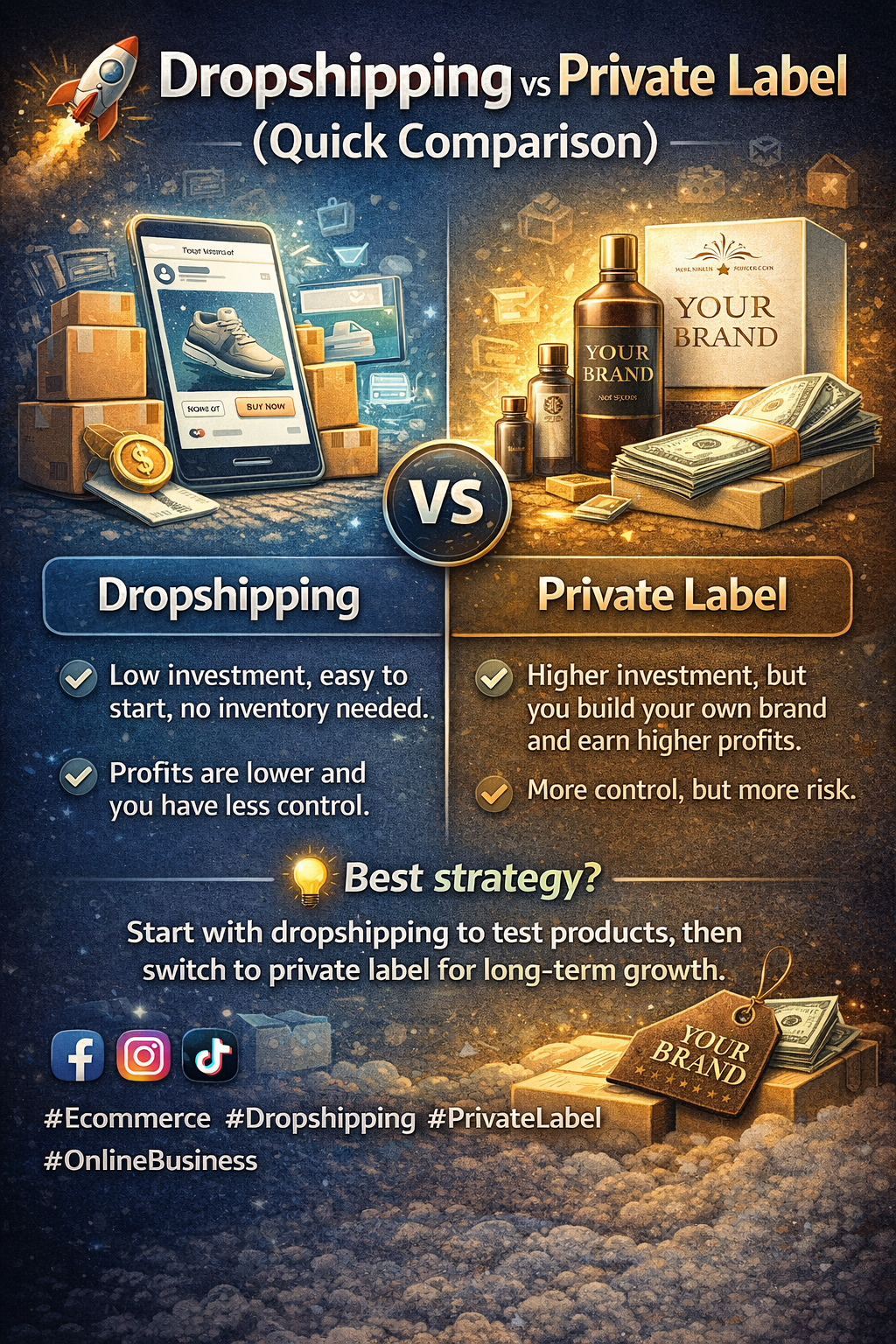
pshipping, test winning products, and then move to private labeling for growth.