Pros and Cons of an Expandable Tiny Home: An Honest Review
You’ve watched the videos: a steel shipping box drops onto a plot of land, workers pull a few levers, and an entire house folds out in an hour. It looks like magic, but are foldable houses good for actual, everyday living?
As an engineer who has designed and installed over 200 prefab container projects, I’ve seen the incredible benefits and the frustrating failures of these structures. Buyers often get caught up in the novelty and ignore the structural realities. This guide breaks down the true expandable tiny home pros and cons, examining the mechanics, the weatherproofing, and the hidden challenges nobody talks about on social media.
How the Expandable Tiny Home Mechanism Actually Works
These homes are not just empty boxes; they are highly engineered mechanical structures. They ship at a standard 20ft by 8ft size, but the side walls feature heavy-duty hinges that allow the floor and roof to fold outward, tripling the living space.
Hydraulic vs. Manual Folding Systems
High-end units use internal hydraulic lifts to push the heavy roof panels up and the floor panels down. This requires zero physical strain but introduces mechanical parts that can fail and leak hydraulic fluid. Budget models rely on manual winches and spring-assisted hinges. While they require manual labor (usually 3 to 4 people), they have fewer components that can break over a 20-year lifespan.
The Setup Process: From Box to House in 2 Hours
Once the crane sets the central unit on a level foundation, the expansion process is shockingly fast. In our experience, a trained crew can unfold a double-wing unit, secure the locking bolts, and apply the initial weather seals in about two hours.
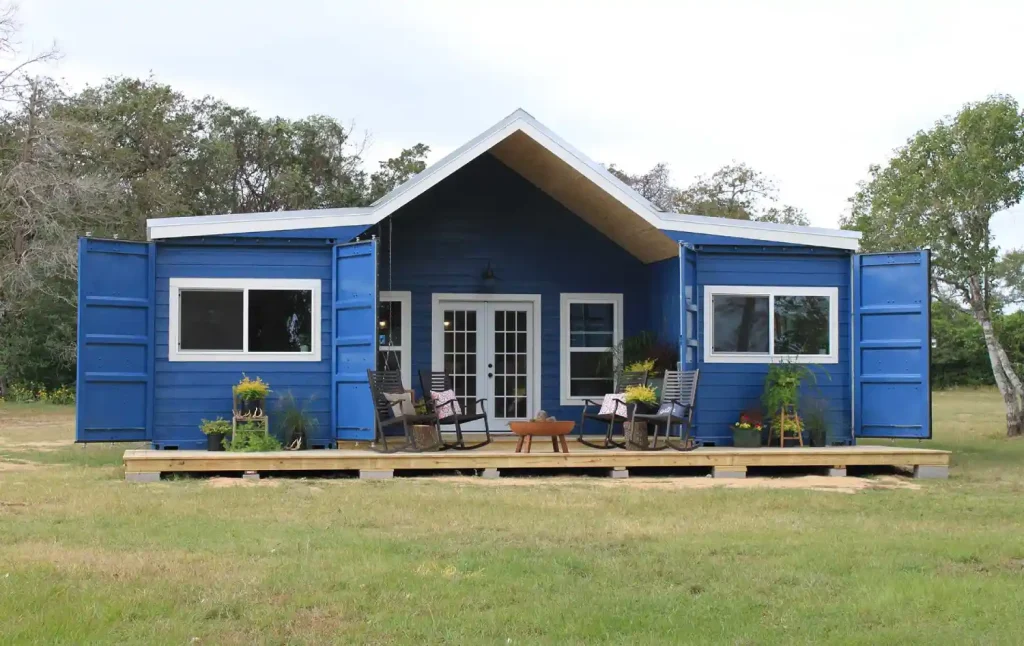
Double wing expandable house fully deployed showing symmetrical wings extended on both sides with central living area.
The Top Advantages of Expandable Container Houses
There is a reason these structures are disrupting the housing market. The expandable container house advantages center around logistics and speed.
Massive Savings on Transportation Logistics
A traditional 400 sq ft modular home requires an oversized load permit, pilot cars, and specialized routing to avoid low bridges, costing $5 to $8 per mile to ship. An expandable home folds down to standard shipping container dimensions. It ships on regular flatbed trucks for $2 to $3 per mile, cutting transportation costs by more than half.
Relocatability: Moving Your Home When Life Changes
If you buy land elsewhere or change jobs, you aren’t forced to sell your house. You simply reverse the folding process, hire a crane and a truck, and move your entire home to the new location.
Unmatched Speed of Construction and Deployment
Site-built construction takes 6 to 12 months. When you order an expandable home, the factory builds it in 30 days. You prepare the foundation concurrently. You can go from placing an order to sleeping in your new house in under 8 weeks.
The Honest Disadvantages You Must Consider
I won’t sugarcoat this: moving parts create vulnerabilities. The problems with expandable homes stem directly from their folding nature.
Lower Ceiling Heights Compared to Traditional Homes
To allow the floors and roofs to fold inside the central core, the ceiling height in the expanded wings is usually limited to 7.5 to 8 feet. The International Residential Code (IRC) requires a minimum of 7 feet, so it is legal, but tall individuals often feel cramped compared to the 9-foot ceilings in traditional homes.
Challenges with Expansion Joint Waterproofing
Every hinge and seam where the folding sections meet the central core is a potential water leak. Factory rubber gaskets degrade over time due to UV exposure. From the projects we’ve completed in rainy climates like the Pacific Northwest, we mandate that owners apply industrial-grade silicone sealant to all exterior roof joints immediately after deployment. You must re-inspect these seals annually.
The Risk of Poor Insulation in Cheap Models
Budget manufacturers (selling units under $20,000) often use 50mm EPS (polystyrene) insulation. This is practically useless in freezing temperatures. If you live in a cold climate, you must specify an upgrade to 75mm or 100mm Polyurethane (PU) foam, which increases the price but prevents the metal walls from sweating and forming mold.
expandable container house
Expandable Tiny Homes vs. Traditional Tiny Houses on Wheels (THOW)
How do they compare to the classic wooden tiny house on a trailer?
Usable Square Footage Comparison
A standard 24-foot THOW maxes out at around 200 sq ft on the main floor (plus a cramped sleeping loft). A 20ft double-wing expandable home yields almost 400 sq ft of single-level living space, allowing for two real bedrooms with doors you can actually close.
Towing Requirements and Highway Regulations
A THOW can be towed by a heavy-duty pickup truck (like an F-350) whenever you want. An expandable home requires hiring a commercial crane and a flatbed 18-wheeler. THOWs win on immediate mobility; expandable homes win on total living space.
Zoning and Permit Challenges for Foldable Houses
The hardest part of owning one of these homes is getting the government to let you live in it.
How Municipalities Classify Expandable Structures
Local zoning boards often panic when they see folding steel houses. If you leave the lifting lugs on and don’t permanently attach it to a foundation, they might classify it as an RV. If you anchor it to concrete, they will demand structural engineering stamps proving it meets local wind and snow loads.
Navigating Temporary vs. Permanent Structure Rules
Many buyers successfully permit these units as Accessory Dwelling Units (ADUs) in their backyards by treating them exactly like modular homes—submitting formal foundation plans and hiring local engineers to verify the factory’s structural data.
Ideal Use Cases for Expandable Prefab Houses
Because of their unique pros and cons, these homes excel in specific niches rather than replacing traditional suburban housing.
High-ROI Airbnb and Glamping Rentals
Investors love them because they can drop three units on a piece of scenic land and start generating cash flow in weeks. The futuristic aesthetic commands premium nightly rates.
Rapid Deployment Guest Houses (ADUs)
If an aging parent needs to move in immediately, an expandable home can be placed in a backyard for a fraction of the cost and time of building a traditional addition.
FAQ
Will the hinges rust or break on an expandable container home?Quality units use heavy-duty galvanized steel hinges coated in anti-corrosive paint. They rarely break, but they will squeak and rust if you don’t lubricate them annually, especially in coastal environments.
Are expandable tiny homes safe in hurricane-force winds?Yes, but only if anchored properly. The structure itself is incredibly rigid. When bolted securely to a poured concrete foundation, most high-quality units are engineered to withstand Category 3 hurricane winds (up to 115 mph).
Do they leak rain where the walls fold together?They shouldn’t, but they can if the foundation isn’t perfectly level. If the unit sits unevenly, the folding walls will not compress the rubber gaskets tightly, allowing water to enter. Proper leveling and secondary silicone sealing guarantee a dry interior.
Understanding the expandable tiny home pros and cons protects you from buyer’s remorse. These structures offer brilliant logistical solutions and incredible value per square foot, provided you accept the lower ceiling heights and commit to annual seal maintenance. If speed, space, and budget are your primary drivers, a foldable container home is an investment worth making.
Double wing expandable house in compact folded position ready for transport on flatbed truck.