The Danger of Expedience (as illustrated in John 18)
Before I begin, I want to talk about the origin of this musing.
Recently, I read Jordan Peterson's 12 Rules for Life: an Antidote to Chaos (Amazon affiliate link). One of the chapters talked about the dangers of expedience, the notion that our behavior should be shaped by choosing what fixes the most problems right now at the potential cost of future issues. That's not really what this post is about, but that's something I wanted to bring up since I'm not really looking at this simply because I have a great brain. I can't normally see a random word and draw some profound meaning from it.
Now that credit has been given where credit is due, I have to confess that I was a little slow to the reading during the Easter season (by that, I mean to say that I didn't sync my reading with Easter at all), but I was reading John 18 this morning which tells the story of Pontius Pilate and the crucifixion of Christ.
This verse stood out to me:
Now Caiaphas was the one who had advised the Jews that it was expedient for one man to die on behalf of the people.
I'm not a professional theologian, and my main thought when I read is to simply prayerfully consider the scriptures to find the greatest meaning that I can.
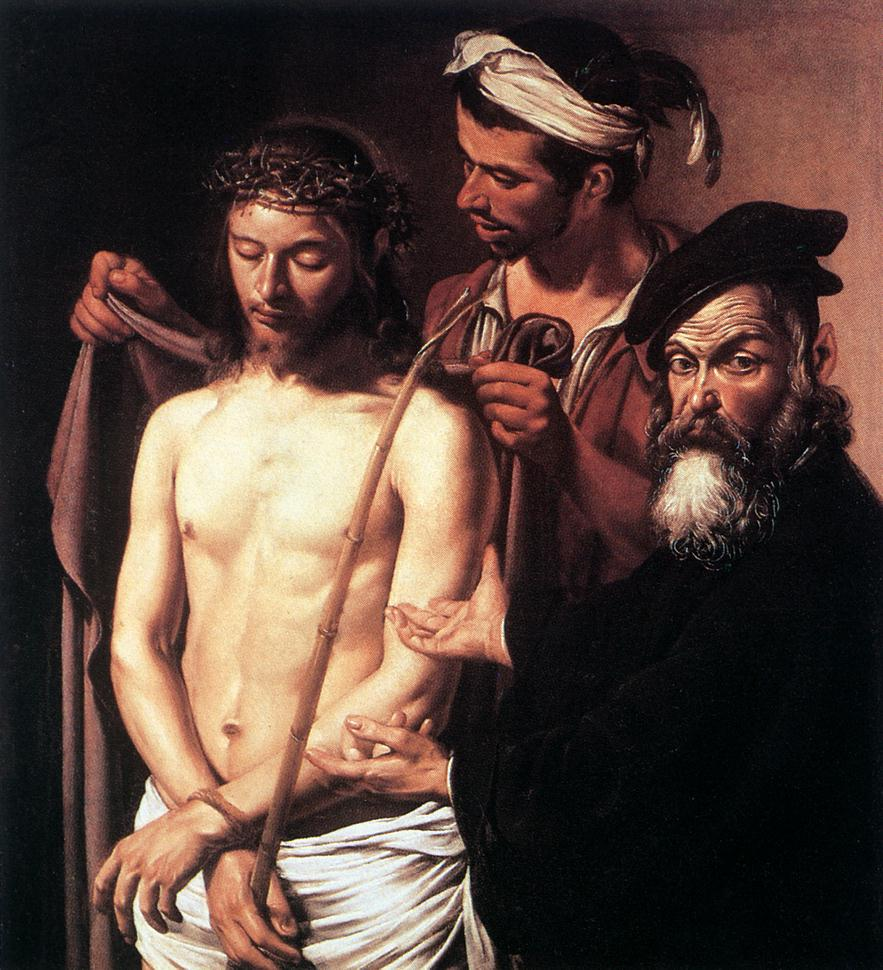
Ecce Homo, by Caravaggio
As a Christian, I find that I often try to justify my actions as belonging to some "greater good" or saying that the ends make up for sub-par means.
There's something poetic in the fact that Caiaphas, who lived in the time of Christ and who Christ was actively ministering to, decided that Christ was a threat to the Jewish faith and community and needed to be killed.
How often do we as Christians wind up doing the same thing Caiaphas did? It's very tempting to look at a young believer who is engaging in some misguided practice and correct them too sternly, or to find someone who we simply dislike for petty reasons and avoid ministering to them so that we can avoid them and have more of our time to ourselves.
How often do we spend time complaining because it makes us feel better, when we could try to make a difference?
The worst part is that the temptation to fall into the same trap as Caiaphas did isn't something we do maliciously, or even intentionally. We do it when we ignore our conscience. Actions that feel bad seem logically justifiable, so we go with the "superior" logic, often ignoring a very real calling from God, who will not force our hands.