Premix Feed Production Line: A Practical Guide to Precision Feed Processing
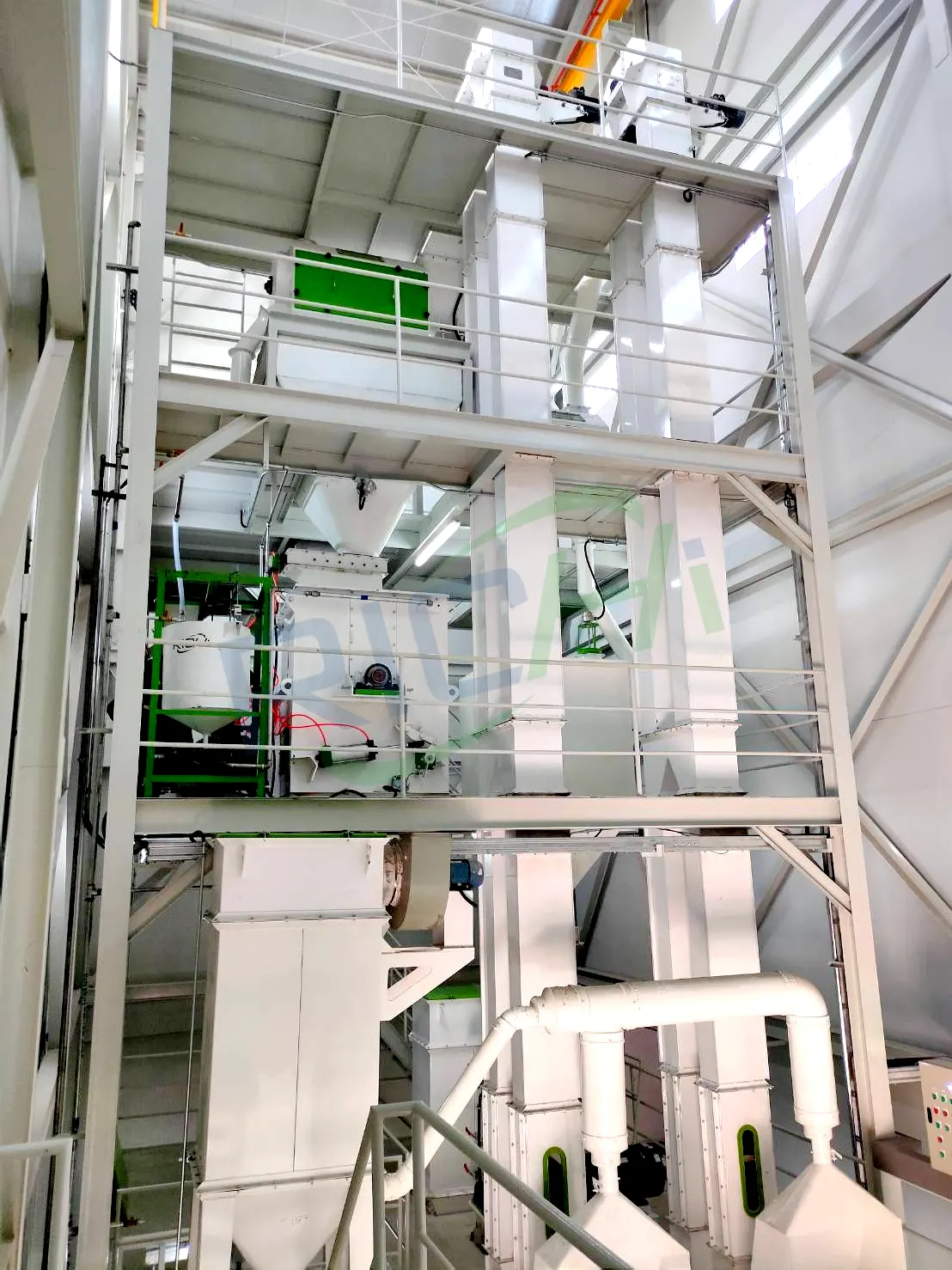
Premix is an important component of modern animal nutrition because it allows small quantities of vitamins, minerals, amino acids, and other additives to be incorporated into feed formulas in a controlled way. Although the amount of premix used in a complete feed formula may be relatively small, its processing requires considerable accuracy. A premix feed production line is therefore designed around precise weighing, thorough mixing, careful material handling, and protection of active ingredients rather than simply maximizing throughput.
What Makes Premix Different from Conventional Feed?
Premix usually contains many different micro-ingredients, including trace mineral elements, vitamins, synthetic amino acids, and certain additives. These materials are often available in powder form and may have very different physical properties.
Because the inclusion rate of some components is extremely low, even a small weighing deviation can influence the composition of the finished product. The reference material indicates that the accuracy requirement for trace ingredients can reach 0.01%, while mixing uniformity is also expected to be very high. This explains why premix production places greater emphasis on precision than a conventional feed line.
Why Is Raw-Material Preparation Important?
The first stage is generally related to raw-material preparation. Cleaning removes unwanted materials such as rope, clods, crop residues, and metal impurities, helping protect subsequent equipment and maintain product quality.
Some carriers and diluents may also need to be crushed. Corn, bran, calcium-based materials, and other carriers should have an appropriate particle size so that they can blend effectively with the micro-ingredients. Depending on the raw materials and production scale, a hammer mill or micro crusher may be included.
Moisture control is equally important. According to the reference material, premix raw materials generally should not exceed approximately 10% moisture. Materials that have absorbed moisture during storage may therefore require drying before batching.
How Does Batching Affect Premix Quality?
Batching is one of the most critical operations because each ingredient needs to be weighed according to a predetermined formulation. Automatic batching, manual weighing, or a combination of the two can be selected depending on the production scale and required accuracy.
For companies comparing a poultry feed mill plant price for broiler feed, it is also useful to distinguish between a complete broiler feed plant and a premix facility. A conventional broiler feed line normally involves major ingredients such as corn and soybean meal, followed by grinding, batching, mixing, pelleting, cooling, screening, and packaging. Premix production, by contrast, focuses more heavily on micro-ingredient weighing and powder mixing.
What Makes Mixing So Important?
Mixing uniformity is one of the defining technical requirements of premix processing. The reference material states that the coefficient of variation should not exceed 5%, and under suitable conditions it can reach approximately 2%–3%.
Mixing time also deserves attention. Premix mixing can take around three to four times longer than conventional compound-feed mixing because trace ingredients must be distributed much more evenly.
When selecting a mixer, uniformity should therefore be considered before simply looking at equipment price. Dead angles, residual material, mixing time, installation conditions, and the characteristics of the formulation all influence the practical performance of the system.
How Should a Premix Facility Be Planned?
A practical premix project should begin with the formulation and raw-material characteristics. The number of ingredients, weighing accuracy, moisture level, particle size, mixing requirements, packaging method, and automation level should all be considered before the equipment configuration is finalized.
Readers who want to learn more about the manufacturer’s background and development can use hop over to these guys as the linked anchor to the company’s About Us page, providing additional company information while keeping the technical discussion focused on premix processing.
Understanding Premix Production as a Precision Process
Premix manufacturing may involve familiar operations such as cleaning, weighing, mixing, conveying, and packaging, but the required precision makes the overall process quite different from ordinary feed production. Consistent particle size, accurate dosing, high mixing uniformity, low moisture, short conveying routes, and effective dust control all contribute to a stable process.
Pellet Maker provides equipment and production-line configurations for different feed-processing applications. For a premix project, the appropriate process should ultimately be selected according to the formulation, raw-material properties, desired capacity, site conditions, and required level of automation.