Kate’s Narration
In the following three or four pages of Finnegans Wake we finally hear Kate’s account of the assault on HCE. FWEET summarizes this section thus:
yet another hostile assault―culminating in a truce and a police report ... fourth version of the assault, this one with the attacker-defender roles as before, or possibly reversed, or perhaps both.
I would question whether this is only the fourth version of the assault, but I agree that the roles of attacker and defender are obscure and the skein of narrative is difficult to unravel. What was originally the Oedipal Event―HCE being assaulted by a younger man―usually becomes in its re-enactment in the following generation the Sibling Rivalry: Shem attacking Shaun (Shaun being HCE’s heir and successor).
These relationships are further complicated by a third one: Master & Slave. When HCE (E) is conquered by the younger Oedipal Figure (Y), the latter becomes the new HCE and the former becomes his slave Sackerson (S) and is forced to serve him. In their Chicken Guide to Finnegans Wake Danis Rose & John O’Hanlon examine the question of the identities of the two combatants at some length. Their analysis is worth reading, but it is much too exhaustive to quote here. The introductory lines will have to suffice:
At this point, we can review the account of the attack to determine who is attacker and who attacked, as it seems on first (second, third ) reading that Earwicker and the cad (clearly, the root-entities involved) are as identities somewhat intertwined. It is self-evident that Joyce intended this confusion (otherwise he would have written a different book or gone back to school and become a civil servant): ‛The pair (whethertheywere Nippoluono engaging Wei-Ling-Taon or de Razzkias trying to reconnoistre the general Boukeleff, man may not say) struggled apairently for some considerable time’ (RFW 65.17; FW 81.33). This situation provides us with a literary loop. Reading it from the beginning and connecting the various leads to some specific identity as these leads are presented results in the contrary identification to the one we would get if we were to connect the clues retrospectively.
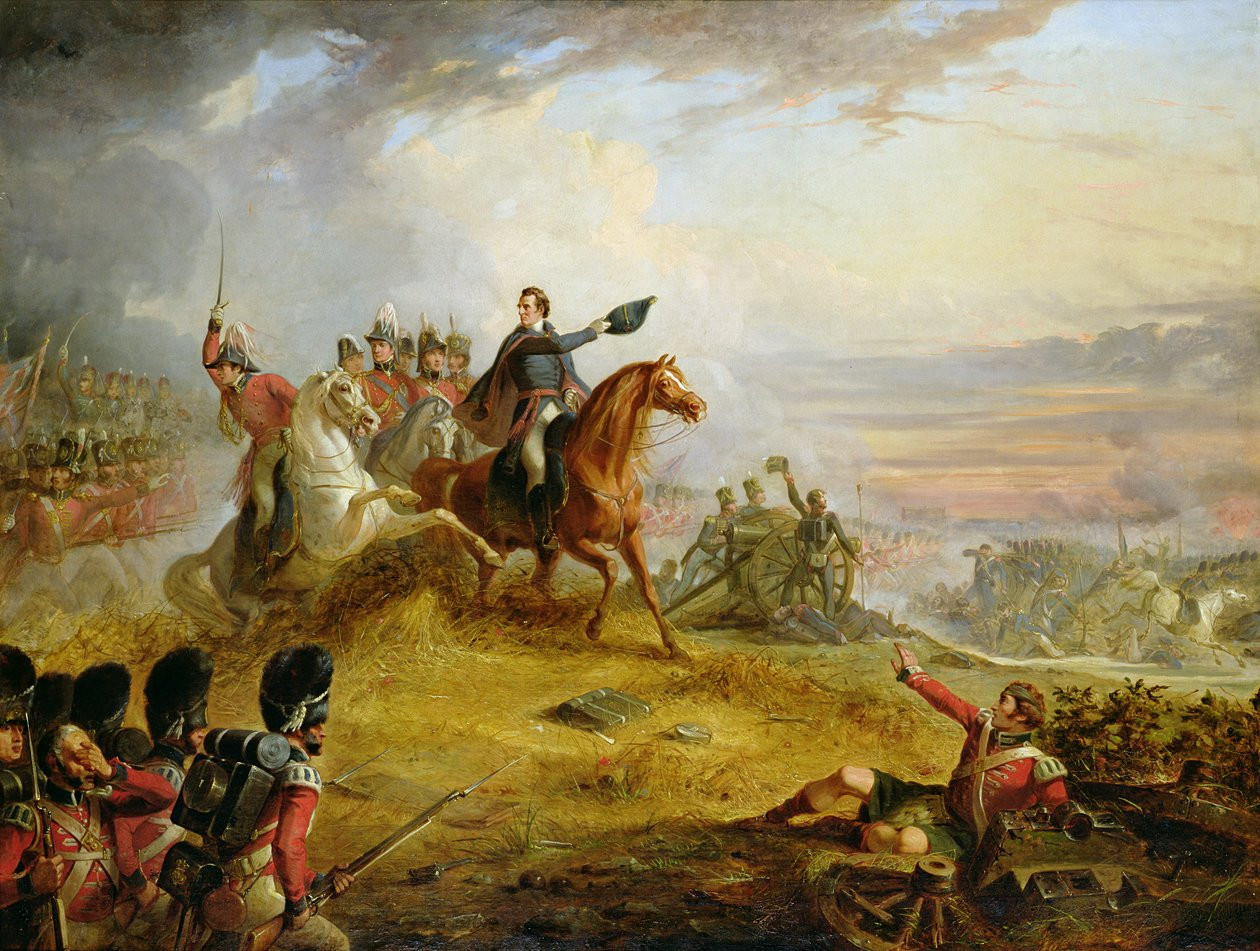
As they see it: reading forwards, HCE is the attacked : reading backwards, HCE is the attacker : reading synoptically, HCE is both the attacked and the attacker―HCE being his own worst enemy. But they also recognize that in this, the fourth iteration of the assault (as they see it), there is the sibling rivalry of Shem & Shaun:
At its most arcane, the fourth and final assault is archetypal, man versus man, and the protagonists merge into a ‘queer mixture’ at the point of reconciliation―in the same way that Butt & Taff do in II.3. Following this logic, Festy King (the man later arrested for the crime) can be interpreted as HCE + Cad, assailant and assailed undifferentiated. HCE is both bullied and bully. His single weapon, the staff, duplicates into staff/strongbox. After the struggle, when the pair reconcile their differences, they become brotherly. The one who leaves is referred to in the plural ‘they’, as also is he who remains. The staff qua staff (‘their humoral hurlbat’) goes; the staff qua strongbox remains (‘left along with the confederate fender’). This explains why HCE is both accused and accuser in the ensuing trial; he subsequently disentangles himself into Shem-Shaun particles. Notice how HCE calls his assailant ‘son’―or is it the other way round?―at RFW 66.13 (FW 082.36).
We have already had some clear indications of this ambivalence, such as the prominence of the fender as the attacker’s weapon of choice. This curious implement was first introduced in the last chapter (050.33) and it will shortly reappear in Kate’s narration. The word can be read as an abbreviation of both offender and defender, making it as much a weapon as a shield.
First-Draft Version
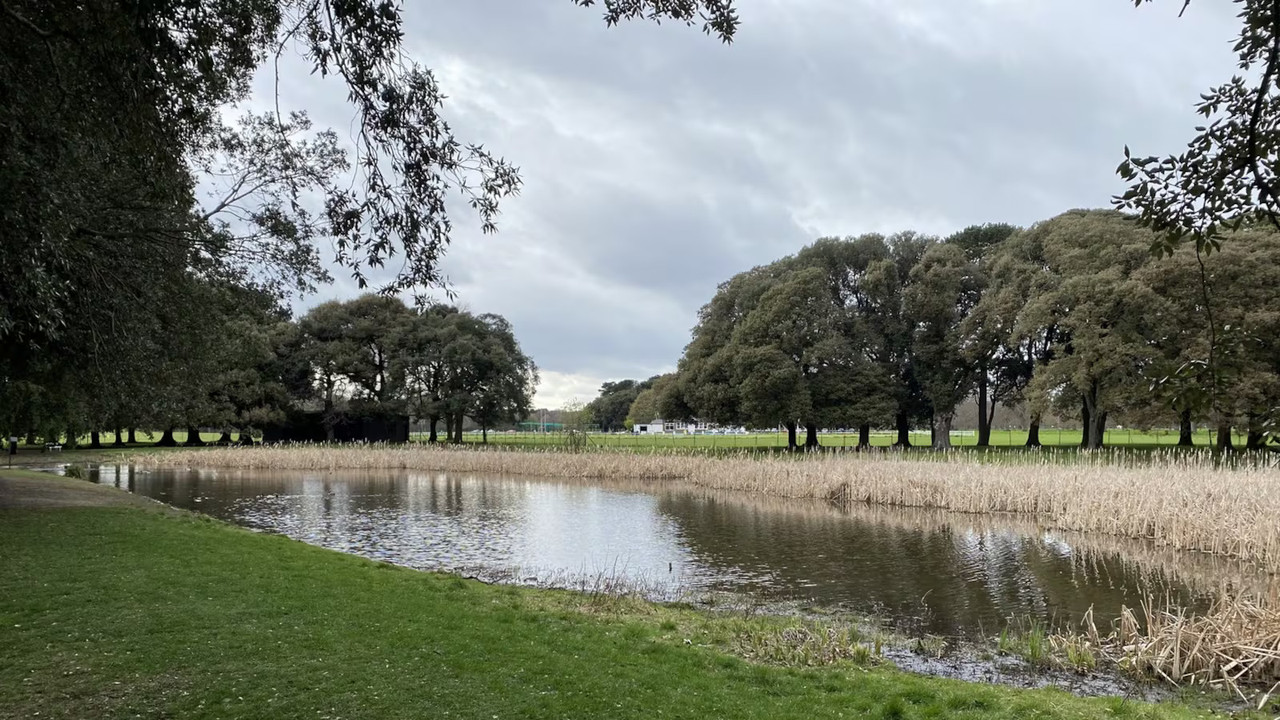
With this passage we return to Joyce’s first draft of this chapter―the preceding thirty lines of text were later additions. When Joyce first sketched out this passage in November 1923, he passed without even a paragraph break from the description of Kate’s filthdump in the Phoenix Park to the account of the assault―leaving us in no doubt that Kate is the narrator and unreliable source of this piece of Earwickian history, and clarifying the location of the assault:
a filth dump near the dogpond in the park on which bootmarks & fingerprint were found of a very involved description. There evidently the attacker, though under medium, with truly native pluck tackled him whom he took to be catching hold of a long bar he had & with which he broke furniture. The struggle went on for a considerable time and in the course of it the masked man said to the other: Let me go, Pat. Later on the same man asked: Was six pounds fifteen taken from you by anyone two or three months ago? There was severe mauling and then a wooden affair in the shape of a revolver fell from the intruder who thereupon became friendly & wanted to know whether his chance companion who had the fender happened to have the change of a ten pound note because, if so, he would pay the six pounds odd out of that for what was lost last summer. The other then said: Would you be surprised to hear that I have not such a thing but I am able to give you four and 7 pence to buy whisky. At the mention of whisky the wouldbe burglar became calm and left the place while the fenderite reported the occurrence, his face being all covered with blood as a proof that he was bleeding from the nose, mouth & ears while some of his hair had been pulled off his head though otherwise his health was good enough. As regards the fender the question of unlawfully obtaining is subsidiary to the far more capital point of the political bias of a person who, when mistakenly molested, was simply exercising one of the most primary liberties of the subject by walking along a public thoroughfare in broad daylight. ―Hayman 75–76 (RFW 064.02 ... 068.11)
By the time Joyce was through with this passage, these twenty-odd lines had grown to more than five pages of text in the published edition of 1939, or more than three pages in Rose & O’Hanlon’s The Restored Finnegans Wake.
Art Imitates Life ... Again
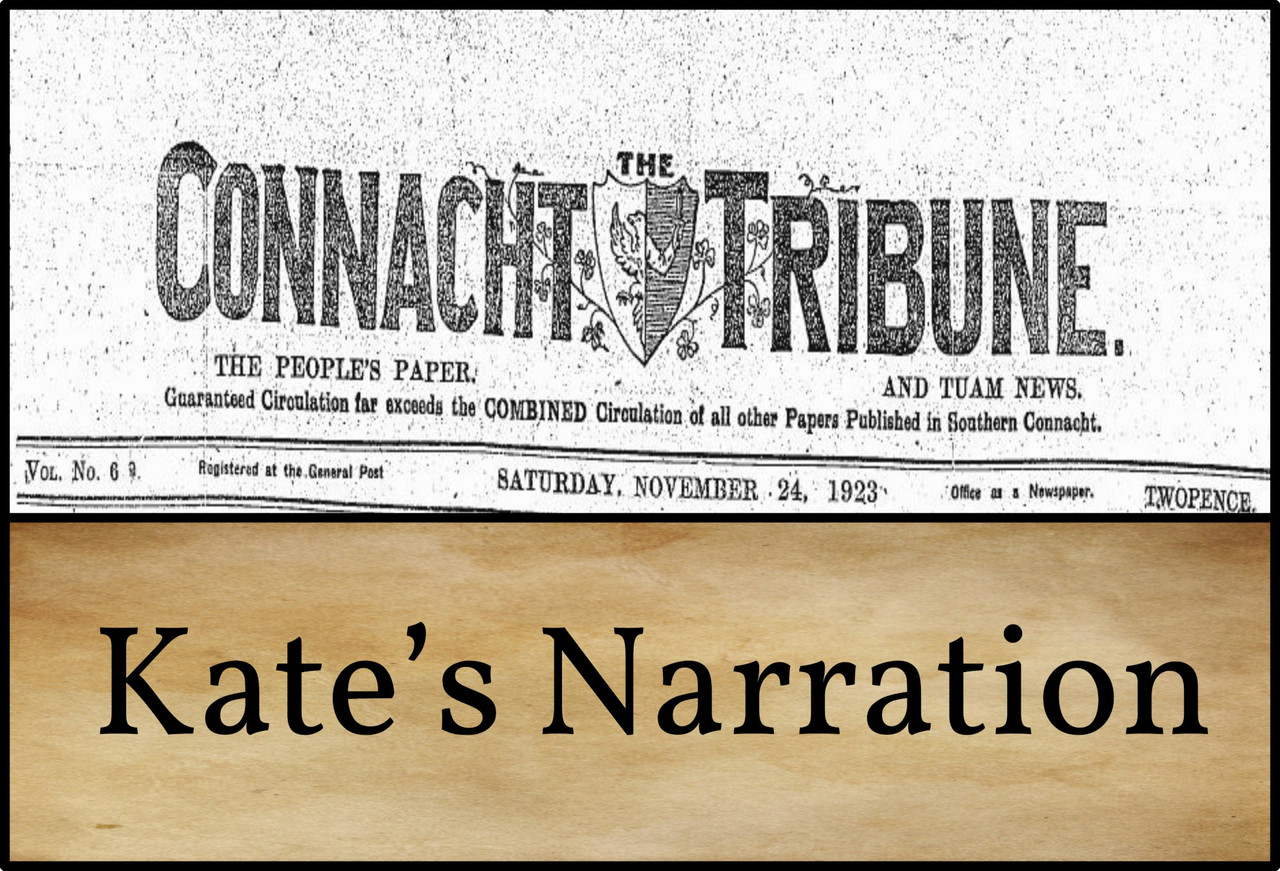
You may recall that the account of the assault on HCE that first introduced the fender (RFW 049.30 ff) was loosely based on a story that appeared in the Freeman’s Journal on 21 November 1923. This discovery was made by Joycean sleuth Vincent Deane. Deane also discovered that Kate’s narration is based on a similar story that appeared in The Connacht Tribune and Tuam News (now known as the Connacht Tribune) three days later. The story bears the headline:
FIERCE STRUGGLE
Man With Mask and Iron Bar.
WOODEN “REVOLVER.”An extraordinary attempted burglary of an old man’s money is reported from Belmont, Milltown. Patrick Byrne, aged 58 years, reported to the Civic Guard station about seven o’clock on Tuesday morning and told the following story: He went to bed on Monday night at eleven o’clock, having bolted and barricaded the doors in consequence of a raid that was made on his house a few months ago. About three o’clock on Tuesday morning he awoke and saw a masked man standing near him. He jumped up and caught hold of the intruder, and both struggled for a considerable time between the room and the kitchen. The burglar said, “Let me out, Pat.” After a fierce struggle the burglar said, “Was £6 10s. taken from you some time ago?” The burglar then went to the door and Byrne caught hold of a long bar he had and with which he broke in the door. Byrne succeeded in taking the bar, and a wooden affair in the shape of a revolver fell from the intruder, who then became friendly and wanted to know if Byrne had the change of a £10 note and, if so, that he (the burglar) would give him back the £5 [sic] 10s. taken from him last summer. Byrne said he had no money, and the burglar then left.
Byrne went out to a neighbour’s house. He was covered with blood and some of the hair was pulled off his head. He was bleeding from the ears and head, but his health in general is good.
John Roche was arrested on Tuesday by Tuam Civic Guards in consequence of information received, and he was brought before Mr. Ml. O’Brien, P.C., at a special court in the Civic Guard station.―Sergt. Ruddy deposed to the arrest of Roche and asked for a remand to Tuam district court next Friday on the charge of breaking into the house of P. Byrne, at Belmont, at three o’clock on Tuesday morning. Roche said: “it is bad enough. What will my wife and three children do?”―The sergeant said he was still making inquiries, and applied for a remand till Friday.―Roche was remanded in custody to Galway jail.
―Connacht Tribune Saturday 24 November 1923, Page 5, Column 7
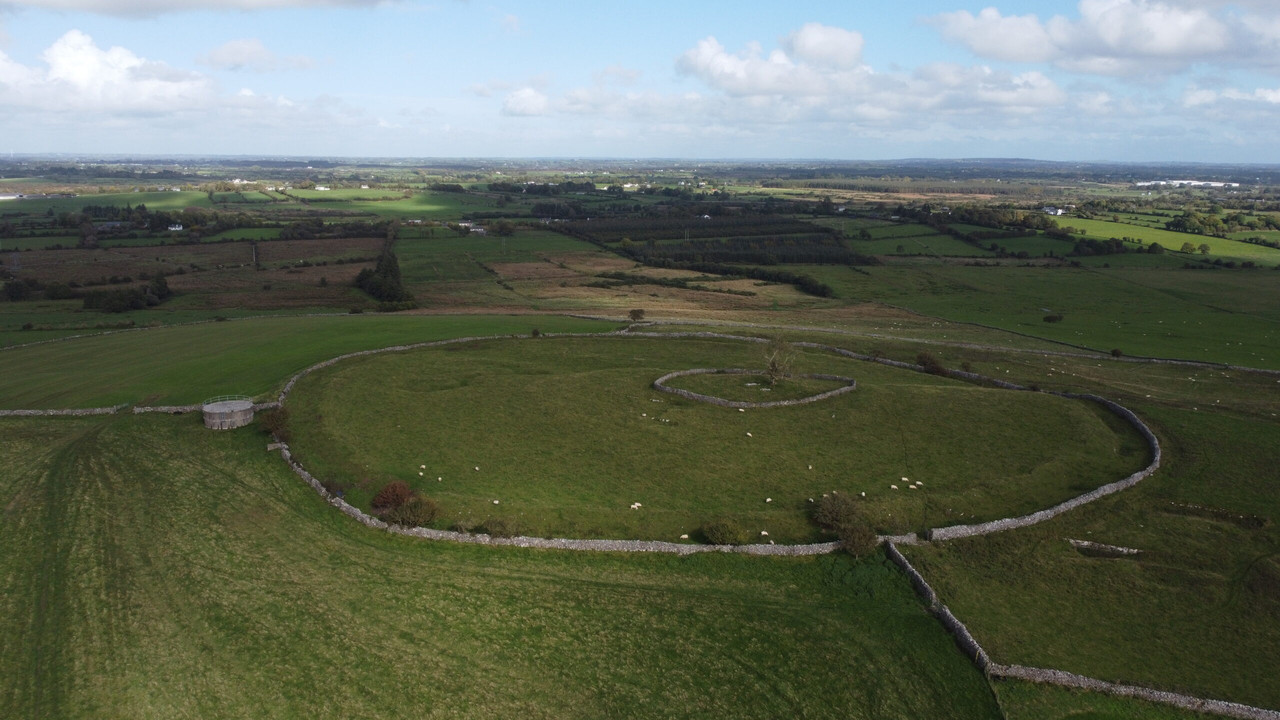
Belmont is a townland that lies about 5 km to the west of Milltown, County Galway, or 38 km north of Galway City.
It takes Joyce little more than a page to exhaust the narrative contents of this particular story (RFW 064.39–066.11), but he was able to flesh out his tale with some details from another story on the same page of the Connacht Tribune―another of Vincent Deane’s discoveries:
CO. GALWAY MURDER
Man Found Guilty of Manslaughter.
JUDGE AND POTEENAt the Commission in Green-street Courthouse, Dublin, on Friday, before the Lord Chief Justice, a man named John Derrane was indicted for the wilful murder of Barbara King, an old age pensioner over eighty years of age, on the 9th January last, in her house in Ballinakill, County Galway.
Mr. Carrigan, K.C., for the Free State, said the prisoner lived in Ballinakill, in the same village as an old age pensioner named Barbara King, a widow, who had been bedridden since some time before January 9th, and who stopped with her daughter, a Mrs. Cloonan. On the evening in question Mrs. Cloonan had to leave the house to go for milk. When on the way back home she met one of her children who was in an excited state. she went to the house and there saw the prisoner in the kitchen.
The dresser was wrecked and a clock was broken, while the old woman lay bleeding on the ground.
Mrs. Cloonan said to the accused, “You have killed my mother.” He ran at Mrs. Cloonan, caught her by the hair and threw her on the floor. She asked him, “Do you know who is in it?” and before Derrane had time to answer, she added, “I will give you £5 for whiskey.” At the mention of whiskey Derrane became calm and left the place.
Evidence bearing out counsel’s statement was given, and for the defence Mr. Fitzgerald Kenny submitted that the case was not one in which the jury should find a verdict of murder. There were circumstances which might reduce the crime to one of manslaughter. Though drunkenness was no excuse for crime, there were certain cases where it was necessary to take it into consideration in order to draw a distinction between murder and manslaughter.
The jury, after a short absence, returned with a verdict of manslaughter.
His lordship approved of the verdict, and said poteen drinking must be put down or they would have more trouble. He ordered the prisoner to be put back for the present.
Connacht Tribune 24 November 1923, Page 5, Column 4
Ballinakill, or Ballynakill, is a Civil Parish in Connemara, County Galway, a few kilometres north of Clifden. The victim Barbara King was not related to the family of Festy King, who figures prominently later in this chapter.

And that’s as good a place as any to beach the bark of our tale.
References
- David Hayman, A First-Draft Version of Finnegans Wake, University of Texas Press, Austin, Texas (1963)
- James Joyce, Finnegans Wake, The Viking Press, New York (1958, 1966)
- James Joyce, James Joyce: The Complete Works, Pynch (editor), Online (2013)
- Danis Rose, John O’Hanlon, The Restored Finnegans Wake, Penguin Classics, London (2012)
Image Credits
- The Connacht Tribune and Tuam News: Irish Newspaper Archives, Public Domain
- Up, Guards, and at ’em!: An Incident at the Battle of Waterloo, Thomas Jones Barker (artist), Private Collection, Public Domain
- The Dogpond: Brendan Ward (photographer), Public Domain, Kopimi
- Belmont Hillfort, County Galway: © Cathal McHugh (photographer), Creative Commons License
- Ballynakill Civil Parish from Diamond Hill: Tourism Ireland (photographers), © Fáilte Ireland, Fair Use
Useful Resources

Thank you for sharing on steem! I'm witness fuli, and I've given you a free upvote. If you'd like to support me, please consider voting at https://steemitwallet.com/~witnesses 🌟