Later on, after the solstitial pause
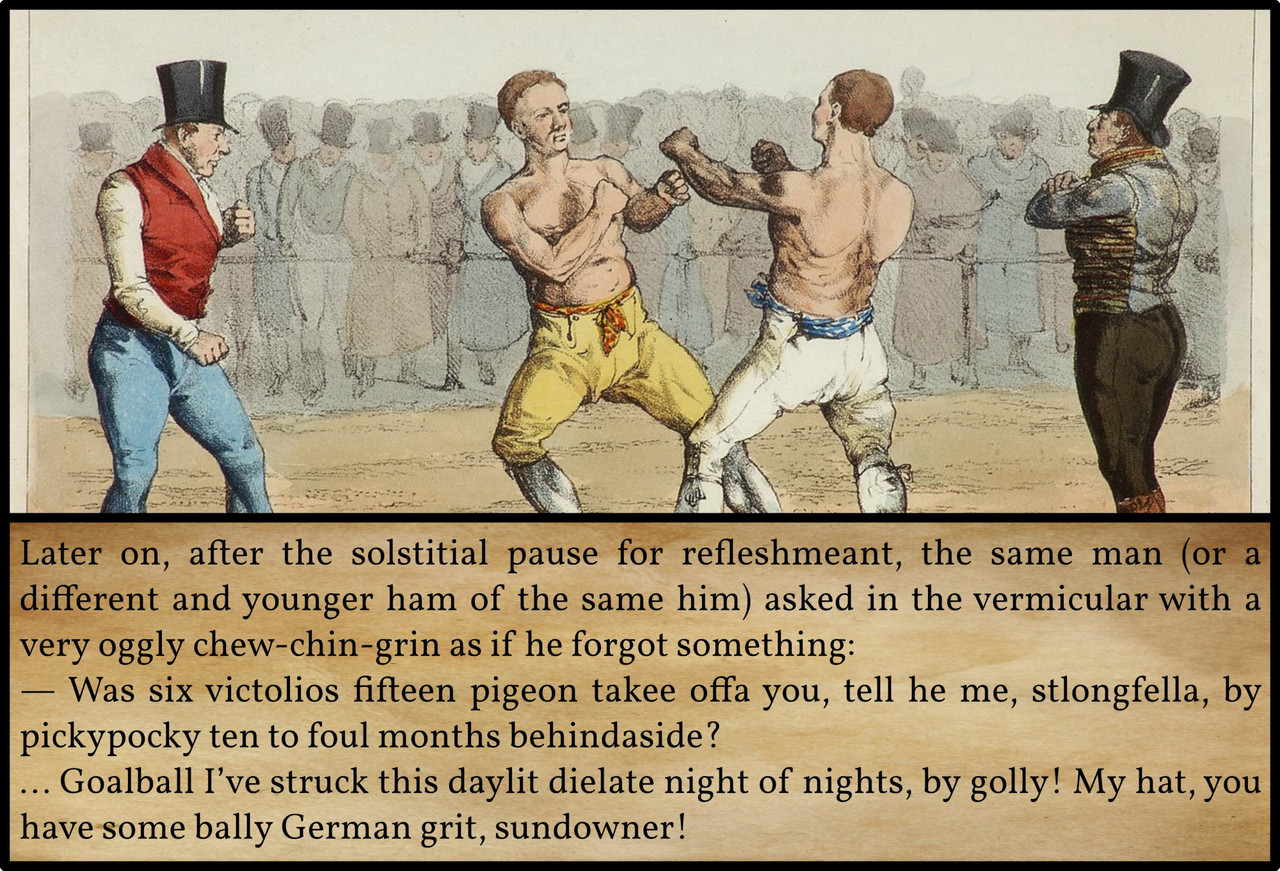
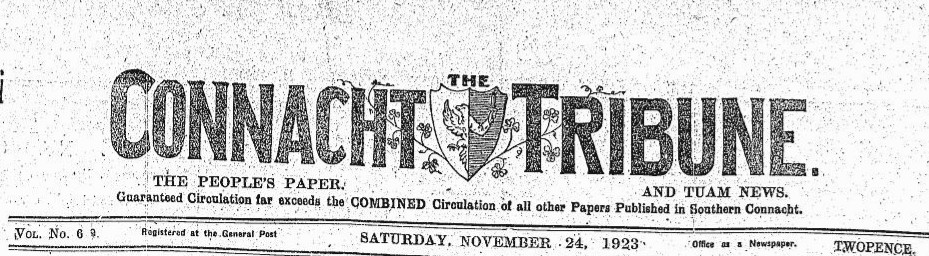
Kate’s account of the assault on HCE continues. This section continues to draw on contemporary reports of true crime that Joyce came across in The Connacht Tribune and Tuam News. In the first of these, a masked man’s attempt to burgle Patrick Byrne’s house culminates in a struggle between the bedroom and the kitchen, at which point the affair takes a decidedly comic turn:
FIERCE STRUGGLE
Man With Mask and Iron Bar.
WOODEN “REVOLVER.”... The burglar said, “Let me out, Pat.” After a fierce struggle the burglar said, “Was £6 10s. taken from you some time ago?” The burglar then went to the door and Byrne caught hold of a long bar he had and with which he broke in the door. Byrne succeeded in taking the bar, and a wooden affair in the shape of a revolver fell from the intruder, who then became friendly and wanted to know if Byrne had the change of a £10 note and, if so, that he (the burglar) would give him back the £5 [sic] 10s. taken from him last summer. Byrne said he had no money, and the burglar then left.
―The Connacht Tribune and Tuam News Saturday 24 November 1923, Page 5, Column 7
Joyce came across the other report on the same page of this newspaper. A woman returns home to find a man attacking her elderly mother. Joyce used only one particular detail from this story:
CO. GALWAY MURDER
Man Found Guilty of Manslaughter.
JUDGE AND POTEEN... When on the way back home she met one of her children who was in an excited state. she went to the house and there saw the prisoner in the kitchen.
The dresser was wrecked and a clock was broken, while the old woman lay bleeding on the ground.
Mrs. Cloonan said to the accused, “You have killed my mother.” He ran at Mrs. Cloonan, caught her by the hair and threw her on the floor. She asked him, “Do you know who is in it?” and before Derrane had time to answer, she added, “I will give you £5 for whiskey.” At the mention of whiskey Derrane became calm and left the place.
The Connacht Tribune and Tuam News 24 November 1923, Page 5, Column 4
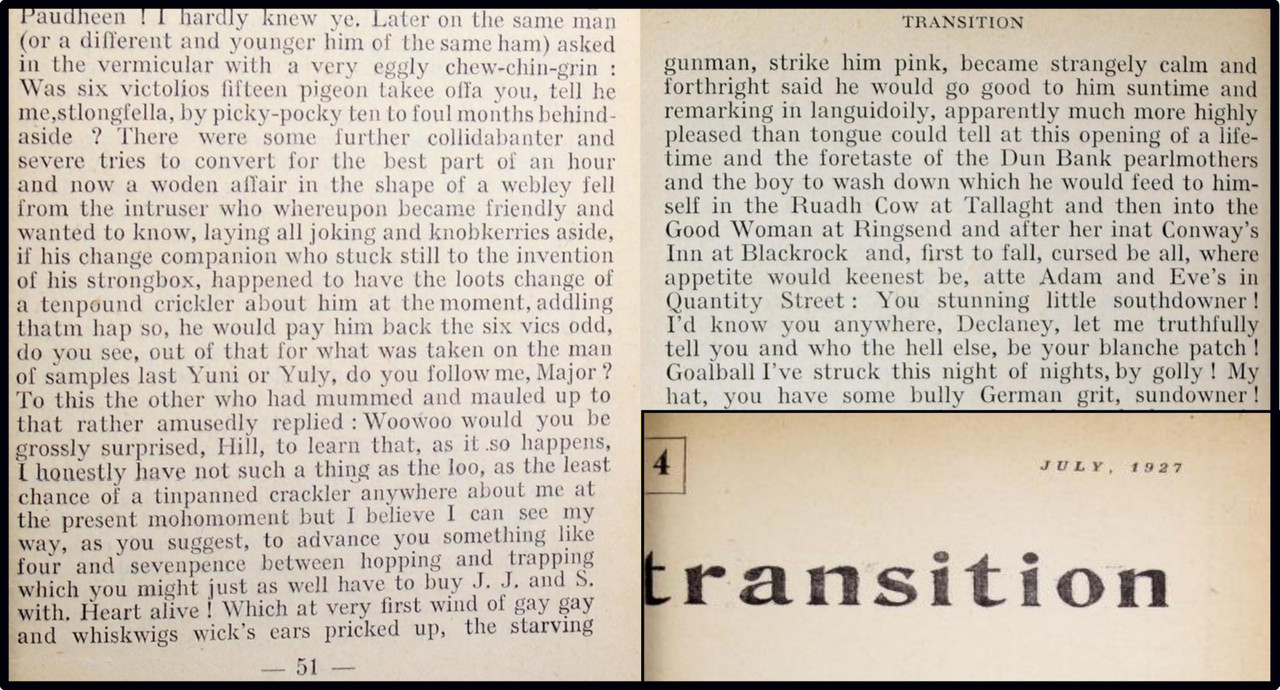
First-Draft Version
The first draft of this passage, as recorded by David Hayman, involves the wooden revolver and the whiskey, and also reintroduces the infamous fender, which was first introduced in the previous chapter (RFW 050.29):
Later on the same man asked: Was six pounds fifteen taken from you by anyone two or three months ago? There was severe mauling and then a wooden affair in the shape of a revolver fell from the intruder who thereupon became friendly & wanted to know whether his chance companion who had the fender happened to have the change of a ten pound note because, if so, he would pay the six pounds odd out of that for what was lost last summer. The other then said: Would you be surprised to hear that I have not such a thing but I am able to give you four and 7 pence to buy whisky. At the mention of whisky the wouldbe burglar became calm and left the place. ―Hayman 76
In expanding this passage over the following years, Joyce removed the mention of the fender, but he replaced it with a strongbox. This answers the question with which I closed the last article:
But why do the pair struggle round the booksafe (a large fire-proof and thief-proof safe for holding books and documents (especially a business’s account books)?
In the dreamworld of Finnegans Wake the booksafe and strongbox are identical to the fender.
The first-draft was written in November 1923. In July 1927 an intermediate draft of this chapter was published in Number 4 of Eugene Jolas’s literary journal transition. It is now 41 lines long, while the final version published in 1939 runs to about 55 lines.
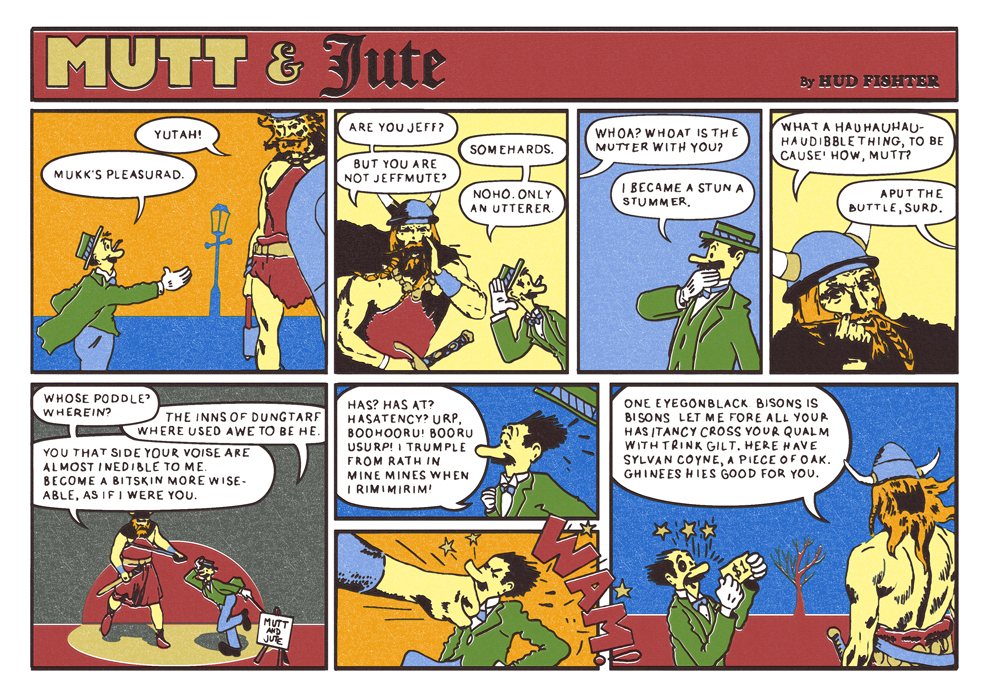
Mutt & Jute
The first part of Kate’s narration focused on the violent aspect of the assault. In this section the two combatants attempt to communicate with one another. This brings to mind the Dialogue of Mutt & Jute from I.1, in which two enemies try to come to terms with one another:
the same man ... asked
tell he me In Italian the polite form of the second person uses the same grammatical form as the third person. This stems for the ancient custom of commoners addressing nobles in the third person. In FW VI.B.14:230o, Joyce wrote: Tell he me = Lei. The literal meaning of the Italian pronoun Lei is she, not he (because in Italian signoria = lordship is feminine), but Joyce’s source was My People: Stories of the Peasantry of West Wales by the Welsh writer Caradoc Evans:
“Mishtir Shinkins. There’s religious he is,” said Simon, addressing William Jenkins in the third person, as is the custom in West Wales when you are before your betters. “Put him up the banns now then.”
“I will, Simon.”
“Tell he me, when shall I say to Beca thus: ‘On such and such a day is the wedding’? Say him a month this day?” ―Evans 55
There were some further collidabanter banter with the Latin: collidebantur = they were brought into collision.
and severe tries to convert several attempts to converse. Converting tries is something that happens in a rugby match. Earlier, HCE’s attacker was referred to as the attackler. Later we have Goalball.
saying ... addling that ... do you see? ... do you follow me, Capn?
the other ... who had mummed and mauled up to that ... rather amusedly replied hummed and hawed.
as you suggest
the starving gunman ... sware ... marx my word fort
remarxing in languidoily _remarking in langue d’oïl, the Romance dialect of northern France from which modern French is descended.
let me trucefully tell you
I am not the first to discern a connection with Mutt & Jute. In Finnegans Wake: A Plot Summary, John Gordon writes:
81.12-85.19: With his ‘deepseeing insight’, the somnolent HCE retraces the past, back to the HCE-Sackerson ‘Mutt and Jute’ meeting of I/l and to other memories evoked there, notably Sackerson’s troubles with the caddish character I have called ‘the Welsher’. The ‘oblong bar’ with which ‘he rose the stick at him’ signals that, like the last such encounter, this is a ‘stickup’, but then ‘stickup’ is elsewhere identified (315.17, 512.04) with the beerpull which Sackerson mans at the bar―which helps explain how when his antagonist becomes a beggar holding out his bowl, the stick becomes the ‘worm’ of a distillery, from which he pours him ‘refleshmeant’. In return, the intruder tricks Sackerson by inveigling change for a ‘woden affair’ (recall the wooden ‘coyne’ of Mutt and Jute (16.31)) which, since the ruse is in effect a robbery, is also a ‘webley’, a gun, after which he levants, leaving the manservant to go to his colleagues the police. ―Gordon 138–139
The Fender
his change companion, who stuck still to the invention of his strongbox
That the strongbox represents the fender that featured in an earlier account of the assault is clear from the following note in one of Joyce’s Finnegan Wake notebooks:
invention of fender ―FW VI.B.14:216d
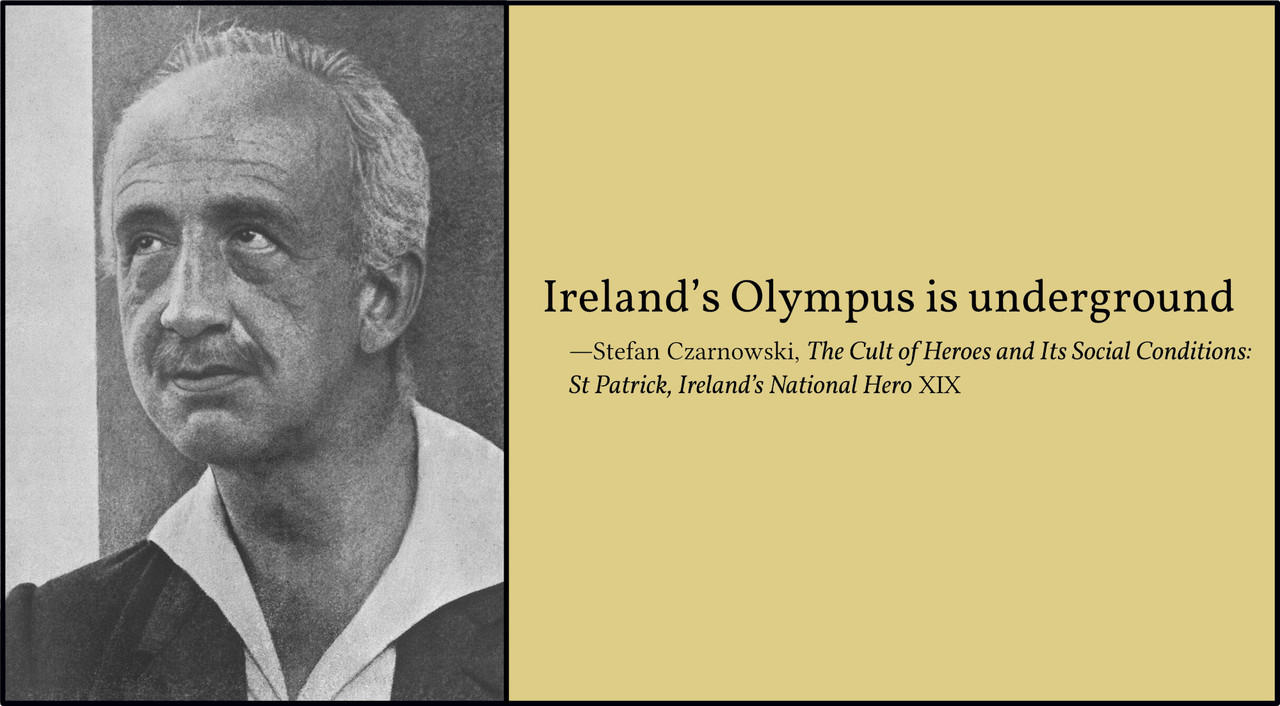
According to the James Joyce Digital Archive, the source of this note is Le culte des héros et ses conditions sociale: saint Patrick, héros nationale de l'Irlande [The Cult of Heroes and Its Social Conditions: Saint Patrick, National Hero of Ireland] by Stefan Czarnowski, a Polish sociologist and folklorist:
On a encore une foule de héros spécialisés. Ainsi beaucoup sont des guérisseurs. D’autres encore correspondent à un idéal professionel et comprennent surtout les inventeurs et les hommes qui ont excellé dans leur métier. Il y a des héros savants, comme Galilée, Pasteur, Léonard de Vinci. ―Czarnowski 75
There is also a crowd of specialized heroes. Quite a few of them are healers. Others correspond to a professional ideal and comprise especially inventors and men who have excelled at their profession. There are scholarly heroes, like Galileo, Pasteur, Leonardo da Vinci. ―Czarnowski 75
The image of the assaulted man holding tight onto his strongbox calls to mind the story of Joyce’s father defending his rates bag against a would-be mugger in the Phoenix Park, which is said to be the ultimate inspiration for HCE’s encounter with the Cad with a Pipe (Ellmann 34).
As we have seen, the first draft read his chance companion who had the fender. Note how chance was turned into change, while a few lines later HCE, who has been asked for the loots change of a ten pound crickler, replies that he hasn’t the least chance of a tinpanned crackler. Joyce clearly had fun ringing the changes on these expressions.
Money Matters
Mutt & Jute discussed currency:
JUTE: One eyegonblack. Bisons is bisons. Let me fore all your hasitancy cross your qualm with trinkgilt. Here have silvan coyne, a piece of oak. Ghinees hies good fir yew.
MUTT: Louee, louee! How wooden I not know it, the intellible greytcloak of Cedric Silkyshag! ―RFW 013.29–33
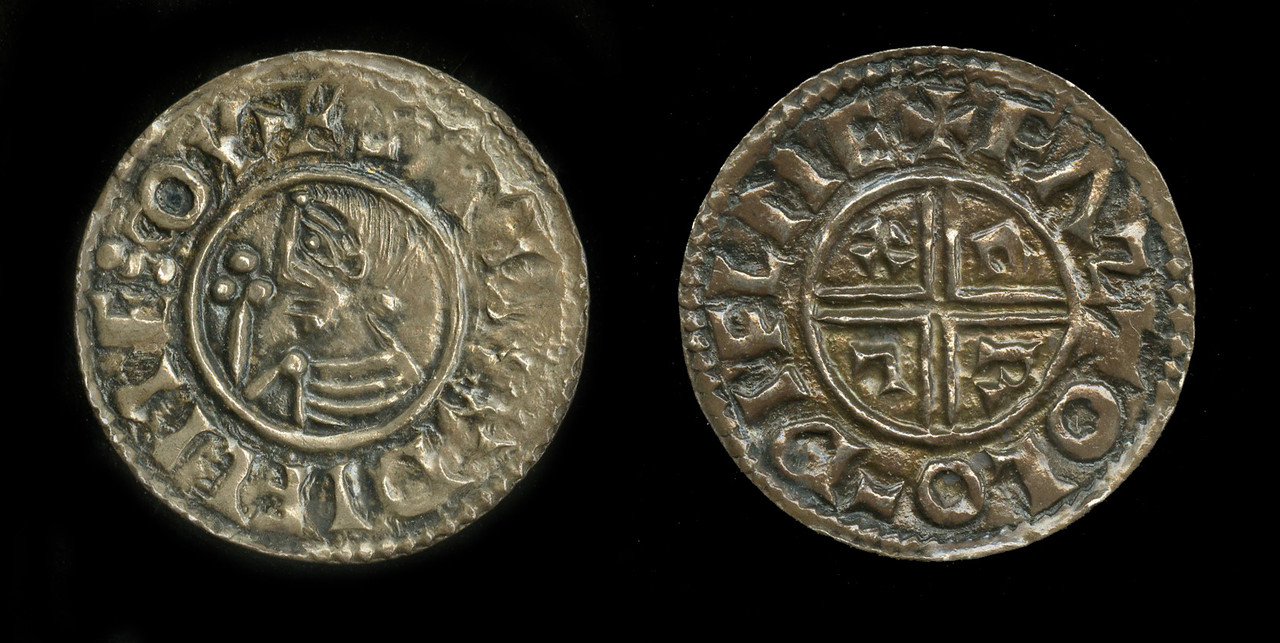
Now the subject turns up again like a bad penny:
Was six victolios fifteen pigeon takee offa you, tell he me, stlongfella, by pickypocky ten to foul months behindaside? In the last chapter HCE’s foreign guest Herr Betreffender was robbed of six quid fifteen of conscience money. John Gordon comments:
82.12: “victolios:” McHugh notes that a “Victoria” was “a sovereign [pound] minted during Victoria’s reign.”
This annotation is not in the first or third edition. If it was in the second edition, McHugh must have reconsidered the matter and removed it. I have not been able to confirm that any British coins with Queen Victoria’s portrait were ever called victorias. I did discover, though, that a Victoria is a variety of domestic pigeon, which may be relevant. In the Oxford English Dictionary they are described as Hyacinths of a lighter shade. Hyacinth O’Donnell will be putting in a cameo appearance later in this chapter. But pigeon also signals the intrusion of pidgin English into the text.
A more probable allusion is to 6 & 7 Victoria c. 15, Slave Trade Treaty with Texas Act 1843: An Act for carrying into effect the Treaty between Her Majesty and the Republic of Texas for the Suppression of the African Slave Trade. Or perhaps 5 & 6 Victoria c. 15, Duties on Spirits, etc Act 1842: An Act to impose an additional Duty on Spirits, and to repeal the Allowance on Spirits made from Malt only, in Ireland.
stlongfella Bislama or Beach-la-Mar is a form of pidgin English spoken in Vanuatu (formerly the New Hebrides) in the South Pacific. Strongfella means very or strongly. In VI.B.14:157g, Joyce translated it with the Italian word molto. There may also be an allusion to Strongbow, another foreign intruder of Norse ancestry. There is certainly an allusion to Éamon de Valera, the foreign-born Irishman who fought for Ireland against the foreign intruders. He was popularly known as The Long Fellow on account of his height (1.91 m or 6 ft 3).
and now a woden affair in the shape of a webley ... fell from the intruser Besides the obvious allusion to the newspaper report, which involved a wooden revolver, this woden affair also recalls Mutt’s allusion to William Wood’s Ha’pennies. In 1722 the English ironmonger William Wood was granted letters patent to produce copper coinage for Ireland, a move that was seen as a deliberate attack on the Irish economy, as it would introduce a large number of coins of inferior quality into the market―Gresham’s Law: Bad Money Drives Out Good. This prompted Jonathan Swift to pen his famous Drapier’s Letters, a series of seven pamphlets denouncing the new coinage. The ensuing boycott of Wood’s Ha’pennies eventually led to the withdrawal of the letters patent, solidifying Swift’s reputation as a champion of the downtrodden Irish.
There is also a reference here to the historical fact that the Norse settlers in both Britain and Ireland gradually abandoned their pagan Germanic gods (Woden is the Anglo-Saxon name for Odin) in favor of Christianity. Here, Wood the Englishman represents the foreign intruder, committing an act of intrusion against the native Irish. The source for this historical allusion was Otto Jespersen’s Growth and Structure of the English Language, which refers specifically to the Christianization of the Norse invaders of England:
60: A great number of Scandinavian families settled in England never to return, especially in Norfolk, Suffolk and Lincolnshire, but also in Yorkshire, Northumberland, Cumberland, Westmoreland, etc ... But these foreigners were not felt by the natives to be foreigners in the same manner as the English themselves had been looked upon as foreigners by the Celts. As Green has it, “when the wild burst of the storm was over, land, people, government reappeared unchanged. England still remained England; the conquerors sank quietly into the mass of those around them; and Woden yielded without a struggle to Christ. ―Jespersen § 60 : J R Green, A Short History of the English People 84
strongbox Although not a literal reference to money, a strongbox is a safe in which money and other valuable may be stored. In the previous paragraph this object was referred to as a booksafe, which FWEET defines as: a large fire-proof and thief-proof safe for holding books and documents (especially a business’s account books).
loots change of a tenpound crickler ... least chance of a tinpanned crackler A ten-pound note, so-called as it crickles or crackles in the hand. Crickle is not actually in the OED, but crick-crack is defined as a representation of a repeated sharp sound, such as gunfire. The verb crick-crackle means to emit a series of sharp crackling sounds. And crickling is an onomatopoeic modification of crackling. Green’s Dictionary of Slang gives crackle as slang for a banknote, usually of ₤5 and up. loots implies that the money was stolen.
he would pay him back the six vics odd ₤6 10s was the actual amount reported in the newspaper. Why did Joyce change this to six quid fifteen? Was it in order to create an allusion to the two Acts of Parliament mentioned above? 5 & 6 Vict. c. 10 (Indemnity Act 1842) and 6 & 7 Vict. c. 10 (Punishment of Death Act 1843) aren’t really relevant.
to advance you something like four and sevenpence In the newspaper report the attacker was appeased with ₤5 for whiskey―a huge amount. 4/7 is 55 pence, which in 1923 could buy one four or five bottles of whiskey.
Loose Ends
pause for refleshmeant Pause for refreshment was a popular slogan for Coca-Cola when Joyce was writing Finnegans Wake. It also suggests that the assault is a boxing match or a wrestling bout, with pauses between rounds.
vermicular He means, of course, vernacular, but vermicular, which means wormlike, has supplanted the correct word due to the mention of the worm (ie the condensing tube of a still for distilling spirits) a few lines above. Finnegans Wake is full of associative distortions like this that help to obscure the language without necessarily adding any vital information. Joyce’s source was Otto Jesperson’s Growth and Structure of the English Language:
131: There is one class of words which seems to be rather sparingly represented in the native vocabulary, so that classical formations are extremely often resorted to, namely the adjectives. It is, in fact, surprising how many pairs we have of native nouns and foreign adjectives, e. g. mouth: oral; nose: nasal; eye: ocular; mind: mental; son: filial; ox: bovine; worm: vermicular ,,, sun: solar Jespersen § 131
John Gordon implies that the sun : solar pair accounts for solstitial. FWEET merely notes that major Celtic festivals were held on the solstices.
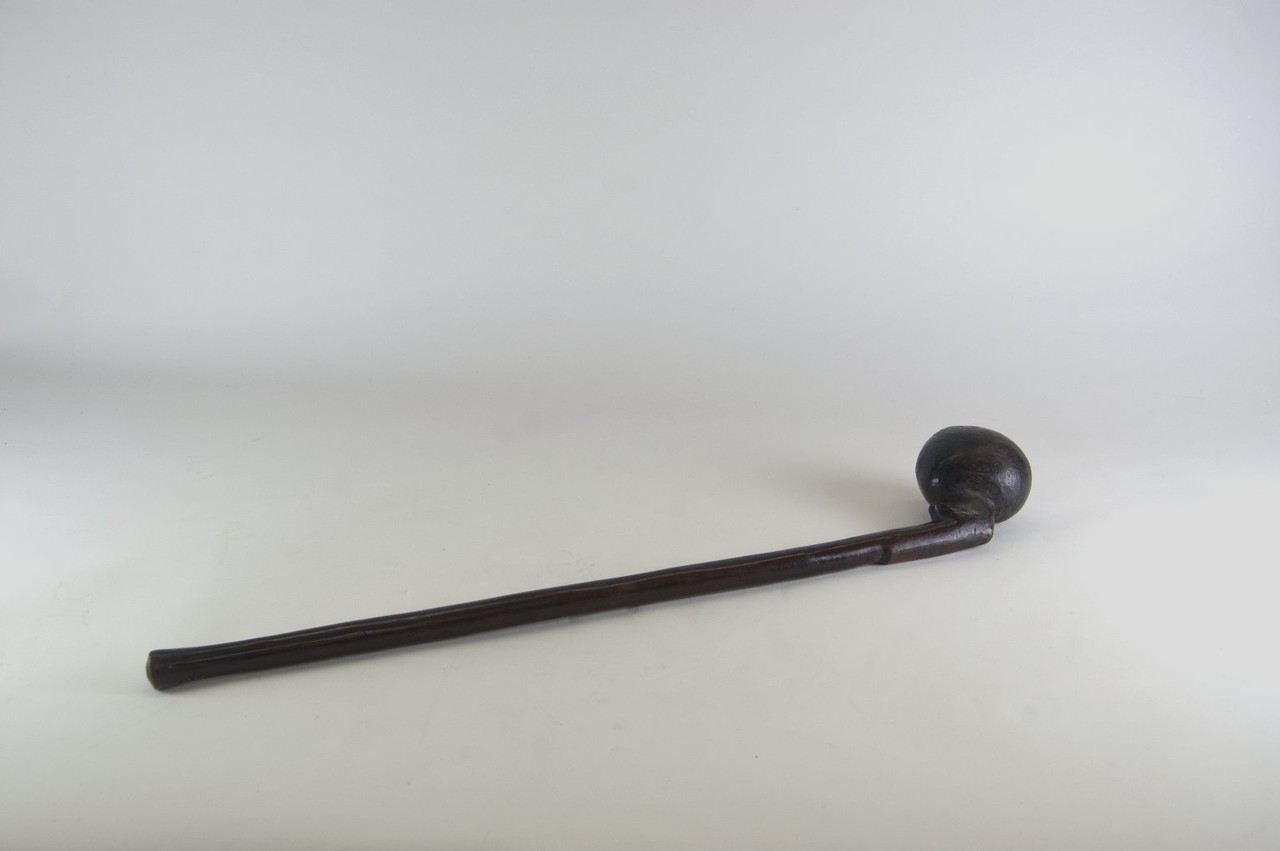
saying not his shirt to tear, to know wanted, joking and knobkerries all aside laying the unusual syntax follows the normal word order of German, reminding us that Herr Betreffender was Austrian. FWEET interprets the later mad nuts and hatter’s hares as allusions not only to Lewis Carroll’s March Hare and Mad Hatter but also to Nazis and Hitler―another Austrian. The presence nearby of Yuddanfest (German: Judenfest = Jewish Holiday) supports this interpretation. A knobkerry is a Zulu fighting stick with a knob on the end―the South-African equivalent of the Irishman’s shillelagh or blackthorn (see thorntree a few lines below).
our old friend Ned ... Hill Ned of the Hill is the English name of the Irish ballad Éamonn an Chnoic, named for an Irish outlaw and folk hero of the late 17th and early 18th centuries. His real name, it is believed, was Edmund O’Ryan. In III.3 Johnny MacDougal’s ass is addressed as Ned of the Hill (RFW 270.18). Ned and Neddy are common names for donkeys, and neddy is used colloquially as a synonym for donkey or ass.
marx my word fort for a chip off the old Flint (in the Nichtian glossery (FW 083.10–11) These have been interpreted as allusions to the German philosophers Karl Marx and Friedrich Nietzsche, though I fail to see the relevance. In The Restored Finnegans Wake, Rose & O’Hanlon moved the phrase for a chip off the old Flint to an earlier point in this paragraph. But Robert Flint was a Scottish philosopher who wrote about Marx and Vico, so the phrase should perhaps have been left where it was. At the end of this passage, the attacker tells the other man that he has German grit. Tadhg Ó Neachtain was an Irish scribe and lexicographer who compiled an Irish dictionary in the eighteenth century.
And that’s as good a place as any to beach the bark of our tale.
References
- Joseph Campbell, Henry Morton Robinson, A Skeleton Key to Finnegans Wake, Harcourt, Brace and Company, New York (1944)
- Stefan Czarnowski, Le culte des héros et ses conditions sociales : Saint Patrick, héros national de l’Irlande, Félix Alcan, Paris (1919)
- Richard Ellmann, James Joyce, New and Revised Edition, Oxford University Press, Oxford (1982)
- Caradoc Evans, My People: Stories of the Peasantry of West Wales, Andrew Melrose, London (1915)
- John Gordon, Finnegans Wake: A Plot Summary, Syracuse University Press, Syracuse, New York (1986)
- John Richard Green, A Short History of the English People, Harper & Brothers Publishers, New York (1878)
- Jonathan Green, Green’s Dictionary of Slang, Volume 1, Chambers, London (2010)
- David Hayman, A First-Draft Version of Finnegans Wake, University of Texas Press, Austin, Texas (1963)
- Otto Jespersen, Growth and Structure of the English Language, B G Teubner, Leipzig (1905)
- Eugene Jolas & Elliot Paul (editors), transition, Number 4, Shakespeare & Co, Paris (1927)
- James Joyce, Finnegans Wake, The Viking Press, New York (1958, 1966)
- James Joyce, James Joyce: The Complete Works, Pynch (editor), Online (2013)
- Roland McHugh, Annotations to Finnegans Wake, Third Edition, The Johns Hopkins University Press, Baltimore, Maryland (2006)
- Danis Rose, John O’Hanlon, The Restored Finnegans Wake, Penguin Classics, London (2012)
- William York Tindall, A Reader’s Guide to Finnegans Wake, Farrar, Straus and Giroux, New York (1969)
Image Credits
- The Prize Fight: Henry Alken (artist), Thomas McLean, London (1824), Public Domain
- Mutt & Jute: © Stephen Crowe (artist), Fair Use
- Stefan Czarnowski: Anonymous Photograph, Społeczeństwo - Kultura, CBN Polona Digital Library, Public Domain
- Silver Coin Minted by Sitric Silkenbeard: British Museum, © The Trustees of the British Museum, Creative Commons License
- A Knobkerry: Brooklyn Museum, Creative Commons License
Useful Resources
- FWEET
- Jorn Barger: Robotwisdom
- Joyce Tools
- The James Joyce Scholars’ Collection
- James Joyce Digital Archive
- John Gordon’s Finnegans Wake Blog